Why Multi-State Tax Planning Could Save You Thousands
Multi state tax planning is the strategic management of tax obligations across multiple states. For high-income earners and business owners, it’s a critical tool for keeping more of your hard-earned money.
Quick Answer for Multi State Tax Planning:
- Nexus Determination: Understand when you owe taxes in each state (physical presence, economic thresholds, remote employees).
- Key Tax Types: Sales, income, franchise, and gross receipts taxes vary by state.
- Common Strategies: Use Pass-Through Entity Taxes (PTETs) to bypass SALT caps, optimize apportionment, and claim credits for taxes paid to other states.
- Business Structure Impact: LLCs, S Corps, and C Corps face different multi-state obligations.
- Compliance Tools: Leverage automation software and maintain detailed records.
As businesses expand across state lines, managing various state taxes becomes increasingly complex. Without proper multi state tax planning, you could face double taxation, penalties, and missed opportunities to reduce your overall tax burden.
State tax laws are in constant flux. The rise of remote work, the adoption of Pass-Through Entity Taxes (PTETs) in nearly 40 states, and the shift to single sales factor apportionment are fundamentally changing how income is taxed. Staying ahead of these changes is key.
I’m David Fritch, and with 40 years of experience as a CPA and tax attorney, I’ve helped countless business owners steer the complexities of multi state tax planning. My firm, Elite Tax Strategy Solutions, specializes in turning these challenges into opportunities for significant tax savings.
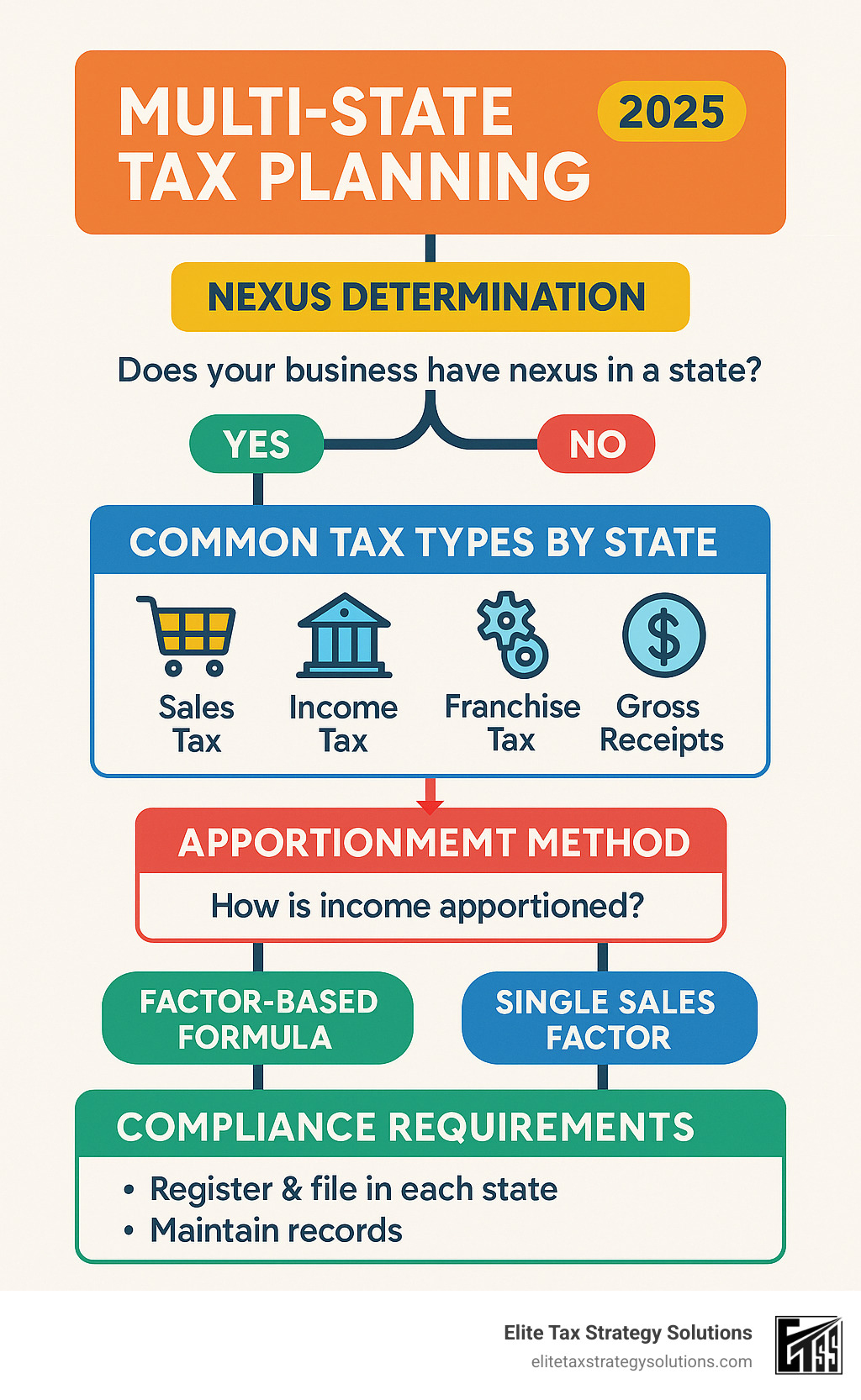
Multi state tax planning terms explained:
The Foundation: Understanding Nexus and Multi-State Tax Obligations

In multi state tax planning, nexus is the connection between your business and a state that gives that state the right to tax you. The rules for what creates nexus have changed dramatically, making it a critical concept for any business operating beyond a single state.
What is Tax Nexus and How is It Determined?
Historically, nexus required a physical presence—an office, warehouse, or employees in a state. This rule still applies, but the internet has expanded the definition.
The 2018 Supreme Court case South Dakota v. Wayfair established economic nexus, meaning you can owe taxes based on your sales volume in a state, even with no physical footprint. Typically, this is triggered by exceeding state-specific sales thresholds (e.g., $100,000 in sales) or transaction thresholds (e.g., 200 transactions). These rules are constantly evolving, as detailed in these state-by-state economic nexus laws.
Other common nexus triggers include:
- Remote workers: Employees working from home in different states can create payroll and income tax nexus.
- Inventory: Storing products in third-party warehouses (like Amazon FBA) can create physical presence.
- Affiliates: Using in-state affiliates to generate sales may also establish nexus.
Determining nexus is no longer simple, as each state has its own interpretation of these rules.
Common Taxes Subject to Multi-State Rules
Once nexus is established, you must determine which taxes you owe. It’s often more than just income tax.
- Sales Tax: Collected from customers and remitted to the state. Economic nexus has made this a major compliance area for online businesses. Our Multi-State Sales Tax Compliance service helps businesses steer this.
- Income Tax: Varies wildly by state, with some states having high rates and others having none.
- Franchise Tax: A fee for the privilege of doing business in a state, often based on net worth or capital, and may apply even if you have a loss.
- Gross Receipts Tax: A tax on total revenue, not profit, which can be burdensome for businesses with thin margins.
- Property Tax: Applies to real estate, equipment, or inventory owned in a state.
Understanding these obligations is the foundation of effective multi state tax planning.
Key Challenges in Your Multi-State Tax Planning

Multi state tax planning can be overwhelming due to several key challenges: the risk of double taxation, complex apportionment rules, varied record-keeping requirements, and the constant threat of state tax audits. Understanding these challenges is the first step toward managing them effectively.
Common Pitfalls: Double Taxation and Apportionment Complexities
Paying tax on the same income in two different states is a common pitfall. This risk arises from how states source your income, using two main concepts:
- Allocation: Assigns specific types of non-business income (e.g., rental income) entirely to one state.
- Apportionment: Divides your business income among the states where you operate. States traditionally used a three-factor formula (property, payroll, and sales), but many are now shifting their approach.
Complications arise from sourcing rules. Some states use cost of performance (where the work is done), while others use market-based sourcing (where the customer receives the benefit). A mismatch in rules between states can lead to the same income being taxed twice or not at all. Strategic multi state tax planning and properly claiming credits for taxes paid to other states are essential to avoiding double taxation.
How Your Business Structure (LLC, S Corp, C Corp) Affects Your Obligations
Your business entity choice fundamentally changes your multi-state tax obligations.
- C Corporation: The corporation pays income tax directly to each state where it has nexus. This is straightforward but can lead to double taxation when profits are distributed as dividends.
- S Corporation: Profits and losses pass through to the owners’ personal returns. However, states treat S Corps differently. Some recognize the pass-through status, while others impose an entity-level tax. This often requires owners to file individual returns in multiple states. Our Tax Planning for S-Corporations guide explores this.
- LLC: An LLC’s tax treatment is flexible (sole proprietorship, partnership, S Corp, or C Corp), which impacts its multi-state obligations. If taxed as a partnership, owners typically must file individual returns in each state where the LLC has nexus. See our Tax Planning for Partnerships resource for more.
Your business structure is the foundation of your multi-state tax strategy, so proactive planning is critical.
The Modern Business Landscape: E-Commerce, Remote Work, and Shifting Rules

The rise of e-commerce and remote work has made multi state tax planning an absolute necessity. The digital economy doesn’t recognize state borders, and tax authorities are adapting quickly. Every online sale, remote worker, or piece of inventory in a third-party warehouse can trigger new tax obligations.
Essential multi state tax planning for e-commerce
E-commerce has rewritten the rules for sales tax and income tax nexus. Key considerations include:
- Amazon FBA: Storing products in Amazon’s fulfillment centers can create physical presence (and thus nexus) in multiple states.
- Marketplace Facilitator Laws: Major platforms like Amazon and eBay now collect and remit sales tax in most states, but this doesn’t cover all sales channels or obligations.
- Drop Shipping: The location of your third-party supplier can create unexpected nexus for your business.
- Affiliate and Click-Through Nexus: Relationships with in-state affiliates or websites that refer customers can establish nexus if they generate sufficient sales.
Navigating this digital maze requires comprehensive Tax Planning for Entrepreneurs to ensure growth doesn’t create a tax nightmare.
The Impact of Remote Work on Your Tax Obligations
With projections that one in five Americans will work remotely by 2025, businesses must understand the tax implications. Hiring remote employees can establish remote employee nexus in every state where they live and work.
This triggers several obligations:
- Payroll Tax Withholding: You must register in each employee’s state to withhold income taxes and pay unemployment taxes. Our Multi-State Payroll Tax Compliance guide details these requirements.
- Income Tax Nexus: An employee’s presence can be enough to subject your business to that state’s income tax.
- Complex Rules: Issues like state reciprocity agreements (which prevent double taxation for some employees) and the convenience of the employer rule (which can create complex tax situations) require careful planning.
A remote hire is a tax decision. Each one should trigger a review of your multi-state tax footprint.
Advanced Strategies to Minimize Your Tax Burden
Beyond compliance, multi state tax planning offers powerful opportunities to reduce your total tax bill. By leveraging specific state rules and programs, you can turn complexity into a strategic advantage.
Leveraging Pass-Through Entity Taxes (PTETs)
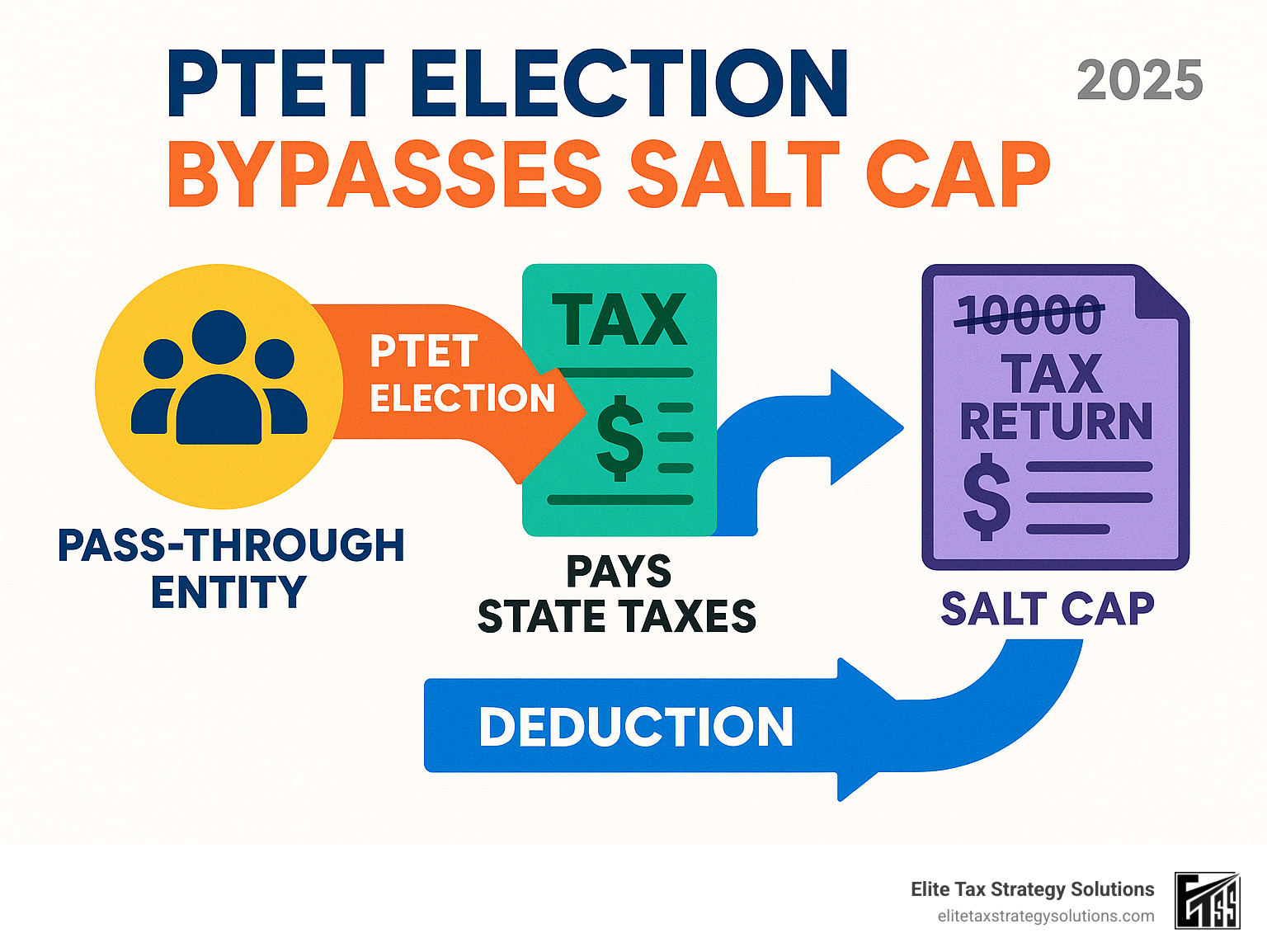
The $10,000 federal cap on state and local tax (SALT) deductions limits a key benefit for many high earners. To counteract this, nearly 40 states have created a workaround called the Pass-Through Entity Tax (PTET). This is one of the most effective tools in modern multi state tax planning.
Instead of owners paying state income tax personally (subject to the SALT cap), the S Corp or partnership can elect to pay the tax at the entity level. The business then deducts the full amount as a business expense on its federal return, bypassing the cap. Owners typically receive a credit on their personal state return for the tax paid by the entity.
Each state has unique rules for PTET elections, credits, and non-resident owners, as shown on this state-by-state PTET map. Analyzing whether a PTET election makes sense requires expertise in Tax Optimization Strategies.
The Shift to Single Sales Factor Apportionment
Many states are abandoning the traditional three-factor apportionment formula (property, payroll, and sales) and moving to a single sales factor. This means a state’s share of your business income is based solely on your sales in that state.
This shift, adopted by states like New Jersey, Idaho, and soon Montana, can dramatically change your tax bill. A business with significant property and payroll in a high-tax state but most of its sales elsewhere could see its tax liability in that state drop significantly. This trend is especially impactful for service businesses and requires proactive Tax Liability Reduction planning.
Using Credits for Taxes Paid to Other States
To avoid double taxation, most states offer a credit for taxes paid to other states. This is a fundamental protection in multi state tax planning that is often underused.
If you live in one state but your business pays income tax to another, your home state will generally provide a credit for the taxes paid to the other state. This credit is typically limited to the amount of tax your home state would have charged on that same income.
Claiming these credits requires proper documentation of taxes paid to each state on specific income. The rules for resident state credits and credits for entity-level taxes paid by pass-throughs can be complex. Properly claiming these credits is a key part of our Tax Savings for Businesses approach.
Proactive Compliance and Expansion
Effective multi state tax planning is an ongoing process, not a one-time fix. The tax landscape changes constantly, so proactive management is essential to avoid costly mistakes, especially when expanding your business.
Best Practices and Tools for Managing Compliance
Successful multi-state tax management relies on good habits and the right tools. Key practices include:
- Regular Nexus Reviews: Conduct quarterly reviews of sales, employee locations, and other business activities to identify new tax obligations before they become a problem.
- Meticulous Record Keeping: Document income, payroll, property, and sales by state. Organized records are your best defense in an audit.
- Internal Audits: Periodically review state tax filings to catch discrepancies in sales tax collection, income apportionment, or payroll withholding.
- Tracking Residency Days: For individuals, tracking days spent in each state is crucial to avoid accidentally establishing residency in a high-tax state.
Technology can streamline this complexity. We help clients implement software with the right features for their needs:
| Feature | Description |
|---|---|
| Automated Nexus Tracking | Monitors sales against state thresholds to alert you to new nexus obligations. |
| Sales Tax Calculation & Remittance | Automatically calculates and facilitates sales tax payments. |
| Apportionment Calculation | Assists in accurately calculating income apportionment based on various state formulas. |
| Payroll Tax Compliance | Handles multi-state payroll withholding, reporting, and filing. |
| Document Management | Centralizes tax-related documents for easy access and audit defense. |
| Reporting & Analytics | Provides reports to visualize tax liabilities and support strategic decisions. |
Finding the right technology is a key part of our comprehensive Tax Compliance Services.
Proactive Multi State Tax Planning When Expanding
Expansion is when costly tax mistakes often happen. Before entering a new state, thorough tax due diligence is critical to ensure profitability.
- Understand New State Laws: Research the target state’s income, sales, franchise, and other taxes to avoid surprises.
- Conduct a Nexus Analysis: Determine exactly which activities will trigger tax obligations so you can structure your expansion strategically.
- Handle Registration Requirements: Proactively obtain all necessary sales tax permits, income tax registrations, and payroll accounts.
- Update Compliance Systems: Ensure your accounting and payroll software is configured for the new state’s rules before you begin operations.
This proactive approach turns a potential compliance nightmare into a competitive advantage. Our Business Tax Planning Strategies guide offers more insights on making expansion work for you.
Conclusion
The complexities of multi state tax planning—from nexus and apportionment to e-commerce and remote work—are not just compliance problems; they are opportunities to save significant money. Understanding nexus prevents surprise tax bills, mastering apportionment can lower your tax burden, and leveraging strategies like PTETs can provide substantial federal tax benefits.
The business landscape will continue to evolve, with states constantly changing their rules. A multi state tax planning strategy that worked last year might be outdated today. Proactive planning is no longer optional—it’s essential for financial stability and growth.
It’s not about reacting to tax problems, but preventing them while maximizing every opportunity for savings. At Elite Tax Strategy Solutions, we specialize in turning these challenges into clear financial wins. We build comprehensive, forward-looking strategies that allow you to focus on your business while we handle the intricacies of multi state tax planning.
Your financial future deserves the strategic advantage that comes from expert guidance and proactive tax optimization.
Take control of your financial future with comprehensive financial planning