Tax optimization strategies are the cornerstone of effective financial planning. At their core, these strategies aim to reduce tax liabilities while enhancing financial well-being. By prioritizing methods such as maximizing deductions and credits, leveraging retirement contributions, and making strategic investment decisions, individuals and businesses can significantly decrease their taxable income and boost long-term financial success. With tax laws frequently changing, staying informed and proactive is crucial to tapping into these strategies effectively.
As David Fritch, with 40 years of experience in law and financial advisory, I specialize in providing tax optimization strategies to help clients steer complex tax regulations and achieve financial stability. Stay tuned for a deeper dive into these strategies in the next section.
Basic tax optimization strategies vocab:
– how to minimize taxes
– proactive tax planning opportunities
– tax savings for high earners
Understanding Tax Optimization Strategies
Tax optimization involves making strategic decisions to legally and efficiently reduce your tax liability. This means paying less in taxes by leveraging available tax laws and regulations.
Why is this important? Every dollar saved on taxes is a dollar that can be reinvested in your financial goals. Whether you’re saving for retirement, buying a home, or growing a business, tax optimization strategies can help you achieve these goals more quickly.
What is Tax Liability?
Tax liability is the total amount of tax you owe to the government, including federal, state, and local taxes. The objective is to minimize this liability as much as possible.
How can you do this? By understanding and utilizing tax regulations to your advantage. For example, contributing to retirement accounts like IRAs or 401(k)s can reduce your taxable income, meaning you’ll owe less in taxes now while also saving for the future.
Navigating Tax Regulations
Tax laws can be complex and frequently change. Staying informed about these changes is crucial to ensure you’re using the most effective strategies.
For instance, the Tax Cuts and Jobs Act increased the lifetime estate tax exemption, allowing you to pass more wealth to heirs tax-free. However, this provision is set to expire in 2025, so planning now is essential.
The Role of a Tax Professional
Given the complexity of tax regulations, working with a tax professional can be incredibly beneficial. They can help you identify opportunities for savings and ensure compliance with current laws.
Imagine you’re a small business owner. By deducting business expenses like home office costs or health insurance premiums, you can significantly lower your taxable income. A tax professional can guide you through these deductions to maximize your savings.

In the next section, we’ll explore key tax optimization strategies to help you minimize taxable income, maximize deductions, and make strategic investment decisions.
Key Tax Optimization Strategies
Minimize Taxable Income
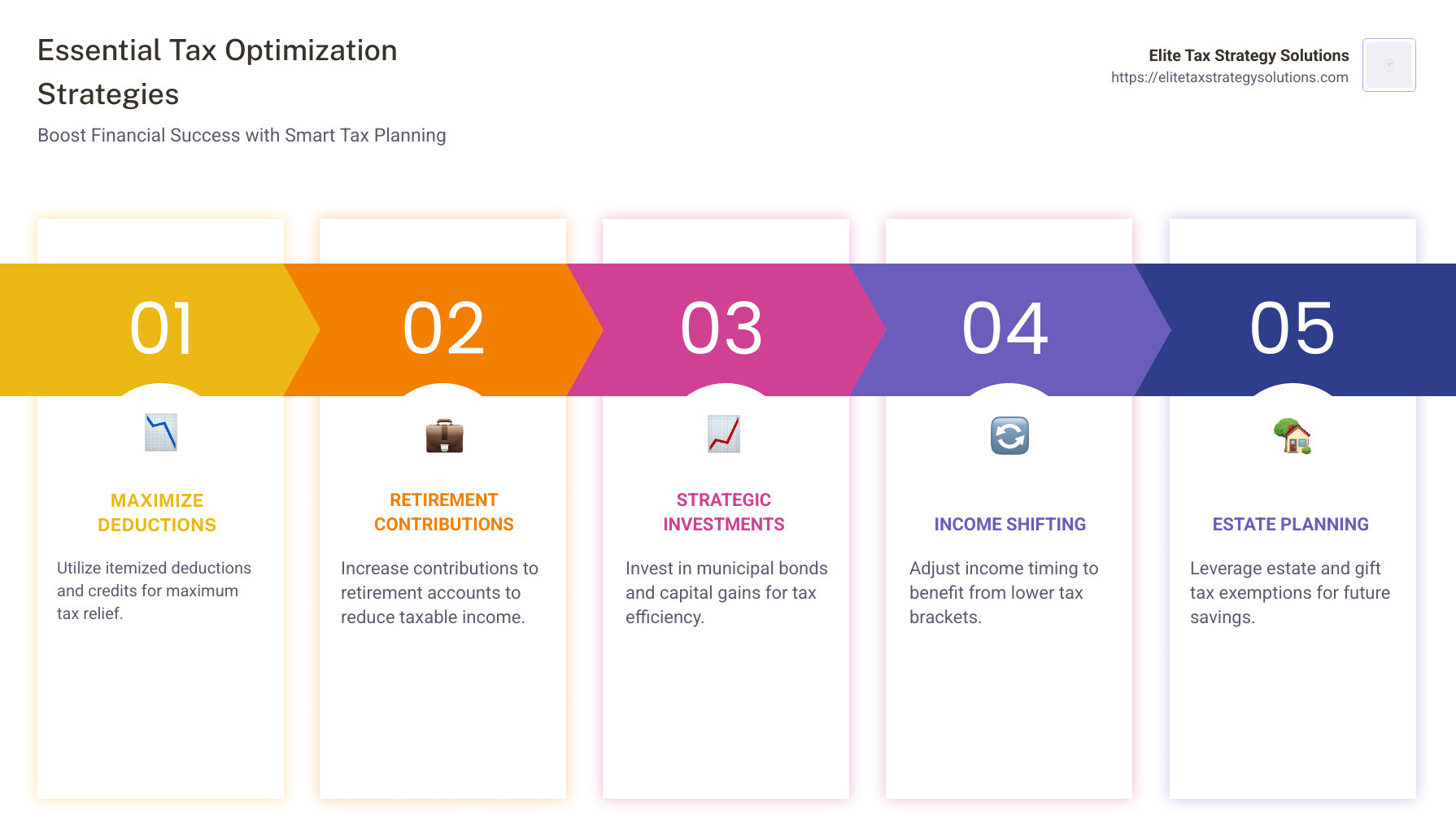
One of the simplest ways to reduce your tax bill is to minimize your taxable income. Contributing to retirement accounts like a 401(k) or IRA is a great start. These contributions are made with pre-tax dollars, which means they lower your taxable income now while building a nest egg for the future.
For example, if you contribute $6,000 to your IRA, you reduce your taxable income by that amount. This not only saves you on taxes today but also helps secure your financial future.
Maximize Deductions and Credits
Deductions and credits are your best friends during tax season. They lower your tax liability in different ways. Deductions reduce your taxable income, while credits provide a dollar-for-dollar reduction in your tax bill.
Consider charitable donations. When you donate to a qualified charity, you can deduct the value of your gift from your taxable income. This is not just a good deed; it’s a smart financial move.
Another strategy is to itemize your deductions. This includes expenses like medical bills, mortgage interest, and state taxes. If your itemized deductions exceed the standard deduction, you can lower your taxable income even further.
Strategic Investment Decisions
Making strategic investment decisions can also help optimize your taxes. Investing in municipal bonds is a popular choice because the interest earned is often exempt from federal taxes and sometimes state and local taxes, too. This is especially beneficial if you’re in a high tax bracket.
When it comes to capital gains, timing is everything. If you hold an investment for more than a year, you qualify for long-term capital gains rates, which are typically lower than short-term rates. This can significantly reduce your tax liability when you sell.
By understanding and implementing these tax optimization strategies, you can effectively manage your tax burden and keep more of your hard-earned money.
In the next section, we’ll dig into advanced techniques like income shifting and estate planning to further improve your financial strategy.
Advanced Tax Planning Techniques
Income Shifting and Timing
Income shifting and timing are powerful tools in your tax optimization toolkit. By strategically deciding when to receive income, you can manage which tax bracket you fall into for the year. This is especially useful if you’re close to the edge of a higher tax bracket.
For example, if you expect a bonus at the end of the year, you might be able to defer it to January. This way, it counts toward next year’s income, potentially keeping you in a lower tax bracket this year.
Another strategy is income deferral. This involves postponing income to future years when you expect to be in a lower tax bracket. For instance, contributing to a retirement plan like a 401(k) or a deferred compensation plan can help you defer income while saving for the future.
Estate and Gift Tax Planning
Estate and gift tax planning is essential for preserving wealth across generations. The estate tax exemption allows you to pass a significant amount of wealth to heirs without incurring federal estate taxes. As of 2024, the exemption is $13.61 million for individuals and $27.22 million for married couples filing jointly.
Lifetime gifting is another strategic move. You can give up to $18,000 per person annually ($36,000 for married couples) without affecting your lifetime estate tax exemption. This allows you to gradually transfer wealth to family members or others while reducing the size of your taxable estate.

By understanding these advanced techniques, you can better manage your financial legacy and minimize tax burdens for you and your heirs. Up next, we’ll tackle frequently asked questions about tax optimization strategies to clarify any lingering doubts.
Frequently Asked Questions about Tax Optimization Strategies
What is optimizing your tax strategy?
Optimizing your tax strategy means using smart moves to lower the taxes you owe. It’s about making the most of tax rules to keep more money in your pocket. This can involve everything from claiming tax credits to making the right retirement savings choices.
For instance, tax reduction can be achieved by contributing to retirement accounts like a 401(k) or an IRA. These contributions reduce your taxable income, which can lower your tax bill.
How do you optimize income tax?
To optimize income tax, you can use a mix of strategies:
-
Municipal bonds: The interest earned on these is generally free from federal taxes. If you live in the same state where the bond is issued, you might avoid state and local taxes too. This makes municipal bonds a smart choice for tax-efficient investing.
-
Tax credits: Unlike deductions, which lower taxable income, tax credits directly reduce the amount of tax you owe. For example, a $1,000 tax credit saves you $1,000 on your tax bill.
Timing plays a role too. By shifting income to another year, you might benefit from a lower tax rate. This is especially helpful if you anticipate being in a different tax bracket soon.
What are the three basic tax planning strategies?
The three basic strategies for tax planning are:
-
Timing: Adjust when you receive income or make deductible expenses. This can help you stay in a lower tax bracket or take advantage of expiring tax credits.
-
Income shifting: Move income to family members in lower tax brackets. This can be done through gifts or by employing family members in a family business.
-
Conversion: This involves changing the form of income or assets to take advantage of lower tax rates. For example, converting a traditional IRA to a Roth IRA can be beneficial if you expect to be in a higher tax bracket in the future.
Understanding these strategies can help you make informed decisions about your taxes and keep more of your hard-earned money. Next, we’ll dive into more complex strategies to further improve your financial success.
Conclusion
At Elite Tax Strategy Solutions, we believe proactive planning is the key to achieving financial stability. By staying ahead of tax regulations and using smart strategies, we help you keep more of your money.
Our approach is simple yet effective. We focus on tax optimization strategies that are custom to your unique situation. Whether you’re a high earner or a small business owner, we offer personalized services to maximize your tax savings.
We understand that tax laws are complex and ever-changing. That’s why we stay informed and adjust our strategies as needed. Our goal is to integrate tax planning into your overall financial strategy, ensuring that every decision aligns with your long-term objectives.
By partnering with us, you gain access to over 100 custom tax-saving strategies. We help you steer the tax code, maximize deductions and credits, and make strategic investment decisions. Our aim is to help you achieve financial success and peace of mind.
Ready to take the next step? Learn more about our innovative tax planning and see how we can help you optimize your taxes and reach your financial goals.