Proactive tax planning opportunities are the secret to securing your financial future. By taking control of your tax strategy, you can make informed decisions that improve your income, minimize tax liabilities, and align with your long-term financial goals. Many might think tax planning is just an annual chore, but it’s actually an ongoing journey with numerous benefits.
Here are the key proactive tax planning opportunities at a glance:
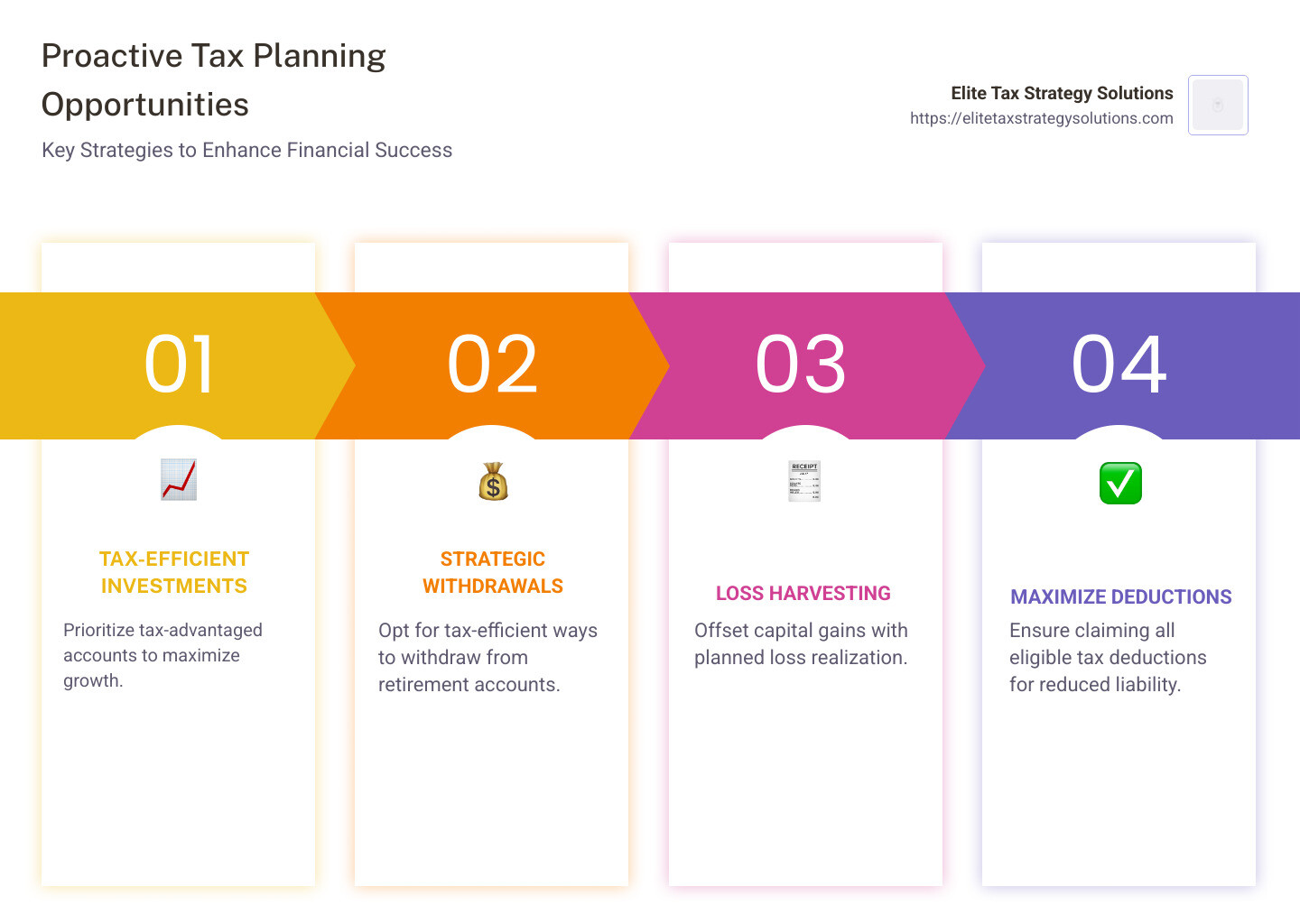
- Tax-Efficient Investment: Prioritize investments that offer tax advantages.
- Strategic Withdrawals: Plan tax-efficient ways to withdraw from retirement accounts.
- Loss Harvesting: Offset capital gains with strategic loss realization.
- Maximize Deductions: Ensure you’re claiming all relevant tax deductions.
By embracing a proactive approach to your tax strategy, you prepare yourself for smoother financial success, regardless of what changes come your way.
My name is David Fritch, and I have over 40 years of experience in proactive tax planning and finance. With this expertise, I’ve guided countless individuals and businesses through complex tax regulations to optimize their financial outcomes.
Easy proactive tax planning opportunities glossary:
– benefits of tax planning
– business tax savings strategies
– tax planning for high earners
Understanding Your Tax Bracket
The U.S. operates under a progressive tax system, which means the more you earn, the more you pay in taxes. This system is designed to ensure that those with higher incomes contribute a larger share to the nation’s revenue.
Tax Brackets Explained
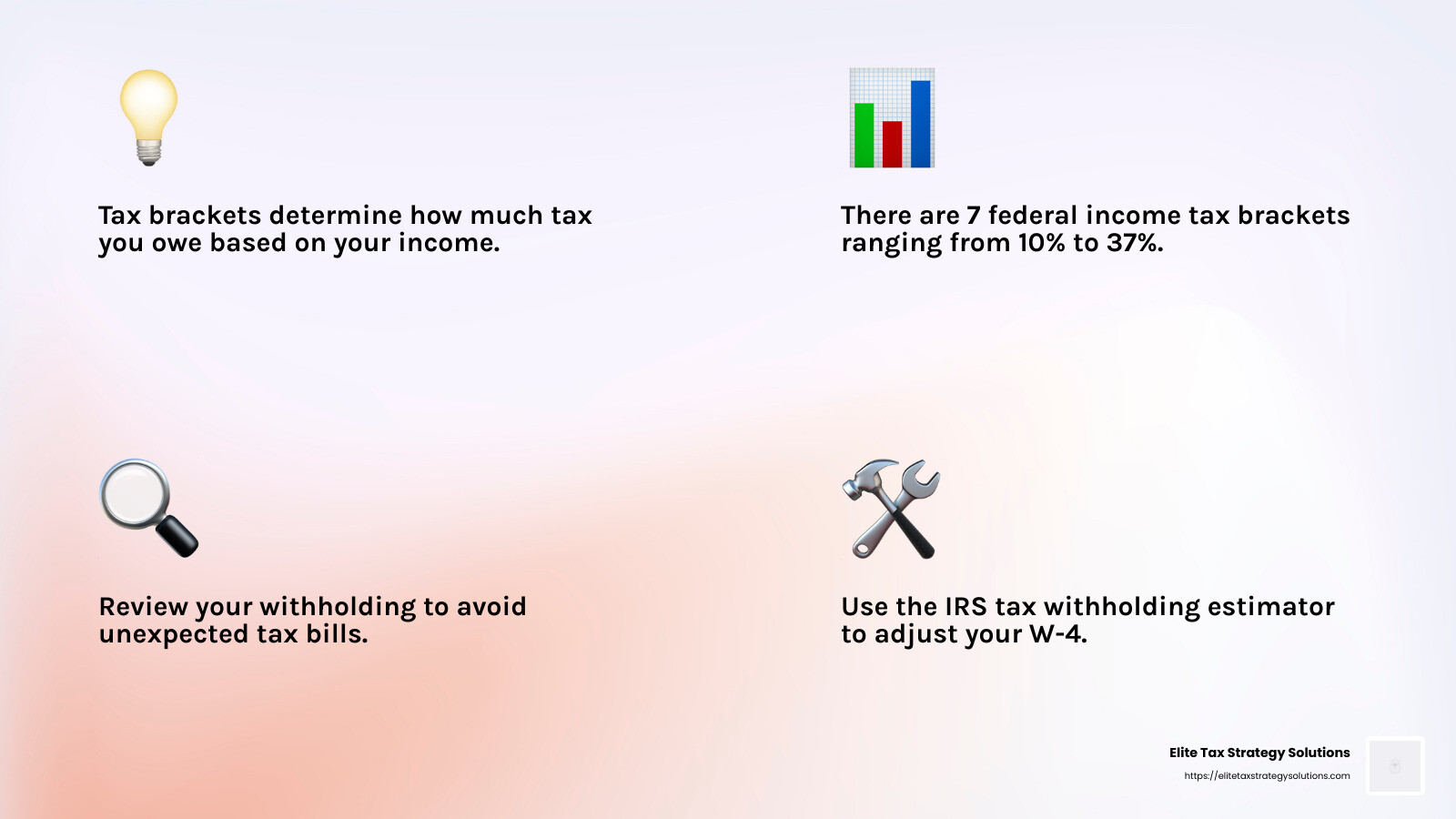
There are currently seven federal income tax brackets: 10%, 12%, 22%, 24%, 32%, 35%, and 37%. Your tax bracket is determined by your filing status and income level. Understanding where you fall can help you make informed decisions about your finances.
For example, if you’re on the cusp of moving into a higher tax bracket, you might consider strategies to manage your taxable income. This way, you’re not surprised by a higher tax bill when filing time comes around.
Withholding Strategies
To avoid a large tax bill or refund, it’s crucial to review your withholding amounts. This involves checking your pay statements to see how much your employer is withholding from your paycheck.
Tip: If you consistently receive a large refund, you might be withholding too much. Conversely, if you owe a significant amount, you might not be withholding enough.
The IRS offers a tax withholding estimator, a useful tool to help you adjust your withholding amounts. You can submit a new Form W-4 to your employer anytime to reflect these changes.
By mastering the art of proactive tax planning, you can ensure that your tax strategy aligns seamlessly with your financial goals. This approach not only optimizes your tax situation but also paves the way for a more secure financial future.
Proactive Tax Planning Opportunities
Proactive tax planning is all about seizing opportunities to reduce your tax liability while aligning with your financial goals. Let’s explore some strategies that can make a real difference.
Tax-Saving Strategies
1. Maximize Retirement Contributions:
Contributing to retirement accounts like a 401(k) or an IRA can significantly reduce your taxable income. For 2023, you can contribute up to $22,500 to a 401(k), with an additional $7,500 if you’re 50 or older. These contributions not only lower your taxable income but also offer the advantage of tax-deferred growth.
2. Tax-Loss Harvesting:
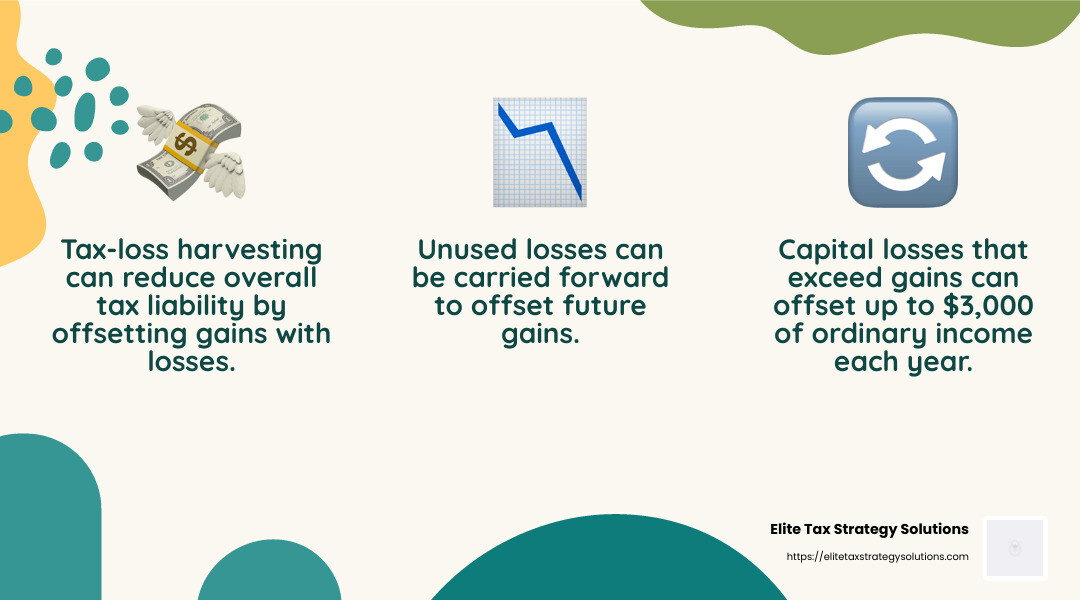
This strategy involves selling investments at a loss to offset gains in other areas. By doing so, you can reduce your overall tax liability. If your losses exceed your gains, you can use up to $3,000 of those losses to offset ordinary income. Any remaining losses can be carried forward to future tax years.
3. Use Deductions and Credits:
Deductions like mortgage interest, medical expenses, and charitable donations can lower your taxable income. Credits, such as the Child Tax Credit or the Earned Income Tax Credit, directly reduce the amount of tax you owe. It’s crucial to understand which deductions and credits you’re eligible for and how they can impact your tax bill.
Aligning with Financial Goals
1. Asset Location:
Place tax-efficient investments in taxable accounts and tax-inefficient ones in tax-advantaged accounts. For instance, high-return investments should ideally be in accounts where they can grow tax-free, like a Roth IRA.
2. Estate Planning:
If passing wealth to heirs is part of your financial goals, consider strategies like gifting or setting up trusts. These can help minimize the tax burden on your estate and ensure more of your wealth goes to your loved ones.
3. Charitable Contributions:
If philanthropy is important to you, donating appreciated assets can provide a dual benefit: a charitable deduction and avoidance of capital gains tax on the donated asset.
Stay Informed and Adapt
Tax laws change frequently, and what worked last year may not be beneficial this year. Regularly reviewing your tax strategy with a professional can help you stay ahead. This ensures you are always making the most of proactive tax planning opportunities.
By integrating these strategies into your financial planning, you can effectively manage your tax liability and work toward achieving your long-term financial goals.
Next, we’ll explore strategies to reduce taxable income, including the benefits of contributing to retirement accounts and leveraging tax-loss harvesting.
Strategies to Reduce Taxable Income
Reducing taxable income is a key part of proactive tax planning. Here are some effective strategies to help you keep more of your hard-earned money.
401(k) Contributions
Maximize Your Retirement Savings
Contributing to a 401(k) is one of the simplest ways to reduce taxable income. For 2023, you can contribute up to $22,500, and if you’re 50 or older, you can add an extra $7,500 as a catch-up contribution. These contributions are made pre-tax, which means they lower your taxable income for the year. Plus, the money grows tax-deferred, giving you a double benefit.
Tax-Loss Harvesting
Offset Gains with Losses
Tax-loss harvesting is a strategy where you sell investments that have lost value to offset gains from other investments. This can reduce your overall tax liability. If your losses exceed your gains, you can use up to $3,000 to offset ordinary income, and any leftover losses can be carried forward to future years.
Deductions and Credits
Leverage Every Opportunity
Deductions and credits are powerful tools for reducing taxable income. Here are some to consider:
-
Deductions: These include mortgage interest, state and local taxes, and medical expenses that exceed 7.5% of your adjusted gross income. Keeping track of these expenses can help you decide whether to itemize or take the standard deduction.
-
Credits: Unlike deductions, credits directly reduce the amount of tax you owe. Popular credits include the Child Tax Credit and the Earned Income Tax Credit. Be sure to check your eligibility to maximize your tax savings.
Example: If you have $5,000 in mortgage interest and $2,000 in charitable donations, these deductions can lower your taxable income significantly. Meanwhile, a $2,000 tax credit directly reduces your tax bill by $2,000.
By applying these strategies, you can effectively manage your taxable income and align your tax planning with your financial goals. In the next section, we’ll discuss the importance of withholding and estimated payments to ensure you’re on track with your tax obligations.
Importance of Withholding and Estimated Payments
Understanding and managing your tax withholding and estimated payments is crucial in proactive tax planning. Let’s explore how these elements can help you avoid surprises during tax season.
IRS Withholding Estimator
Tailor Your Withholding Amounts
The IRS withholding estimator is a useful tool to ensure you’re withholding the right amount from your paycheck. By inputting your details, you can see if you’re on track to meet your tax obligations without overpaying or underpaying. This tool helps you adjust withholding to avoid a large tax bill or a hefty refund, which is essentially an interest-free loan to the government.
Estimated Tax Payments
Stay Ahead with Quarterly Payments
If you earn income not subject to withholding, like freelance or investment income, you might need to make estimated tax payments. These are typically due quarterly and help you avoid penalties for underpayment. If you’re self-employed or have significant non-wage income, estimated payments are essential to manage your tax liability throughout the year.
Form W-4
Adjust Your Withholding Anytime
Form W-4 is the form you submit to your employer to indicate how much tax to withhold from your paycheck. You can update it anytime to reflect changes in your financial situation, like marriage, a new job, or additional income streams. Adjusting your W-4 can help you better manage your withholding and align it with your financial goals.
By understanding and utilizing these tools and strategies, you can take control of your tax situation, ensuring you’re neither overpaying nor underpaying throughout the year. In the next section, we’ll dive into the differences between itemizing deductions and taking the standard deduction to further optimize your tax strategy.
Itemizing vs. Standard Deduction
When tax season rolls around, deciding between itemizing deductions and taking the standard deduction is a crucial step in proactive tax planning. Each option has its benefits, and understanding them can help reduce your tax bill.
Standard Deduction
A Simple Option with a Fixed Amount
The standard deduction is a fixed dollar amount that reduces the income you’re taxed on. It’s straightforward, requires no record-keeping, and is adjusted annually for inflation. The amount varies based on your filing status—single, married filing jointly, or head of household. For many, the simplicity and ease of the standard deduction make it the go-to choice.
Itemizing Deductions
Maximize Deductions with Eligible Expenses
Itemizing allows you to deduct specific expenses you’ve incurred throughout the year. These can include:
- Mortgage interest
- State and local taxes
- Property taxes
- Charitable donations
- Medical and dental expenses (exceeding 7.5% of your adjusted gross income)
If your deductible expenses add up to more than the standard deduction, itemizing could lower your taxable income significantly. This requires keeping detailed records and receipts, but the potential tax savings can be worth the effort.
Itemizing Benefits
Tailor Your Deductions to Your Situation
One of the main benefits of itemizing is the ability to tailor deductions to your specific expenses. For example, if you’ve had high medical bills or made substantial charitable contributions, itemizing can provide a greater tax benefit than the standard deduction.
Strategy Tip: Bunching Deductions
A savvy strategy is “bunching” deductions. This means timing your expenses, like medical procedures or charitable donations, to fall within the same tax year. By concentrating expenses, you might exceed the standard deduction threshold, making itemizing more advantageous.
Choosing between itemizing and the standard deduction depends on your personal financial circumstances. By evaluating your expenses and understanding the benefits of each option, you can make an informed decision that aligns with your financial goals. In the next section, we’ll address some frequently asked questions to further clarify proactive tax planning.
Frequently Asked Questions about Proactive Tax Planning
What does it mean to be proactive in tax?
Being proactive in tax planning means continuously reviewing and adjusting your financial strategies to minimize your tax liability. It involves looking ahead and making smart decisions throughout the year, rather than just during tax season. This approach helps you identify tax-saving opportunities and align your tax plan with your financial goals. For example, staying informed about changes in tax laws can help you take advantage of deductions and credits you might otherwise miss.
What is an example of a tax planning strategy?
One effective tax planning strategy is contributing to an Individual Retirement Account (IRA). By doing so, you can benefit from tax-deferred growth. This means the money you contribute can grow without being taxed until you withdraw it, typically during retirement. This not only reduces your taxable income now but also allows your investments to compound over time. Another strategy is tax-loss harvesting, where you sell investments at a loss to offset gains, reducing your tax bill.
Why do tax professionals have a perfect opportunity to perform financial planning for their clients?
Tax professionals meet with their clients at least once a year, which provides a perfect opportunity to engage in broader financial planning. During these annual meetings, they can review a client’s entire financial picture, including investments, retirement plans, and estate considerations. By doing so, they can identify potential tax savings and help clients make informed decisions that align with their long-term financial goals. This holistic approach not only optimizes the client’s tax position but also improves their overall financial stability.
In the next section, we’ll dig into the importance of withholding and estimated payments, providing you with practical tips to manage your tax obligations effectively.
Conclusion
At Elite Tax Strategy Solutions, we understand that every client’s financial situation is unique. That’s why we offer personalized tax planning services designed to maximize your tax savings while ensuring your financial stability. Our proactive approach means we don’t just look at the numbers during tax season; we work with you year-round to identify and capitalize on proactive tax planning opportunities.
By integrating tax planning with your overall financial strategy, we help you steer the complexities of tax regulations and adapt to changes in tax laws. This comprehensive approach ensures that you can achieve your long-term financial goals without unexpected tax surprises.
Whether you’re a high-income earner or a small business owner, our team of seasoned professionals is here to guide you. We offer over 100 custom tax-saving strategies to help you optimize your tax position and secure a stable financial future.
Ready to take control of your financial destiny? Explore our Innovative Tax Planning services and find how we can help you seize the day with proactive tax planning.