
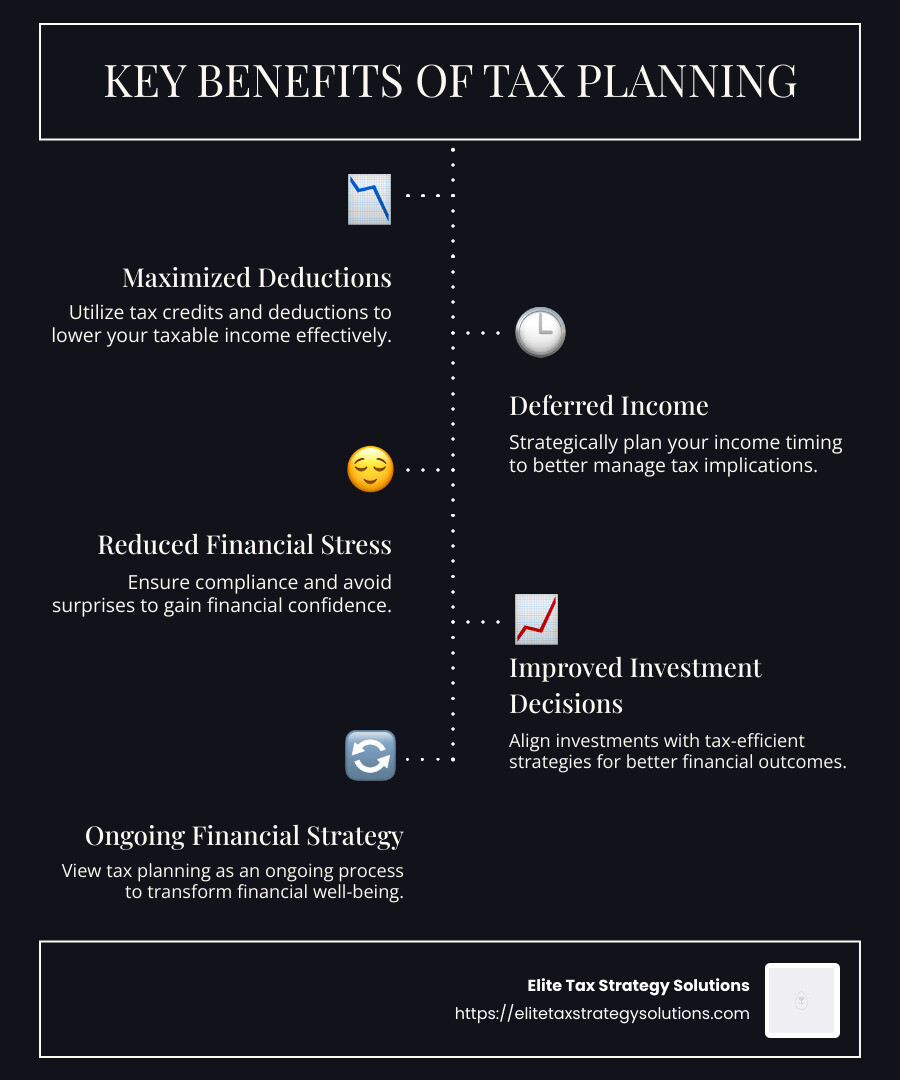
Benefits of tax planning aren’t just about reducing what you owe; it’s about crafting a financial strategy that works in your favor. By understanding the benefits, you’ll find opportunities to maximize deductions, minimize liabilities, and even improve your financial security. Here’s a quick look at key benefits of tax planning:
- Maximized deductions and credits: Use available options to lower your taxable income.
- Deferred income: Strategically time your income to manage tax implications.
- Reduced financial stress: Gain confidence by ensuring compliance and avoiding surprises.
- Improved investment decisions: Align your investments with tax-efficient strategies for better outcomes.
These points highlight how tax planning is a formidable tool in creating a robust financial strategy. It’s more than just a yearly chore—it’s an ongoing process that can transform your financial well-being.
My name is David Fritch. With 40 years of experience in tax law and financial planning, I understand the deep benefits of tax planning. My expertise lies in guiding high-income earners and small business owners to strategically reduce their tax burdens while boosting financial health. Ready to dig into the details? Let’s explore how tax planning can work for you.
Understanding Tax Planning
Tax planning is like crafting a roadmap for your financial journey. It’s about making informed financial decisions that consider tax implications, helping you reach your goals with fewer bumps along the way.
Tax Implications
Every financial choice you make can have tax consequences. Whether it’s buying a house, investing in stocks, or even choosing a retirement plan, understanding these implications is crucial. For instance, contributing to a traditional IRA can lower your taxable income, reducing your tax liability for the year. Similarly, investing in tax-advantaged accounts like Health Savings Accounts (HSAs) can offer tax-deductible contributions and tax-free withdrawals for qualified expenses.
Financial Decisions
Tax planning helps you make smarter financial decisions. By analyzing your current financial situation and future goals, you can align your actions to minimize taxes. Consider timing your income and expenses strategically. For example, deferring a bonus to the next tax year might keep you in a lower tax bracket this year. This foresight can save you money and help you plan for major life events like buying a home or retiring.
Tax Liability
Your tax liability is essentially the total amount of tax you owe to the government. Effective tax planning aims to reduce this liability as much as possible. This could mean maximizing deductions, utilizing tax credits, or even considering the tax impact of different investment strategies. Tax-loss harvesting is one technique where you sell investments at a loss to offset gains, reducing your overall tax bill.
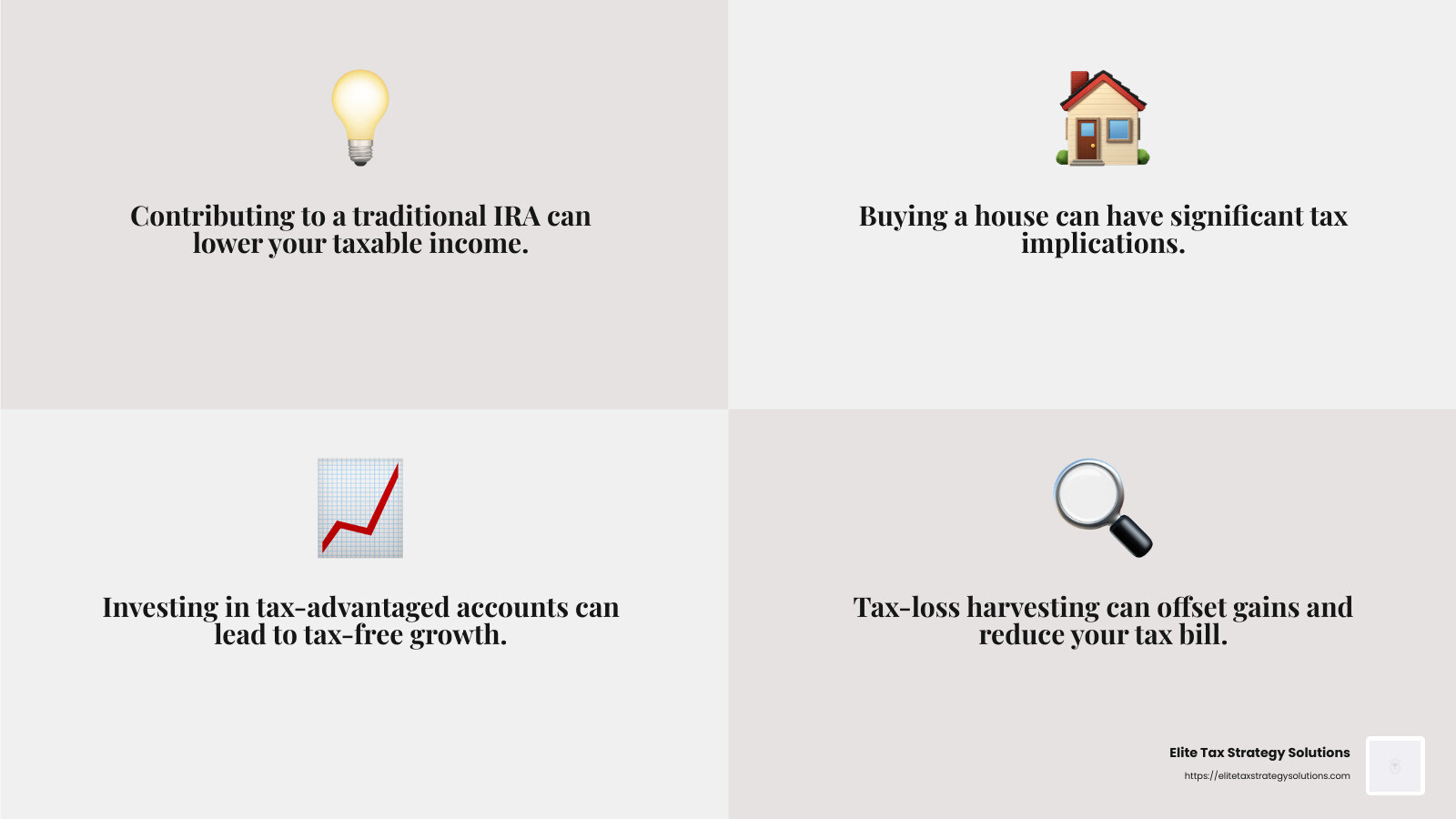
In summary, understanding tax planning isn’t just about cutting your tax bill. It’s about making informed choices that support your broader financial strategy. By proactively managing your tax implications, you can achieve greater financial stability and peace of mind.
This understanding paves the way for maximizing your credits and deductions, which we’ll explore next.
Benefits of Tax Planning
Tax planning offers a range of hidden benefits that can significantly improve your financial well-being. It’s not just about paying less tax; it’s about making your money work smarter for you.
Maximize Deductions
Think of deductions as your secret weapon against high taxes. By maximizing deductions, you can lower your taxable income, which in turn reduces your tax liability. For example, if you have a home office, you might be eligible for a home office deduction, which can save you a significant amount of money. Similarly, contributions to retirement accounts like a 401(k) or IRA are excellent ways to deduct income.
Imagine you’re a freelancer who works from home. You can deduct expenses related to your home office, such as a portion of your rent or mortgage, utilities, and even office supplies. This not only reduces your taxable income but also puts more money back in your pocket.
Defer Income
Timing is everything when it comes to taxes. By strategically deferring income, you can keep your taxable income in a lower bracket. This might involve delaying a year-end bonus or postponing the sale of an investment until the next tax year.
Consider this: If you expect to be in a lower tax bracket next year, deferring income can mean paying less tax overall. It’s like getting a discount on your taxes just by planning ahead.
Be Tax-Efficient
Being tax-efficient means making decisions that minimize your taxes over time. This includes choosing investments that are taxed at lower rates or structuring your finances to take advantage of tax benefits.
For instance, investing in municipal bonds can provide tax-free interest income, which is particularly beneficial if you’re in a high tax bracket. Similarly, tax-loss harvesting allows you to offset gains with losses, reducing your overall tax bill.
Incorporating these strategies into your financial plan can help you achieve your financial goals faster. By maximizing deductions, deferring income, and being tax-efficient, you can reduce your tax burden and keep more of your hard-earned money.
This approach not only improves your financial stability but also sets the stage for more informed financial decision-making, which we’ll dig into next.
Maximize Your Credits and Deductions
When it comes to reducing your tax bill, tax credits and deductions are your best allies. They help lower the amount of tax you owe, but they work in slightly different ways. Let’s break it down.
Understanding Tax Credits
Tax credits are like golden tickets. They directly reduce the amount of tax you owe, dollar for dollar. So, if you owe $1,000 in taxes and have a $200 tax credit, your tax bill drops to $800. Pretty neat, right?
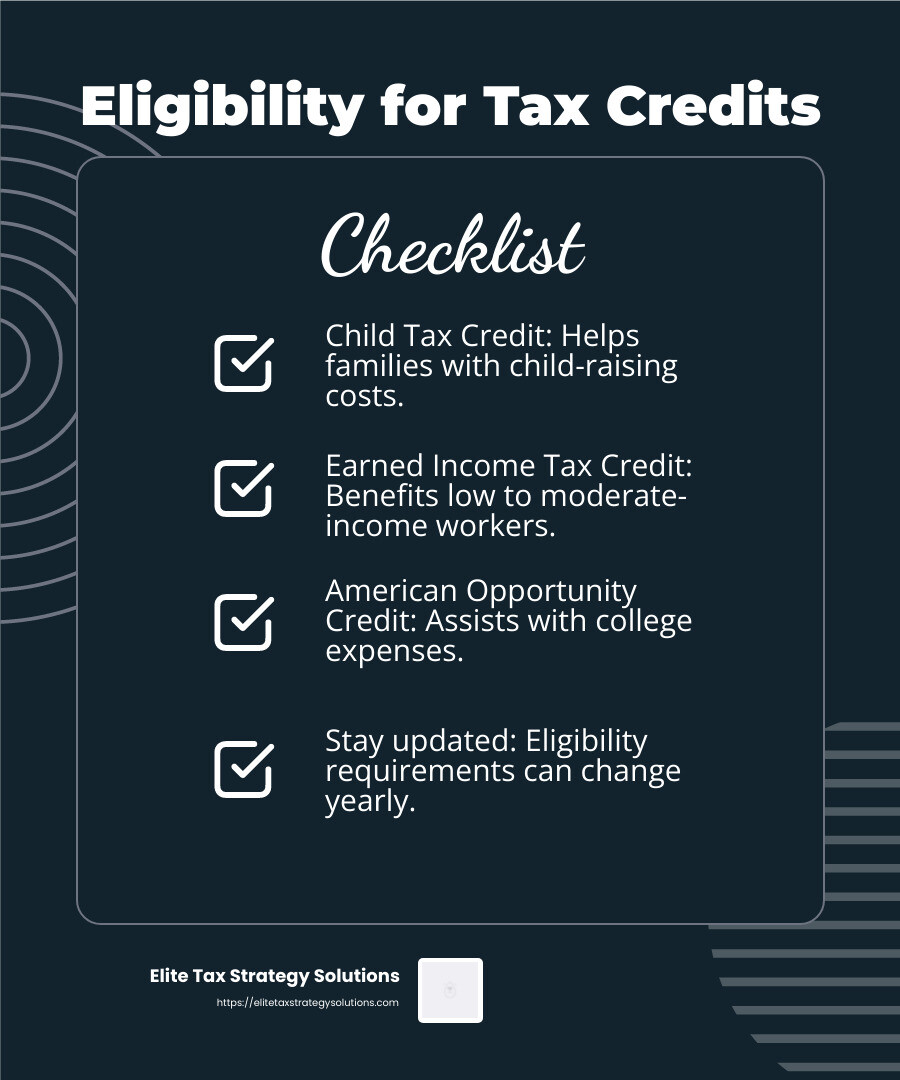
There are various tax credits available, each with its own eligibility requirements. Some popular ones include:
- Child Tax Credit: Helps families with the cost of raising children.
- Earned Income Tax Credit (EITC): Designed to benefit low to moderate-income workers.
- American Opportunity Credit: Assists with college expenses.
To qualify, you need to meet specific criteria, such as income limits or filing status. It’s crucial to check the requirements each year because they can change based on tax law updates.
The Power of Tax Deductions
While tax credits reduce your tax bill directly, tax deductions work by lowering your taxable income. This means you pay tax on a smaller amount of income.
There are two main types of deductions: standard and itemized.
- Standard Deduction: A fixed amount you can subtract from your income. For example, in 2024, it’s $14,600 for single filers.
- Itemized Deductions: These include expenses like mortgage interest, medical expenses, and charitable donations. You list these individually on your tax return.
Choosing between the standard deduction and itemizing depends on which option gives you the most significant tax benefit. If your itemized expenses exceed the standard deduction, it’s usually better to itemize.
Meeting Eligibility Requirements
To take advantage of these credits and deductions, you must meet certain eligibility requirements. This could mean:
- Having a qualifying child for the Child Tax Credit.
- Falling within specific income brackets for the EITC.
- Providing documentation for itemized deductions, like receipts for medical expenses or proof of charitable donations.
It’s essential to stay informed about these requirements to ensure you’re not missing out on valuable tax savings.
By understanding and maximizing your tax credits and deductions, you can significantly lower your tax liability. This not only keeps more money in your pocket but also allows you to allocate resources towards your financial goals.
In the next section, we’ll explore how strategic asset allocation can further improve your tax efficiency and overall financial strategy.
Strategic Asset Allocation
Strategic asset allocation plays a crucial role in enhancing your tax efficiency and overall financial strategy. It’s all about how you spread your investments across different assets to minimize taxes and maximize returns.
Investment Strategies
The right investment strategies can help you grow your wealth while keeping your tax bill in check. Here are some key approaches:
-
Diversification: Spread your investments across various asset classes like stocks, bonds, and real estate. This not only reduces risk but also allows for tax-efficient growth.
-
Holding Period: Consider holding investments for more than a year to benefit from long-term capital gains tax rates, which are generally lower than short-term rates.
-
Tax-Loss Harvesting: This involves selling investments at a loss to offset gains elsewhere, reducing your taxable income. It’s a smart way to manage your investment portfolio.
Tax-Advantaged Accounts
Using tax-advantaged accounts is a powerful way to lower your tax liability. These accounts offer special tax benefits that can help you save more:
-
401(k) and Traditional IRAs: Contributions to these accounts are tax-deductible, reducing your taxable income. Plus, the money grows tax-deferred until you withdraw it in retirement.
-
Roth IRAs: While contributions are made with after-tax dollars, withdrawals in retirement are tax-free. This can be a great strategy if you expect to be in a higher tax bracket later.
-
Health Savings Accounts (HSAs): These accounts offer triple tax benefits: contributions are tax-deductible, growth is tax-free, and withdrawals for medical expenses are tax-free.
Managing Taxable Income
A key goal of strategic asset allocation is to manage and potentially reduce your taxable income. Here’s how you can do it:
-
Defer Income: Delay receiving certain types of income, like bonuses or capital gains, to a future tax year when you might be in a lower tax bracket.
-
Municipal Bonds: Invest in these to earn tax-free interest income at the federal level. They can be especially beneficial if you’re in a high tax bracket.
-
Qualified Dividends: These are taxed at the lower capital gains rate, so prioritize investments that pay qualified dividends.
By implementing these strategies, you can effectively manage your taxable income and take advantage of the benefits of tax planning. This not only helps you keep more of your hard-earned money but also supports long-term financial growth.
In the next section, we’ll dig into how improved financial decision-making can further improve your tax strategy and future planning.
Improved Financial Decision Making
Improved financial decision making is a key benefit of tax planning. When you understand the tax implications of your choices, you can make smarter decisions about your money.
Financial Strategizing
With tax planning, you can create a financial strategy that aligns with your long-term goals. This means thinking ahead about how your financial moves today will affect your taxes tomorrow. Consider these strategies:
-
Budgeting with Taxes in Mind: Plan your budget to account for tax liabilities. This helps you save for tax payments and avoid surprises.
-
Investment Choices: Choose investments not just for their potential returns, but also for their tax efficiency. This can mean opting for tax-advantaged accounts or investments that offer favorable tax treatment.
Tax Implications
Understanding tax implications is crucial. Every financial decision, from buying a house to selling stocks, can affect your tax bill. Here’s how to stay informed:
-
Consult with Experts: Regularly meet with a tax advisor to understand how changes in tax laws might impact your financial plans.
-
Stay Updated: Keep up with tax law changes that could affect your situation. This ensures that your financial decisions remain tax-efficient.
Future Planning
Planning for the future is easier when you have a clear picture of your tax situation. With proper tax planning, you can:
-
Prepare for Retirement: Make the most of retirement accounts like 401(k)s and IRAs to ensure a comfortable future. Contributions to these accounts can lower your taxable income now, while providing for the future.
-
Set Long-Term Goals: Whether it’s buying a home or starting a business, understanding your tax situation helps you set realistic financial goals.
-
Estate Planning: Ensure that your estate plan minimizes taxes for your heirs, preserving more of your wealth for future generations.
By integrating tax planning into your financial decision-making, you can steer complex financial landscapes with confidence and clarity. This approach not only optimizes your current finances but also sets the stage for a secure financial future.
Next, we’ll explore some frequently asked questions about tax planning, shedding light on its benefits and why it might be a good fit for you.
Frequently Asked Questions about Tax Planning
What are the benefits of a tax planner?
A tax planner can be your guide to achieving a tax-efficient financial life. They help you steer the complex world of taxes, ensuring you make the most of available deductions and credits. This can result in significant savings, leaving more money in your pocket.
Here’s what a tax planner can do for you:
- Maximize Deductions: Identify all eligible deductions to reduce your taxable income.
- Defer Income: Strategically delay income to lower your tax bracket for the current year.
- Avoid Pitfalls: Stay clear of common tax mistakes that could lead to penalties.
Do I need tax planning?
If you want to minimize tax liability and keep more of your hard-earned money, then yes, you probably do need tax planning. Whether you’re an individual, a business owner, or planning for retirement, tax planning can help you understand the tax implications of your financial decisions.
Consider these scenarios:
- Life Changes: Major life events like marriage, a new job, or having a child can affect your tax situation.
- Investment Growth: As your investments grow, so do the potential taxes. Planning helps you manage these efficiently.
- Business Ownership: If you own a business, tax planning can optimize your operations and reduce your tax burden.
What is a tax planning benefit?
A core benefit of tax planning is the ability to maximize deductions and defer income, which can lower your taxable income and, consequently, your tax bill. This strategic approach ensures that every dollar you earn works harder for you.
Here’s how it works:
- Tax-Efficient Investments: Choose investments that align with your tax strategy, such as those offering tax-free growth or income.
- Retirement Contributions: Contribute to retirement accounts to reduce current taxable income and save for the future.
- Smart Spending: Plan your expenditures to take advantage of deductions and credits.
By understanding these benefits, you can make informed decisions that support your financial goals and improve your overall financial plan.
In the next section, we’ll wrap up with some final thoughts on how proactive tax planning can lead to financial stability and success.
Conclusion
In today’s world, achieving financial stability is more crucial than ever. Proactive tax planning plays a vital role in this journey. By understanding and leveraging the benefits of tax planning, you can position yourself or your business for long-term success.
At Elite Tax Strategy Solutions, we specialize in personalized tax planning for high earners and closely held businesses. Our unique approach focuses on maximizing tax savings while ensuring compliance with ever-changing tax laws. We believe that a thorough, proactive strategy not only reduces tax liability but also supports broader financial goals.
Here’s why proactive tax planning is essential:
- Financial Stability: By minimizing taxes, you retain more of your income, which can be reinvested or saved for future needs.
- Informed Decision-Making: A clear understanding of tax implications helps you make smarter financial choices, whether it’s about investments, retirement, or business growth.
- Peace of Mind: Knowing that you’re compliant and optimizing your tax situation reduces stress and allows you to focus on what truly matters.
By integrating tax planning into your overall financial strategy, you can achieve a level of financial stability that supports your lifestyle and future aspirations. Let us help you steer the complexities of the tax code and create a plan that aligns with your unique circumstances.
For more insights and to start your journey towards financial optimization, visit our Innovative Tax Planning page. Together, we can work towards a brighter financial future.