In today’s business world, understanding business tax reduction is crucial for business owners looking to maximize their profits and minimize their financial obligations. At its core, business tax reduction involves strategies that leverage tax credits and deductions, two powerful tools that can significantly lower your overall tax bill. Here’s a quick summary to help you get started:
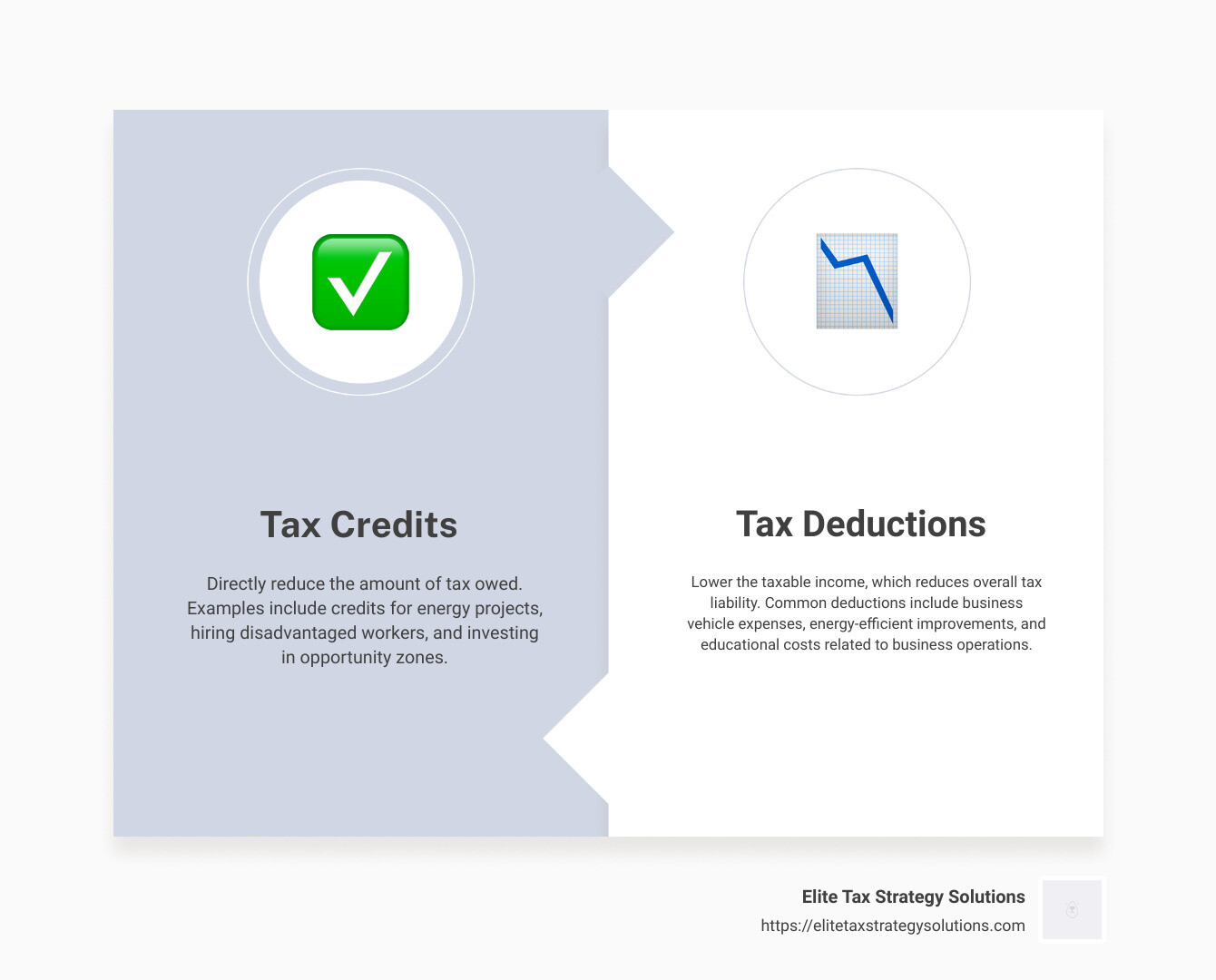
- Tax Credits: Reduce the amount of tax you owe directly. Useful credits include those for energy projects, hiring disadvantaged workers, and investing in opportunity zones.
- Tax Deductions: Lower your taxable income, which can, in turn, reduce your overall tax liability. Common deductions include business-related vehicle expenses, energy-efficient improvements, and educational costs pertinent to your business operations.
Understanding how these elements work together is essential to developing a comprehensive tax strategy that aligns with your business goals.
As a small business owner or high-income earner navigating complex tax regulations, you need a roadmap to reduce stress and optimize your financial outcomes. I’m David Fritch, with 40 years of experience in tax strategy and advising business owners like you. I specialize in business tax reduction, employing targeted solutions to ensure compliance while maximizing your savings.
Handy business tax reduction terms:
– tax planning for real estate investors
– tax planning for small businesses
Understanding Business Tax Credits
Business tax credits are a powerful tool for reducing your tax liability. Unlike deductions, which lower your taxable income, credits directly reduce the amount of tax you owe. Let’s explore how these credits work, focusing on key areas like economic development, energy projects, and the Work Opportunity Tax Credit (WOTC).
1. Tax Credits for Economic Development
Tax credits can spur economic development by encouraging businesses to invest in specific areas or activities. For instance, the Opportunity Zones program allows companies to defer taxes on eligible gains when they invest in economically distressed areas. This not only benefits the businesses through tax savings but also stimulates growth in communities that need it most.
2. Energy Project Tax Credits
Businesses investing in energy projects can access various tax credits aimed at promoting sustainability. For example, the Energy Efficient Home Credit offers up to $5,000 for contractors building energy-efficient homes. Similarly, companies that invest in advanced energy projects may qualify for credits through the Department of Energy. These incentives help reduce the environmental impact while lowering the tax burden.
3. Work Opportunity Tax Credit (WOTC)
The WOTC encourages employers to hire individuals from certain targeted groups who face barriers to employment. This includes veterans, ex-felons, and long-term unemployed individuals. Employers can receive a credit of up to 40% of the first $6,000 paid to these employees, making it a win-win situation for both businesses and the community.
How to Claim These Credits
To claim these credits, businesses must file the appropriate forms with their tax return. Often, this includes Form 3800, the General Business Credit form, which aggregates all eligible credits. Remember to check the IRS website for the most current forms and instructions, as these can change from year to year.
Understanding and utilizing these tax credits can significantly reduce your business’s tax liability, freeing up resources to reinvest in your business or community. Up next, we’ll dig into how to maximize business tax deductions to further improve your tax strategy.
Maximizing Business Tax Deductions
When it comes to business tax reduction, deductions are your best friend. They lower your taxable income, which in turn reduces the amount of tax you owe. Let’s break down some key areas where you can maximize deductions: taxable income, deductible expenses, home office, and vehicle expenses.
Taxable Income and Deductible Expenses
Your taxable income is what remains after subtracting all eligible deductions from your gross income. By identifying and claiming all possible deductions, you effectively lower your taxable income and, consequently, your tax bill.
- Office Supplies: Pens, paper, and other office essentials.
- Utilities: Electricity, water, and internet for your business.
- Travel: Business-related travel costs like airfare and lodging.
- Legal and Professional Fees: Payments to accountants or lawyers for business-related services.
Home Office Deduction
If you use part of your home exclusively for business, you can claim a home office deduction. There are two ways to calculate this:
-
Simplified Method: Deduct $5 per square foot of your home used for business, up to 300 square feet.
-
Standard Method: Calculate the percentage of your home used for business and apply this percentage to your home’s expenses, like mortgage interest or rent, utilities, and repairs.
To qualify, your home office must be used regularly and exclusively for business, and it must be your principal place of business.

Vehicle Expenses
If you use your car for business, you can deduct vehicle expenses. There are two methods to calculate this deduction:
-
Standard Mileage Rate: For 2024, the rate is $0.67 per mile. Just keep track of your business miles and multiply by this rate.
-
Actual Expenses: Deduct a percentage of your total car expenses (like gas, maintenance, and insurance) based on the percentage of miles driven for business.
Remember to keep detailed records of your trips, including dates, mileage, and purpose, to substantiate your claims.
By understanding and optimizing these deductions, you can significantly lower your taxable income and thus your tax liability. Next, we’ll explore top strategies for business tax reduction, including the Qualified Business Income Deduction and bonus depreciation.
Top Strategies for Business Tax Reduction
Reducing your business tax bill doesn’t have to be a mystery. Let’s explore some powerful strategies that can help you achieve significant business tax reduction: the Qualified Business Income Deduction, Section 179 deduction, and bonus depreciation.
Qualified Business Income Deduction (QBID)
This deduction is a game-changer for many small business owners. The QBID allows eligible businesses to deduct up to 20% of their qualified business income (QBI). This is especially beneficial for “pass-through” entities like sole proprietorships, partnerships, and S corporations.
Who Benefits?
- Pass-through Businesses: These include sole proprietors, partners in partnerships, and S corporation shareholders.
- Income Thresholds: The deduction may be limited based on your income level and business type.
To make the most of this deduction, consult with a tax professional to ensure you meet all requirements and maximize your savings.
Section 179 Deduction
Investing in your business can lead to immediate tax benefits. The Section 179 deduction allows you to deduct the full purchase price of qualifying equipment and software purchased or financed during the tax year.
Key Points:
- Limit: For 2024, the maximum deduction is $1,160,000.
- Qualifying Assets: Includes machinery, vehicles, computers, and office furniture.
- Usage: The equipment must be used for business more than 50% of the time.
This deduction can be a substantial boon for businesses looking to upgrade or expand their operations.
Bonus Depreciation
Bonus depreciation is another method to write off the cost of business assets faster. Unlike Section 179, there’s no spending limit, and it can be used for both new and used assets.
How It Works:
- Percentage: For 2024, businesses can deduct 80% of the cost of eligible assets in the first year.
- Eligible Assets: Includes machinery, equipment, and even certain types of buildings.
- Stacking: You can use bonus depreciation alongside Section 179 to maximize your tax savings.
This approach is especially useful for businesses making significant capital investments.
By leveraging these strategies, you can effectively reduce your taxable income and keep more money in your business. In the next section, we’ll answer some frequently asked questions about business tax reduction, including how to reduce taxable income and the specifics of the 20% tax deduction for small businesses.
Frequently Asked Questions about Business Tax Reduction
How can I reduce my business taxable income?
Reducing your business taxable income involves using a variety of tax-saving strategies. One effective method is to contribute to retirement plans. Contributions to plans like a SEP IRA or SIMPLE IRA for yourself and your employees can be deducted from your business income, lowering your taxable income.
Another strategy is to work closely with a certified public accountant (CPA). A CPA can help identify deductible expenses and ensure you’re taking full advantage of available tax credits. They can also guide you in structuring your business to maximize tax benefits.
What is the 20% tax deduction for small businesses?
The 20% tax deduction, known as the Qualified Business Income Deduction (QBID), is a major benefit for small business owners. It allows eligible “pass-through” entities—such as sole proprietorships, partnerships, and S corporations—to deduct up to 20% of their qualified business income. This deduction can significantly lower your taxable income, but it comes with specific income thresholds and limitations based on your business type.
For example, if you own a small consultancy firm and your qualified business income is $100,000, you could potentially deduct $20,000, reducing the amount of income subject to taxation. It’s crucial to check with a tax advisor to see if your business qualifies.
How much can an LLC write-off?
An LLC can write off a variety of expenses, which can help alleviate financial strain. Some common deductions include:
-
Startup Expenses: You can deduct up to $5,000 in startup costs and $5,000 in organizational costs, provided your total startup expenses are under $50,000.
-
Operating Expenses: This includes costs like rent, utilities, and office supplies. These are deducted from your business income, reducing your taxable income.
-
Depreciation: LLCs can also take advantage of Section 179 and bonus depreciation to write off the cost of business assets.
Understanding these deductions and strategically using them can significantly reduce your business’s taxable income. Always consult with a CPA to ensure you’re maximizing these deductions and complying with tax regulations.
Conclusion
Proactive tax planning is not just about saving money—it’s about achieving financial stability and setting your business on a path to long-term success. At Elite Tax Strategy Solutions, we specialize in helping high earners and closely held businesses steer the complexities of tax regulations with ease.
Our approach focuses on maximizing tax savings while ensuring compliance. By integrating tax planning into your overall financial strategy, we help you make informed decisions that align with your broader financial goals. This means not only reducing your current tax liabilities but also positioning your business for future growth.
Consider our services as a way to take the stress out of tax season. With over 100 custom tax-saving strategies, our team of seasoned professionals will work with you to identify and implement the most effective solutions for your unique situation. Whether it’s leveraging the Qualified Business Income Deduction or exploring opportunities for bonus depreciation, we ensure you’re taking full advantage of every available benefit.
Partnering with us means more than just tax reduction; it means gaining a trusted advisor in your journey toward financial success. To learn more about how we can help you achieve your financial goals, visit our Comprehensive Financial Planning page.
The key to successful tax planning is not just about understanding the rules but about applying them strategically to your advantage. Let us help you open up the full potential of your business through effective tax planning.