
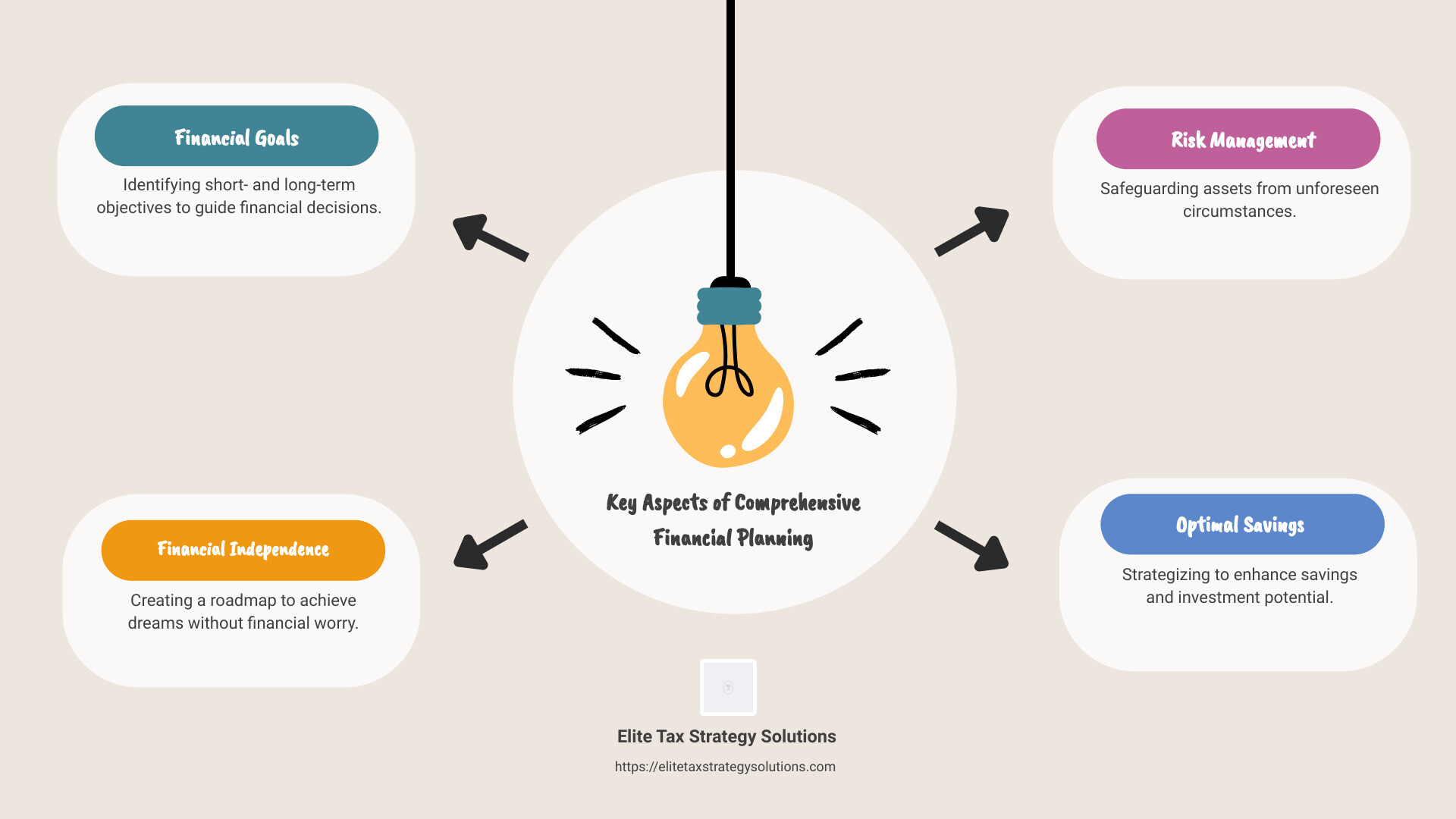
Comprehensive financial planning is the guide guiding individuals toward their financial aspirations and stability. If you’re curious about what it involves, here’s a quick snapshot:
- Financial goals: Identifying your short- and long-term financial objectives.
- Financial independence: Creating a roadmap to achieve your dreams without financial worry.
- Risk management: Safeguarding your assets from unforeseen circumstances.
- Optimal savings: Strategizing to improve savings and investment potential.
In today’s financial landscape, comprehensive financial planning is more important than ever. It’s not just about the wealth you amass, but about the confidence and peace of mind knowing your financial future is on track. From meticulous risk assessments to detailed retirement plans, having a structured approach is crucial for high-income earners and business owners who are navigating the complexities of modern-day finance.
I’m David Fritch. With decades of experience, including my tenure as a CPA and investment advisor, I bring an extensive understanding of comprehensive financial planning. Let’s dive into how this planning can be the cornerstone of your financial journey.
What is Comprehensive Financial Planning?
Comprehensive financial planning is like having a GPS for your financial journey. It’s a holistic approach that considers every aspect of your financial life. Imagine you’re building a house. You wouldn’t just focus on the roof or the walls. You’d look at the entire structure. That’s what comprehensive financial planning does for your finances.
A Holistic Approach
Instead of focusing on just one area, such as investments or savings, this type of planning covers everything. It includes cash flow analysis, retirement planning, risk management, investment management, tax management, and estate planning. Each component is like a piece of a puzzle, and when they fit together, they create a complete picture of your financial health.

Your Financial Roadmap
Think of comprehensive financial planning as your financial roadmap. It helps you set and reach your financial goals. Whether you’re planning for retirement, saving for a child’s education, or buying a home, this plan charts the course. It’s not just about reaching your destination but doing so in the most efficient way possible.
For example, a study by the CFA Institute found that a well-planned savings withdrawal strategy can extend a portfolio’s longevity by more than three years on average. This highlights the importance of having a solid plan in place.
Achieving Financial Independence
At its core, comprehensive financial planning aims to help you achieve financial independence. This means having the freedom to live the life you want without financial stress. It’s about making informed decisions that align with your values and goals. By understanding and managing your finances, you can make choices that support your lifestyle, now and in the future.
Comprehensive financial planning is about more than just money. It’s about creating a stable and secure future for you and your loved ones. By taking a holistic approach, you can build a financial foundation that supports your dreams and aspirations.
Next, we’ll explore the key components of comprehensive financial planning and how they work together to help you achieve your financial goals.
Key Components of Comprehensive Financial Planning
Understanding the key components of comprehensive financial planning is like assembling the essential parts of a well-oiled machine. Each piece has a role, and together, they keep your financial future running smoothly.
Cash Flow Analysis
Cash flow analysis is the backbone of any financial plan. It helps you understand where your money comes from and where it goes. By examining your income and expenses, you can identify areas to cut back and opportunities to save more. This analysis ensures you have enough cash on hand to meet your needs and invest in your future.
Retirement Planning
Retirement planning is about ensuring that you can maintain your lifestyle after you stop working. It involves setting goals for how much money you’ll need and creating a strategy to achieve those goals. This might include contributing to retirement accounts, like IRAs or 401(k)s, and planning for Social Security benefits. A solid retirement plan helps you enjoy your golden years without financial worry.
Risk Management
Risk management is like having insurance for your life. It involves identifying potential risks, such as health issues or accidents, and finding ways to mitigate them. This might include purchasing insurance policies or creating an emergency fund. Effective risk management protects you and your family from unforeseen events that could derail your financial plans.
Investment Management
Investment management is about growing your wealth through smart investments. It involves selecting the right mix of assets, such as stocks, bonds, and real estate, to achieve your financial goals. According to Investopedia, understanding your risk tolerance and asset allocation is crucial for a successful investment strategy. Regularly reviewing and adjusting your investments ensures they align with your objectives and market conditions.
Tax Management
Tax management is not just about filing your taxes. It’s about strategically planning to minimize your tax liabilities and maximize your income. This might involve taking advantage of deductions, credits, and tax-deferred investment accounts. Staying informed about tax law changes can help you adjust your strategies and keep more of your hard-earned money.
Estate Planning
Estate planning ensures that your assets are distributed according to your wishes after you pass away. It involves creating a will, setting up trusts, and naming beneficiaries. Estate planning can also include strategies to minimize estate taxes and provide for your loved ones. By planning ahead, you can ensure that your legacy is preserved and your family is taken care of.
These components work together to create a comprehensive financial plan that supports your goals and adapts to your life’s changes. By addressing each area, you can build a strong foundation for financial security and peace of mind.
Stay tuned as we dive into the steps to create your own comprehensive financial plan, guiding you through setting goals, auditing your financial situation, and more.
Steps to Create a Comprehensive Financial Plan
Creating a comprehensive financial plan can feel overwhelming, but breaking it down into steps makes it manageable. Here’s how to get started:
1. Set Clear Financial Goals
Start by asking yourself what you want to achieve financially. Do you want to buy a house, save for retirement, or pay off debt? Your financial goals should be specific, measurable, and time-bound. For example, “I want to save $20,000 for a house down payment in three years.”
2. Audit Your Financial Situation
Next, take a close look at your current financial situation. This means listing all your assets (like savings and property) and liabilities (such as loans and credit card debt). Understanding your net worth and spending habits is crucial. Create a personal financial inventory to get a clear picture of where you stand.
3. Maximize Savings
Once you know where you are financially, find ways to boost your savings. Implement the 50/30/20 budgeting rule, where 50% of your income goes to needs, 30% to wants, and 20% to savings and debt repayment. Building an emergency fund is also essential to cover unexpected expenses and avoid financial setbacks.
4. Develop Strategies
With your goals and financial audit in hand, it’s time to develop strategies to meet your objectives. This might include investing in retirement accounts, diversifying investments, or seeking tax-saving opportunities. Consider working with a financial planner to tailor strategies to your unique needs.
5. Monitor Progress
Finally, regularly review and adjust your financial plan. Life changes, and so should your strategy. Schedule periodic reviews to track your progress toward your goals and make necessary adjustments. This ensures you stay on track and adapt to any changes in your financial situation or goals.
By following these steps, you can build a robust comprehensive financial plan that evolves with you and supports your financial aspirations.
Benefits of Comprehensive Financial Planning
Comprehensive financial planning isn’t just about numbers. It’s about peace of mind, smart choices, and building a future you can rely on. Let’s explore the key benefits:
Financial Security
One of the top perks of comprehensive financial planning is financial security. By mapping out your financial future, you create a safety net against life’s uncertainties. Whether it’s a job loss, a medical emergency, or unexpected expenses, having a solid plan means you’re prepared. It’s like having a financial umbrella for those rainy days.
Stress Reduction
Money worries can be a major source of stress. But with a comprehensive plan, you can breathe easier. Knowing that you have a clear strategy to meet your goals—whether that’s paying off debt, saving for a big purchase, or planning for retirement—takes a huge weight off your shoulders. It’s about feeling confident and in control of your financial future.
Informed Decisions
A well-crafted financial plan empowers you to make informed decisions. By understanding your financial situation and goals, you can evaluate options and choose what’s best for you. This means less guesswork and more clarity. For instance, when deciding on an investment, you’ll know how it fits into your overall strategy, helping you avoid costly mistakes.
Optimal Savings
Effective financial planning helps you optimize your savings. By setting clear objectives and tracking your progress, you can ensure you’re saving enough to meet your future needs. This might mean adjusting your budget or finding new ways to save. The key is to make your money work for you, so you can achieve your dreams without sacrificing your lifestyle.
These benefits make comprehensive financial planning a valuable tool for anyone looking to secure their financial future. Whether you’re just starting out or nearing retirement, having a plan in place can make all the difference. Now, let’s move on to some common questions people have about comprehensive financial planning.
Frequently Asked Questions about Comprehensive Financial Planning
What is comprehensive financial planning?
Comprehensive financial planning is an all-encompassing approach to managing your financial life. It’s like a master plan that covers all the bases: from your day-to-day cash flow to your long-term retirement goals. Think of it as a financial roadmap that ties together all the interrelated aspects of your finances, ensuring nothing is left to chance.
It’s not just about saving or investing. It’s about looking at your entire financial life holistically. This means considering everything from tax strategies to estate planning. It’s about understanding how each piece affects the other and making sure they all work together smoothly.
How to write a comprehensive financial plan?
Creating a comprehensive financial plan involves a few key steps:
-
Set Clear Financial Goals: Start by defining what you want to achieve. Whether it’s buying a house, saving for retirement, or funding your child’s education, having clear goals gives you direction.
-
Track Your Money: Know where your money is going. Keep tabs on your income and expenses. This will help you identify areas where you can cut back and save more.
-
Budget for Emergencies: Life is unpredictable. An emergency fund can be your financial lifeline. Aim to save enough to cover 3-6 months of living expenses.
-
Audit Your Financial Situation: Take stock of what you have—your assets, liabilities, and net worth. This snapshot helps in crafting a plan that’s realistic and achievable.
-
Develop Strategies: Based on your goals and current situation, create strategies for saving, investing, and managing debt. Tailor these strategies to fit your unique needs.
-
Monitor Progress: Regularly review your plan. Life changes, and so should your plan. Adjust as needed to stay on track towards your goals.
What is comprehensive financial management?
Comprehensive financial management goes beyond planning. It’s about actively managing and adapting to life’s changes. This includes dealing with life events like marriage, having children, or starting a business. It’s about making smart decisions that align with your goals and circumstances.
In the field of business planning, it involves ensuring your business finances are in harmony with your personal finances. This might mean integrating tax strategies or planning for potential risks.
Estate planning is another crucial element. It’s about making sure your assets are distributed according to your wishes and that your loved ones are taken care of. It involves setting up wills, trusts, and other legal documents to manage your estate.
By understanding and integrating these components, you can steer financial challenges with confidence and ensure a stable financial future.
Conclusion
At Elite Tax Strategy Solutions, we understand that comprehensive financial planning is more than just a plan—it’s a pathway to financial well-being and peace of mind. Our approach is personalized, ensuring that each client’s unique financial landscape is accounted for. We focus on the details, crafting custom tax planning strategies that align with your long-term goals.
Our proactive approach means we’re always a step ahead, helping you steer the complexities of tax regulations and financial planning. We pride ourselves on staying informed about the latest tax laws and financial strategies, ensuring that our clients can maximize their tax savings and secure their financial future.
By choosing us, you’re not just getting a service; you’re gaining a partner dedicated to your financial success. Whether it’s optimizing deductions, managing investments, or planning for retirement, our team is here to guide you every step of the way.
Explore how we can assist you further with our personalized tax planning services. Let’s work together to craft a comprehensive plan that brings clarity to your financial journey and paves the way for a prosperous future.