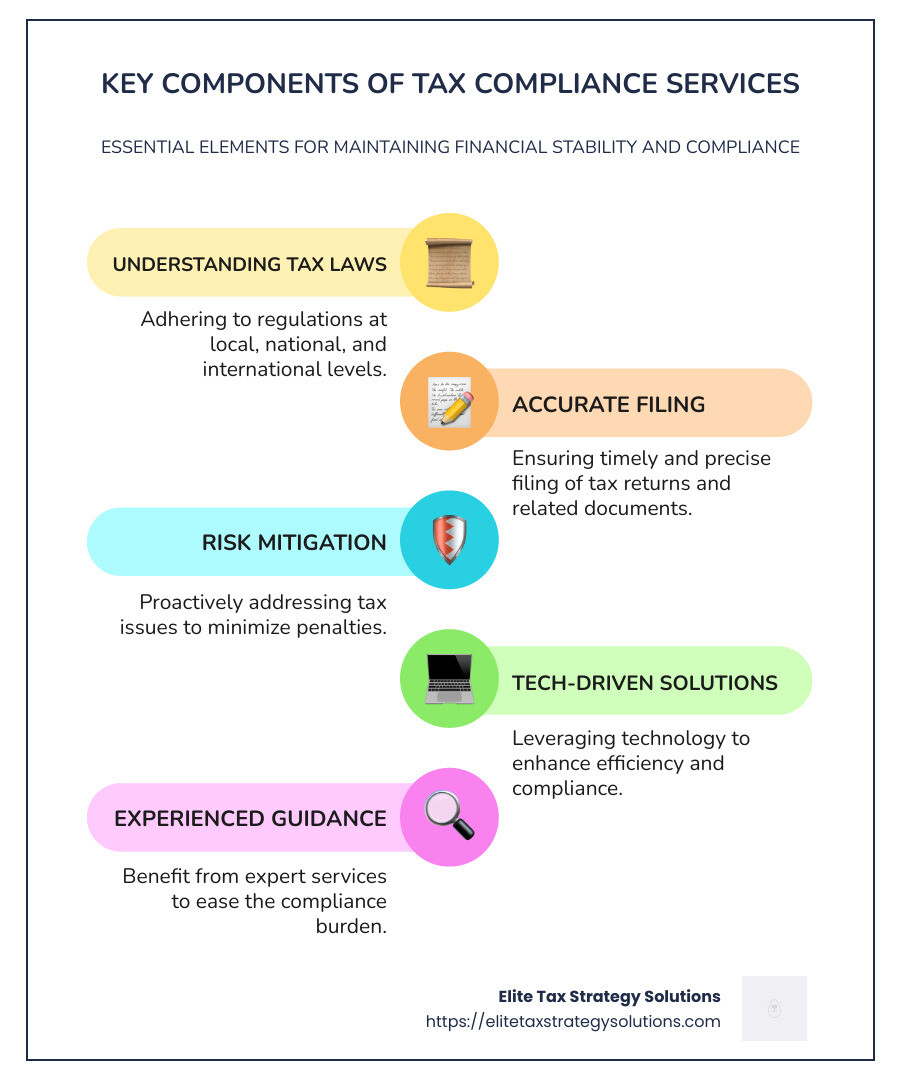
Tax compliance services are crucial for businesses striving to stay afloat in today’s and changing regulatory environment. These services ensure that companies adhere to the latest tax laws, reduce risks associated with non-compliance, and maintain financial stability. Navigating tax compliance involves several key components:
- Understanding and adhering to tax laws at local, national, and international levels.
- Timely and accurate filing of tax returns and related documents.
- Minimizing penalties by addressing tax issues proactively.
- Utilizing technology-driven solutions to improve compliance and efficiency.
Keeping up with tax regulations can be overwhelming for even the most astute business owners. The landscape is complex, with constant changes that demand attention and resources. It’s here that specialized tax compliance services come into play, offering custom strategies to ease the compliance burden.
I’m David Fritch, and I’ve spent over 40 years helping businesses like yours steer the complexities of tax compliance services. My experience spans owning a CPA practice and working with major firms like Arthur Anderson & Company. Let’s dig into how these services can ensure your business’s financial stability and tax efficiency.
Understanding Tax Compliance
Tax compliance is about more than just paying taxes. It’s a comprehensive process that involves understanding tax laws, meeting reporting requirements, filing accurate tax returns, and interacting with tax authorities. Let’s break down these components to see how they fit together.
Tax Laws
Tax laws are the rules set by governments that determine how much tax individuals and businesses owe. These laws can change frequently, making it crucial for businesses to stay updated. For example, the U.S. tax code has seen numerous changes over the years, affecting everything from corporate tax rates to deductions for small businesses. Understanding these laws is the first step in ensuring compliance and avoiding penalties.
Reporting Requirements
Every business has specific reporting requirements, which involve providing detailed financial information to tax authorities. This includes income statements, balance sheets, and other financial documents. These reports help authorities assess how much tax a business owes. Missing a deadline or submitting incorrect information can result in fines or audits.
Tax Returns
Filing tax returns is a critical part of tax compliance. A tax return is a form or forms filed with a tax authority that reports income, expenses, and other relevant financial information. For businesses, this often involves complex calculations and the need to account for various deductions and credits. Accurate tax returns are essential to avoid overpaying or underpaying taxes.
Tax Authorities
Tax authorities are government agencies responsible for collecting taxes and enforcing tax laws. In the United States, the Internal Revenue Service (IRS) is the main federal tax authority. State and local governments may have their own tax agencies. Businesses must maintain good relationships with these authorities to ensure smooth operations and avoid legal issues.
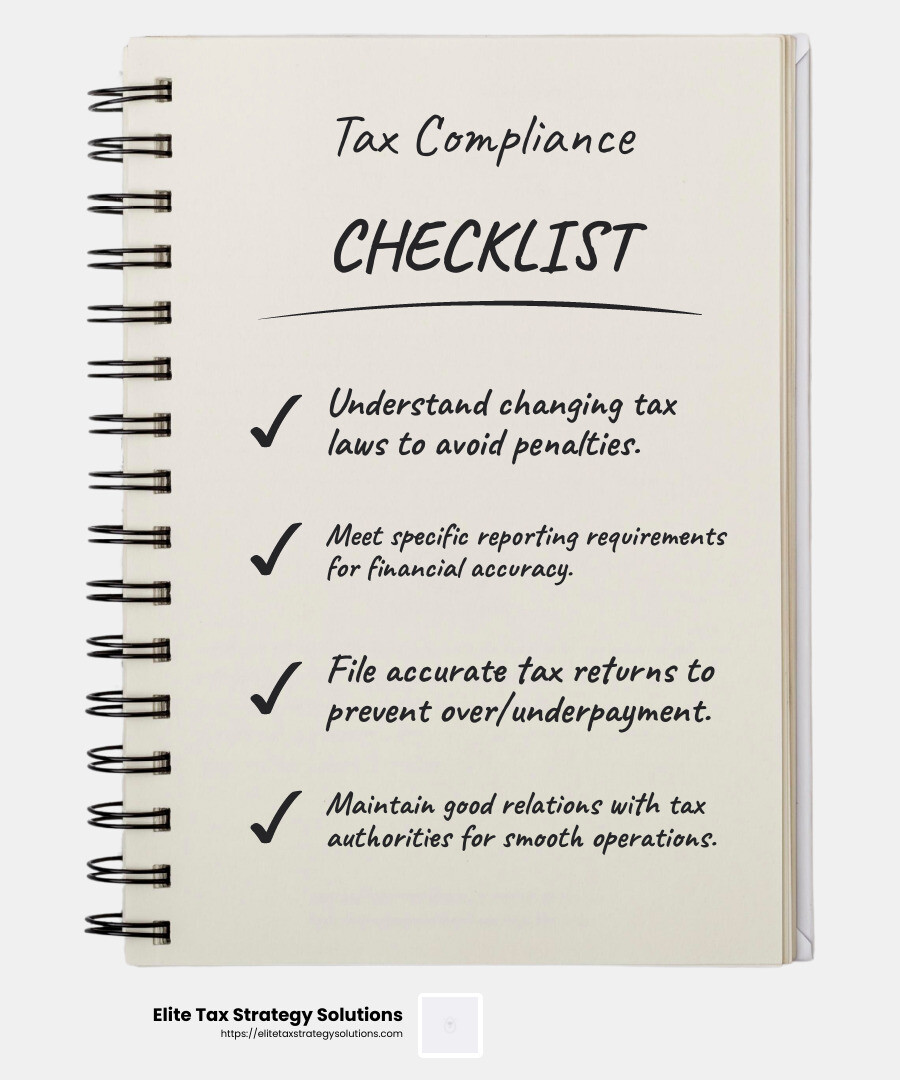
In summary, tax compliance services are essential for navigating these complex areas. They help businesses stay on top of changing laws, meet reporting requirements, file accurate returns, and maintain good standing with tax authorities. This ensures not only compliance but also financial stability and efficiency.
Next, we’ll explore the essential tax compliance services that businesses can leverage to stay compliant and efficient.
Essential Tax Compliance Services
Navigating taxes can feel like walking through a maze. But with the right tax compliance services, your business can find the path to compliance and efficiency.
Corporate Tax Compliance
Corporate tax compliance is vital for businesses of all sizes. It involves adhering to regulatory compliance requirements and managing tax risks. Companies must file accurate tax returns and pay the correct amount of taxes. Failure to do so can lead to penalties and damage to your business reputation.
To manage these complexities, many businesses turn to tax consulting services. These experts help with tax planning and cost management, ensuring that your company meets all tax obligations while minimizing expenses.
Indirect Tax Compliance
Indirect taxes, such as sales and use tax, VAT, and excise tax, are collected by businesses on behalf of the government. These taxes can be tricky, as they vary by jurisdiction and industry.
For instance, a hospitality business must manage a mix of taxes, including hospitality tax, which covers hotel occupancy and food and beverage taxes. Tax reporting for these can be complex, requiring accurate records and timely filings.
By outsourcing indirect tax compliance, businesses can streamline their processes and reduce the risk of errors. This allows them to focus on their core activities while ensuring compliance.
Personal Tax Compliance
For individuals, personal tax compliance involves filing accurate income tax returns and taking advantage of tax deductions and tax credits. These can significantly reduce the amount of tax owed, but only if correctly applied.
Professional services can help individuals understand their tax situation and ensure they comply with all relevant laws. This not only maximizes savings but also provides peace of mind knowing that all tax obligations are met.
Specialized Tax Compliance Services
Certain industries face unique tax challenges. Specialized tax compliance services cater to these needs, offering expertise in areas like:
- Severance tax: Applied to the extraction of non-renewable resources, such as oil and gas.
- Fuels tax: Involves complex reporting and compliance due to varying state and federal regulations.
- Business license tax: Ensures businesses have the necessary permits and comply with local tax laws.
- Vape tax: A relatively new tax that requires specialized knowledge to steer.
By leveraging these specialized services, businesses in these sectors can ensure full compliance and avoid potential pitfalls.
In summary, tax compliance services are not just about filing returns. They encompass a range of activities designed to ensure that businesses and individuals meet all their tax obligations efficiently and effectively. Next, we’ll look at the benefits of professional tax compliance services.
Benefits of Professional Tax Compliance Services
When it comes to managing taxes, professional tax compliance services offer several key benefits that can make a real difference to your business’s bottom line. Let’s explore some of these advantages.
Risk Mitigation
Tax compliance can be a minefield of potential risks. Missing a deadline or misinterpreting a regulation can lead to hefty penalties. Professional tax services help businesses steer these risks by ensuring all tax obligations are met accurately and on time. By working with experts who stay up-to-date on the latest tax laws, businesses can avoid costly mistakes.
Cost Efficiency
Handling taxes internally might seem cost-effective, but it can actually lead to overspending. Professional tax services streamline the tax process, using efficient methods and advanced technology to reduce costs. They identify tax-saving opportunities that might be overlooked otherwise, such as deductions and credits, ultimately saving your business money.
Error Reduction
Errors in tax filings can trigger audits and penalties. Professional tax services bring expertise and precision to the table, minimizing the chances of mistakes. Their experience with complex tax scenarios ensures that all filings are correct and complete. This attention to detail not only reduces errors but also provides peace of mind.
Compliance Reporting
Staying compliant with ever-changing tax regulations is a challenge. Professional services offer comprehensive compliance reporting, ensuring that your business meets all reporting requirements. They provide detailed documentation and keep track of regulatory changes, so you don’t have to. This helps maintain a good standing with tax authorities and protects your business reputation.
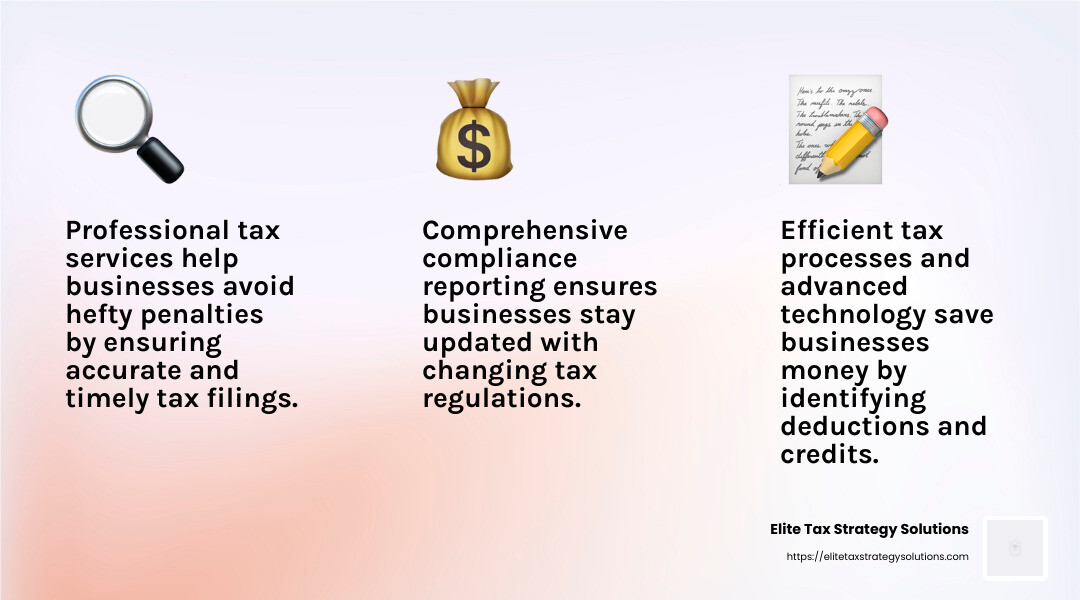
Professional tax compliance services are about more than just filing taxes. They provide a strategic advantage by mitigating risks, enhancing cost efficiency, reducing errors, and ensuring robust compliance reporting. Next, we’ll address some common questions about tax compliance services.
Frequently Asked Questions about Tax Compliance Services
What does a tax compliance officer do?
A tax compliance officer plays a crucial role in ensuring businesses and individuals adhere to tax laws. These officers are responsible for tax enforcement, which involves making sure that taxpayers accurately report their income and pay the correct amount of taxes. They conduct field investigations and office investigations to verify that tax returns are truthful and complete. By doing this, they help maintain the integrity of the tax system and ensure that everyone is paying their fair share.
What is an IRS tax compliance check?
An IRS tax compliance check is a review process to ensure that taxpayers are fulfilling their tax obligations. This check is not an audit but rather a way for the IRS to confirm that tax returns are filed correctly and on time. If there are any discrepancies, the IRS may send a Letter 6201, which asks for additional information to clarify any issues. This helps the IRS maintain accuracy across the board and ensures that all taxpayers are compliant with the law.
What does compliance mean in tax?
Tax compliance refers to the adherence to tax laws and regulations set by tax authorities. It involves accurate financial reporting and timely payment of taxes. Compliance means that businesses and individuals must follow the rules for filing tax returns and paying taxes, ensuring that they meet all legal requirements. Failing to comply can result in penalties, audits, or legal issues, so it’s crucial to understand and meet all tax obligations.
Conclusion
At Elite Tax Strategy Solutions, we believe that successful tax management is more than just meeting deadlines—it’s about creating a proactive plan that aligns with your financial goals. Our focus is on proactive tax optimization, where we not only help you comply with current tax laws but also look ahead to identify opportunities for tax savings.
Our personalized approach to tax planning ensures that each strategy is custom to your unique financial situation. We understand that every business and individual has different needs, so we offer customized solutions that maximize tax savings and promote long-term financial stability.
By partnering with us, you gain more than just a service provider; you gain a team committed to enhancing your financial well-being. We use our expertise to help you steer the complex tax landscape, ensuring that you not only remain compliant but also achieve greater financial success.
With Elite Tax Strategy Solutions, you’re not just checking a box; you’re taking a strategic step towards securing your financial future.