Multi state sales tax compliance is crucial for any business operating across state lines. Compliance means staying up-to-date with each state’s unique sales tax laws, which can significantly impact your bottom line if ignored. Here’s what you need to know right away:
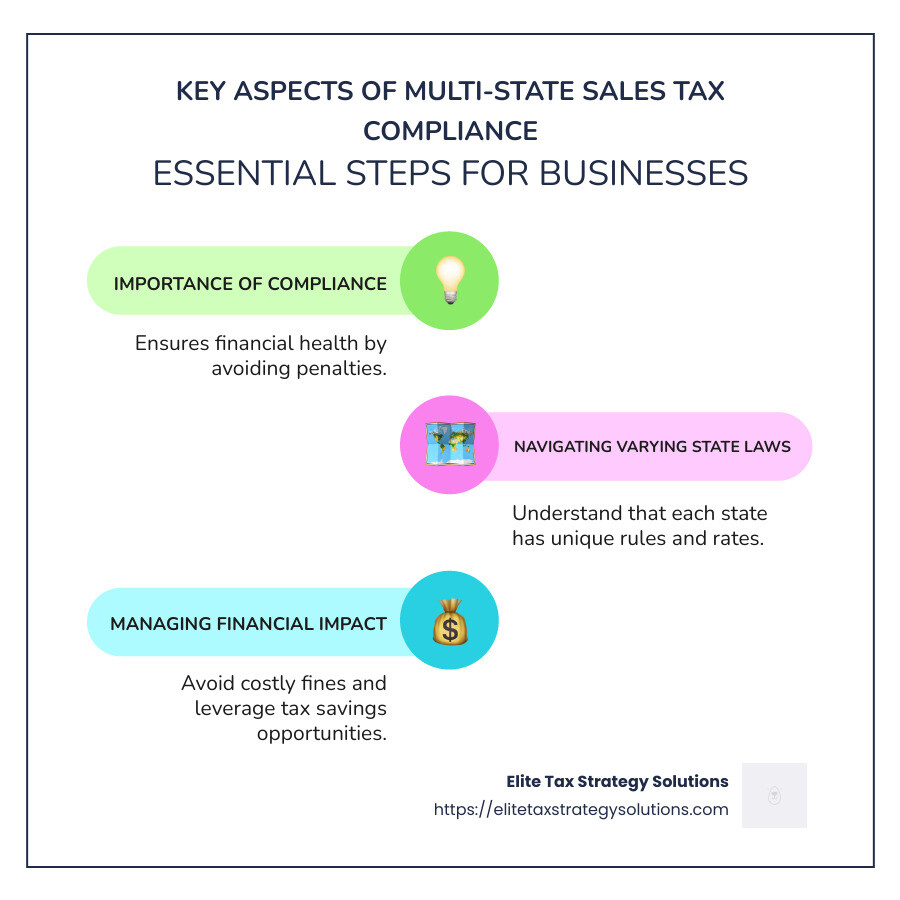
- Importance of Compliance: Avoid penalties and protect your business’s financial health.
- Varying State Laws: State laws differ; what applies in one state may not apply in another.
- Financial Impact: Ignoring compliance can lead to costly fines and missed opportunities for tax savings.
Staying compliant with multi state sales tax is not just a regulatory necessity but a smart financial strategy. Each state has its own rules and rates, which can be tricky to steer. Compliance ensures you pay what you owe, avoid penalties, and keep your business running smoothly.
I am David Fritch, bringing 40 years of experience in helping businesses with tax strategy and compliance. I’ve assisted countless businesses in navigating the complexities of multi state sales tax compliance, ensuring they minimize liabilities and keep their operations stress-free.
Factors Affecting Sales Tax in Different States
Navigating multi state sales tax compliance can feel like trying to solve a complex puzzle. Each state has its own rules and rates, and understanding these variations is essential for any business selling across state lines. Let’s break down the key factors that affect sales tax in different states.
Base Sales Tax Rate
Every state sets its own base sales tax rate, which is the starting point for calculating what you owe. For instance, California has a base rate of 7.25%, while Oklahoma’s is 4.5%. These differences can significantly impact how much tax you need to collect and remit.
Differential Rates
States also have different approaches to what they tax. Some states, like Hawaii, have a broad tax base and can maintain lower rates, such as 4%. In contrast, states with higher revenue needs might impose higher rates to meet budgetary demands. Businesses need to keep these differences in mind to ensure accurate tax collection.
Local Sales Taxes
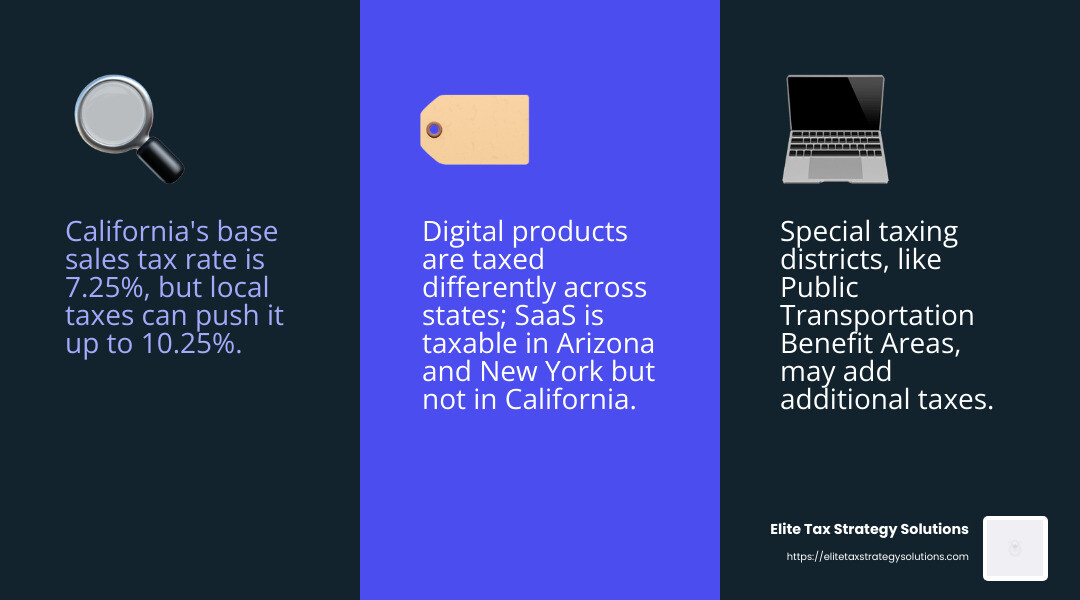
In addition to state rates, many areas impose local sales taxes. These can be city or county taxes, or even both. For example, while California’s state rate is 7.25%, local taxes can push the total rate up to 10.25% in some areas. It’s crucial for businesses to integrate these local rates into their e-commerce systems to ensure accurate tax calculations.
Special Taxing Districts
Special taxing districts can add another layer of complexity. These districts can impose additional taxes to fund specific projects like transportation improvements or tourism promotion. For example, a Public Transportation Benefit Area might add an extra 0.9% sales tax to support local transit services. Businesses need to be aware of these districts to avoid unexpected tax liabilities.
Exemptions
Most states offer exemptions for certain products or organizations. Common exemptions include sales to non-profit organizations, or for items like food, prescription drugs, and agricultural products. Businesses must apply for tax exemption certificates or verify certificates provided by customers to ensure they aren’t overcharging sales tax.
Digital Products
The taxation of digital products varies widely across states. For instance, Software-as-a-Service (SaaS) is taxable in Arizona and New York, but not in California and Georgia. Similarly, online courses may be taxed in Texas and Pennsylvania, but not in Oklahoma and Maine. Understanding these rules is crucial for businesses that sell digital products across state lines.
By understanding these factors, you can better steer the complexities of sales tax compliance in multiple states. This knowledge is crucial for avoiding penalties and ensuring your business remains financially healthy.
Rules for Sales Tax by State
When it comes to multi state sales tax compliance, understanding the specific rules and rates in each state is key. Here’s a breakdown of sales tax rules for various states, highlighting the unique aspects of each.
Alabama
Alabama’s state sales tax rate is 4%. However, don’t be misled by this seemingly low rate. Local jurisdictions can levy additional taxes up to 7.5%, leading to a combined rate of about 9.25%. Businesses must be aware of these local taxes to ensure correct tax collection.
Alaska
Alaska does not impose a state sales tax, but local governments can charge up to 7.5%. This results in an average effective rate of 1.76%. Businesses should pay attention to local tax rules when operating in Alaska.
Arizona
Arizona has a state sales tax rate of 5.6%, but local taxes can increase the total to as high as 11.2%. Knowing both the state and local tax codes is essential for businesses operating in Arizona.
Arkansas
Arkansas charges a 6.5% state sales tax. As a destination-based state, sales tax is collected based on the customer’s location, not the seller’s. This makes understanding your customer’s location critical.
California
California’s state sales tax rate is 7.25%, with local rates potentially pushing the total up to 10.25%. Businesses need to be aware of their sales tax nexus, as physical or economic presence in the state requires tax collection.
Colorado
Colorado’s state rate stands at 2.9%, but local taxes can make it soar to 11.2%. As a “home rule” state, local municipalities can set their own tax rules, complicating compliance.
Connecticut
Connecticut imposes a 6.35% state sales tax. The “Amazon law” requires e-commerce entities with a presence in the state to collect sales tax, highlighting the importance of understanding nexus and e-commerce laws.
Delaware
Delaware is unique with no state sales tax. However, businesses must still complete a registration process, which simplifies operations but requires attention to other tax obligations.
Florida
Florida has a 6% state sales tax, with special exceptions like mobile homes taxed at 3%. Businesses must be aware of these exceptions to ensure correct tax application.
Georgia
Georgia’s state rate is 4%, but local taxes can raise the total to an average of 7.4%. Businesses need to manage these local taxes for accurate compliance.
Hawaii
Hawaii charges a 4% state sales tax, with local taxes bringing it up to 4.5%. The complexity of local-level taxes necessitates continuous monitoring to stay compliant.
Idaho
Idaho’s state sales tax rate is 6%, with local taxes pushing it up to 9%. Businesses need to secure a seller’s permit and understand local tax obligations.
Illinois
Illinois has a state rate of 6.25%, but local taxes can increase this to 11%. Businesses must steer a complex tax environment to ensure full compliance.
Indiana
Indiana’s state sales tax rate is a straightforward 7%. Businesses must collect this tax and may need to handle exemption certificates for certain transactions.
Iowa
Iowa imposes a 6% state sales tax, with local taxes up to 2%. Understanding local tax obligations is essential for businesses operating in Iowa.
Kansas
Kansas charges a 6.5% state sales tax, with local taxes potentially reaching 10.6%. Businesses need to account for these variations to ensure proper tax collection.
Kentucky
Kentucky has a flat state sales tax rate of 6% and does not impose local sales taxes, simplifying compliance for businesses.
Louisiana
Louisiana’s state sales tax rate is 4.45%, with local taxes possibly raising it to 9.55%. Businesses must be vigilant about both state and local taxes.
Maine
Maine charges a 5.5% state sales tax with no additional local taxes, offering a simpler tax environment for businesses.
Maryland
Maryland’s state rate is 6%, but alcohol is taxed at 9%. Businesses must be aware of these specific rates to ensure accurate tax collection.
Massachusetts
Massachusetts imposes a 6.25% state sales tax on tangible personal property and utilities. Understanding what is taxed is key for compliance.
By familiarizing yourself with these rules, you can steer the multi state sales tax compliance maze more effectively, avoiding pitfalls and ensuring your business stays on the right side of the law.
Sales Tax Compliance Strategies
Navigating multi-state sales tax compliance can feel like a maze. But with the right strategies, it becomes manageable. Let’s explore some effective approaches.
Automation
Automation is like having a smart assistant for your taxes. It uses software tools to handle repetitive tasks. This means fewer errors and more time for you.
-
Software Tools: These tools integrate with your sales systems. They calculate the right tax rates automatically. No more manual math!
-
Real-Time Updates: Tax rates change often. Automated tools update in real-time, keeping you compliant without the headache.
-
Integration: Your sales and tax systems can talk to each other. This means smooth operations and less room for errors.
Outsourcing
Sometimes, it’s best to let experts handle the tricky stuff. That’s where outsourcing comes in.
-
Invoke Tax Partners: A dedicated team can manage your sales tax filings and payments. They handle jurisdictional notices and keep track of tax calendars.
-
Dedicated Support: With experts on your side, you get personalized help. They ensure your sales tax obligations are met on time.
-
State Registrations and Renewals: Outsourcing can also handle registrations and renewals, making sure nothing slips through the cracks.
Tax Compliance Services
Tax compliance services offer a suite of solutions to keep your business on track.
-
Sales Tax Returns: These services prepare and file your sales tax returns, ensuring accuracy and timeliness.
-
Audit Representation: If an audit happens, experts defend your interests, minimizing potential liabilities.
-
Reverse Audits: This process identifies and recovers tax overpayments, putting money back in your pocket.
-
Compliance Reviews: Regular reviews of your tax practices help spot issues before they become problems.
-
Nexus Studies: These studies determine where you have tax obligations, helping you manage your sales tax nexus effectively.
-
Tax Refund Reviews: Experts review your transactions for potential refunds, applying for them on your behalf.
-
Legal Research and Litigation Support: When tricky tax issues arise, legal experts provide clear answers and support.
-
Tax Amnesty and Voluntary Disclosure Agreements: These programs help reduce liabilities and penalties if you’ve missed tax obligations in the past.
-
Educational Seminars: Learn the ins and outs of tax compliance through custom educational sessions.
By implementing these strategies, you can streamline your tax operations and focus on what you do best—growing your business.
Frequently Asked Questions about Multi-State Sales Tax Compliance
Navigating multi-state sales tax compliance can be daunting, but understanding the basics can make it easier. Let’s answer some common questions.
Which states are part of the Multistate Tax Commission?
The Multistate Tax Commission (MTC) is an organization that helps states work together on tax issues. States that are part of the MTC include:
- Alabama, Alaska, Arkansas, Colorado, and District of Columbia
- Hawaii, Idaho, Kansas, Missouri, Montana, and New Mexico
- North Dakota, Oregon, Texas, Utah, and Washington
- California, Delaware, Kentucky, Louisiana, Michigan, and Minnesota
- New Jersey, Rhode Island, Vermont, and West Virginia
These states collaborate on tax policy and enforcement to simplify compliance for businesses operating in multiple states.
What is sales tax compliance in the US?
Sales tax compliance involves several key steps:
-
Preparing and Filing Returns: Businesses must prepare and file sales tax returns based on their sales activities. This ensures the correct amount of tax is reported and paid.
-
Remitting Tax: Once collected, sales tax must be sent to the appropriate tax authority. This process is called remitting tax.
-
Timely Basis: All returns and payments must be made on time to avoid penalties and interest. Each state has different deadlines, so it’s important to keep track.
Staying compliant requires attention to detail and an understanding of each state’s rules.
Do I charge IL sales tax for out-of-state customers?
When selling to out-of-state customers from Illinois, you typically don’t charge Illinois sales tax. However, there are exceptions:
-
6.25% Use Tax: If the customer uses the product in Illinois, they might owe a 6.25% use tax. This is similar to sales tax but applies to out-of-state purchases used in Illinois.
-
No Local Taxes: For out-of-state sales, local taxes generally don’t apply. This simplifies the process for businesses selling across state lines.
Understanding these rules helps ensure your business remains compliant while serving customers nationwide.
By grasping these aspects of multi-state sales tax compliance, businesses can steer the complex landscape of sales tax with greater confidence.
Conclusion
In today’s business environment, multi-state sales tax compliance is more crucial than ever. Staying compliant isn’t just about avoiding penalties; it’s about building trust with your customers and safeguarding your financial health.
Proactive compliance is key. By staying ahead of changing tax laws and understanding the specifics of each state’s requirements, businesses can avoid unexpected tax liabilities. This proactive approach not only saves money but also reduces stress and allows businesses to focus on what they do best.
At Elite Tax Strategy Solutions, we offer personalized tax planning services designed to help you steer the complexities of sales tax compliance. Our goal is to maximize your tax savings while ensuring financial stability. We believe in a thorough, proactive approach to tax optimization and compliance, giving you peace of mind and allowing you to concentrate on growing your business.
By working with us, you can ensure that your tax strategies are not only compliant but also aligned with your long-term financial goals. This alignment helps you make the most of your resources and supports your business’s growth and success.
Compliance isn’t just a legal obligation—it’s a strategic advantage. Let us help you turn tax compliance into a tool for maximizing savings and achieving financial stability.