Why Business Tax Compliance is Your Foundation for Financial Success
Business tax compliance services help companies meet their legal tax obligations through accurate reporting, timely filing, and correct payment of all required taxes.
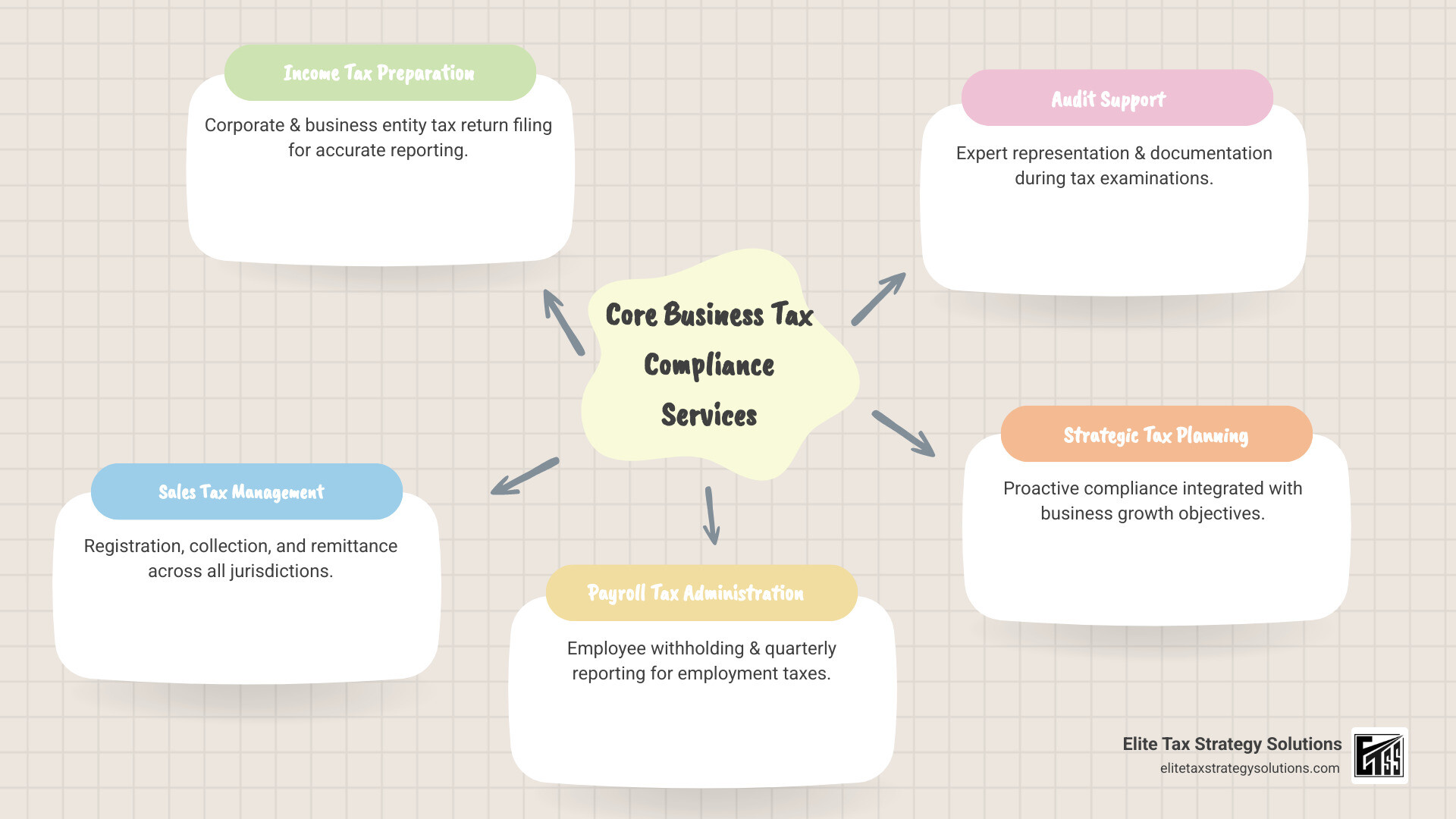
Core Business Tax Compliance Services:
- Income Tax Preparation – Corporate and business entity tax return filing
- Sales Tax Management – Registration, collection, and remittance across jurisdictions
- Payroll Tax Administration – Employee withholding and quarterly reporting
- Audit Support – Representation and documentation during tax examinations
- Strategic Tax Planning – Proactive compliance integrated with business growth goals
The stakes for non-compliance are enormous. The U.S. tax gap—the difference between taxes legally owed and what’s actually paid on time—reached $574 billion in 2023. This number reflects not just intentional tax avoidance, but also the complexity that trips up well-meaning business owners.
For small businesses, tax compliance consumes an average of 100 hours per year—nearly three full work weeks. The consequences of mistakes go beyond lost time, as penalties, interest, and audits can devastate cash flow and reputation.
However, compliance isn’t just about avoiding problems. It’s the foundation for accessing government contracts, securing business loans, and maintaining financial stability.
I’m David Fritch, and with 40 years of experience owning both a law firm and CPA practice, I’ve helped business owners steer the complexities of business tax compliance services while optimizing their financial outcomes. The key is to transform compliance from a burden into a strategic advantage that supports your long-term success.
Basic business tax compliance services vocab:
What is Business Tax Compliance and Why is it Crucial?
Business tax compliance means following all applicable tax rules by reporting income accurately, calculating taxes correctly, and filing on time. It’s about building the financial stability and legal soundness that become the foundation for your business goals.
When your business maintains good tax standing, doors open. Investors take you seriously, banks approve loans more easily, and government contracts become accessible. In some places, like Ontario, Canada, you can even check your tax compliance status online to verify you’re meeting requirements.
The $574 billion tax gap shows how many companies struggle with compliance, often due to the sheer complexity of the rules. Proper compliance is a competitive advantage. For more guidance on the regulatory landscape, see our insights on Business Tax Regulations.
The High Cost of Non-Compliance
Ignoring tax compliance can devastate a business. The consequences include:
- Financial penalties: The IRS charges 5% of unpaid taxes for late filings, plus 1% per month late, up to 12 months. Some states charge penalties up to 25% for missed sales tax deadlines.
- Interest charges: These compound on top of penalties, turning minor oversights into significant bills.
- Legal fees: Resolving issues with tax authorities often requires professional help, which can be costly and time-consuming.
- Reputational damage: Non-compliance can harm relationships with suppliers, partners, and even employees.
- Increased audit risk: Tax authorities flag businesses with compliance issues for closer scrutiny.
If you’re facing IRS penalties, don’t panic. We have strategies that may help. Learn more at How to Handle IRS Penalties: Strategies to Potentially Avoid Paying.
Specific Challenges for Small Businesses
Small businesses face a perfect storm of limited resources, complex regulations, and significant time consumption. You must steer the same maze of federal, state, and local requirements as large corporations but without a dedicated department.
That average of 100 hours per year on tax compliance is time not spent with customers or growing the business. We understand these pressures and can take this burden off your shoulders so you can focus on what you do best.
Learn more about how we can help at Small Business Tax Planning Strategies.
The Core Components of Business Tax Compliance
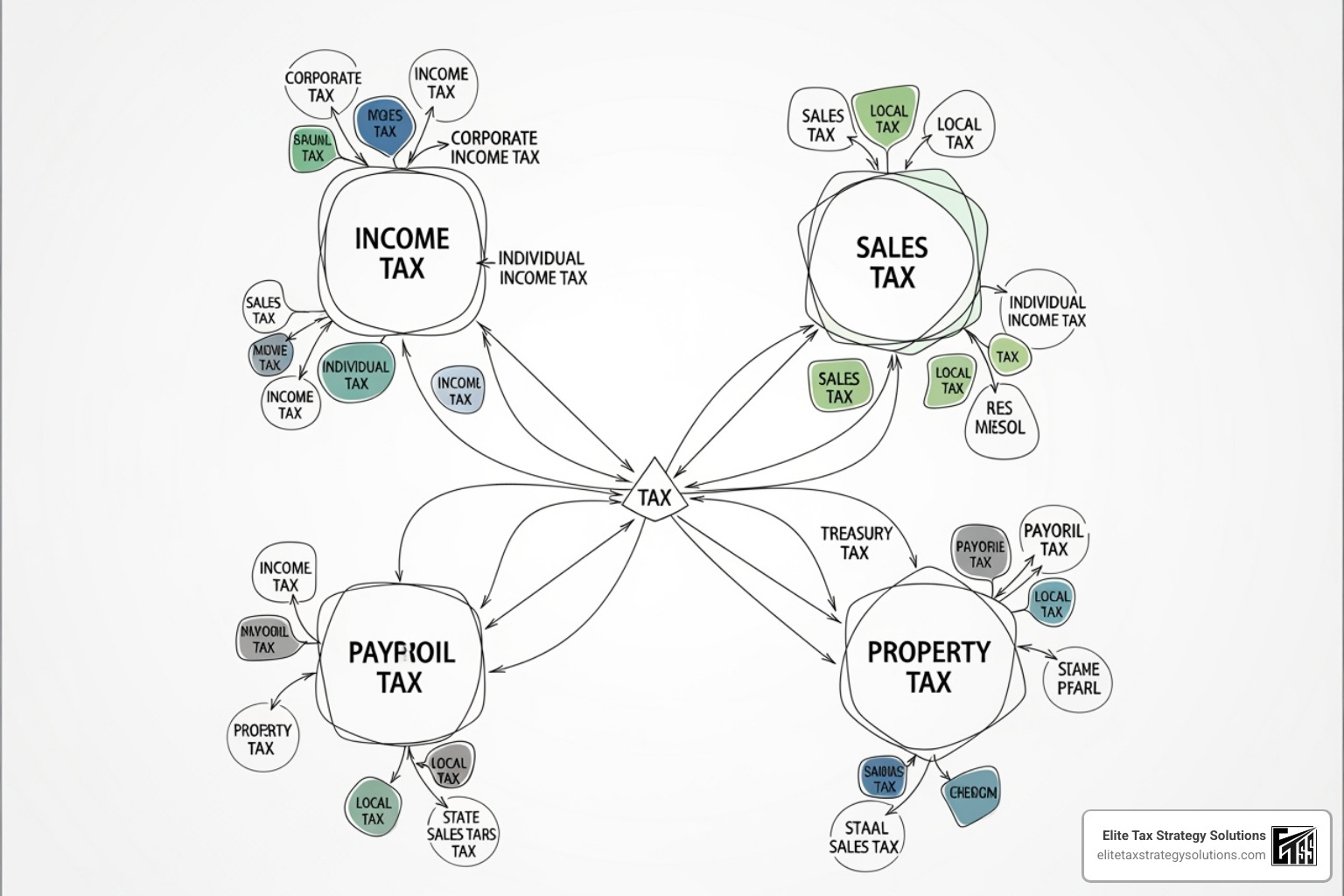
Business tax compliance services involve navigating a complex web of different tax types, each with its own rules and deadlines. Businesses must deal with federal, state, and often municipal taxes across over 11,000 tax jurisdictions in the U.S. alone. Understanding the main components makes this manageable.
Income and Corporate Taxes
Income and corporate taxes are typically a business’s largest tax obligations and vary based on business structure. Key aspects include:
- Filing returns: Every business must file an income tax return. Corporations generally have six months from their fiscal year-end to file, and missing the deadline leads to penalties.
- Estimated tax payments: Sole proprietorships, partnerships, and S-Corps must make quarterly estimated payments throughout the year to avoid penalties.
- Business structure implications: An S-Corp avoids corporate-level tax by passing profits and losses to the owner’s personal return. A C-Corp faces double taxation (at the corporate level and on dividends), which requires different planning strategies.
Our Corporate Tax Planning services help you steer these rules to avoid unnecessary taxes.
Sales, Use, and Excise Taxes
These taxes often trip up businesses, especially those selling online or across state lines.
- Nexus rules: Nexus determines if you have enough presence in a state to owe sales tax. Economic nexus laws now mean you might owe tax based on sales thresholds, even without a physical presence.
- Collection and remittance obligations: You must collect sales tax from customers and remit it to the government. You may also owe use tax on out-of-state purchases where no sales tax was paid.
- E-commerce considerations: Selling online can mean dealing with different sales tax rules, rates, and filing requirements in dozens of states.
Our Sales and Use Tax Compliance Services can help you manage this complexity.
Payroll and Employment Taxes
Payroll taxes have some of the strictest deadlines and heaviest penalties.
- Employee withholding: You must calculate and withhold federal income tax, Social Security, and Medicare from each paycheck, plus any state and local taxes.
- Remittance schedules: Depending on your payroll size, you must deposit these taxes on a strict schedule. Missing a deadline by even a day can trigger penalties.
- Contractor classification: Misclassifying an employee as an independent contractor can lead to significant back taxes, penalties, and interest. Proper handling of 1099 forms for legitimate contractors is crucial.
Our 1099 Tax Compliance services ensure you classify workers correctly and stay compliant.
The Role of Professional Business Tax Compliance Services and Technology
Tax laws change constantly, which is why over 70% of small businesses outsource some or all of their tax compliance work. This is a smart strategic move that provides a financial safety net and a partnership for growth.
Outsourcing buys back your most precious resource: time. Instead of spending 100+ hours per year on tax forms, you can focus on growing your business. The risk reduction is also significant, as professionals stay current on regulations, spot issues early, and find savings opportunities. Learn more about the benefits of Tax Compliance Outsourcing.
What to Expect from Business Tax Compliance Services
Partnering with a professional service provides a strategic ally for your financial success. Key services include:
- Tax preparation and filing: Ensures all federal, state, and local returns are filed accurately and on time.
- Strategic tax planning: Proactively identifies deductions, credits, and structural opportunities to legally minimize your tax burden throughout the year.
- Audit representation and support: An experienced professional handles communications and documentation during tax audits, leading to smoother resolutions.
- Regulatory monitoring: Tracks evolving tax laws to keep your strategy compliant and effective.
- Nexus analysis: Determines where you have sales tax obligations, which is crucial for e-commerce or multi-state businesses.
Our Business Tax Advisory Services encompass all these elements to protect your business and optimize financial outcomes.
Leveraging Technology for Better Compliance
Technology has transformed tax compliance into a streamlined, accurate, and less stressful process.
- Accounting software like QuickBooks and Xero integrates with tax systems, automates expense categorization, and generates necessary financial reports.
- Automated sales tax solutions are essential for multi-state businesses. They calculate correct rates, collect payments, and remit taxes automatically. Our Automated Sales Tax Solutions can eliminate this headache.
- A Tax Compliance Platform acts as a central command center for deadlines, documents, and calculations. This centralization increases accuracy and saves time.
When sophisticated systems work with expert oversight, you gain confidence that your compliance is rock-solid, leading to better business decisions.
From Compliance to Growth: The Power of Proactive Tax Strategy

Business tax compliance services can do more than keep you out of trouble—they can fuel your growth. Shifting from reactive compliance to a proactive tax strategy creates opportunities by aligning every tax decision with your business goals. This approach open ups significant tax savings while ensuring full compliance, resulting in better cash flow and smarter decisions. Learn more about our approach to Proactive Tax Management.
Best Practices for Airtight Record-Keeping
Airtight record-keeping is the backbone of any great tax strategy. Good records are essential for maximizing deductions and surviving an audit.
- Organize receipts and invoices: Use digital methods like cloud storage and expense tracking apps to make records searchable and accessible.
- Reconcile accounts regularly: Monthly reconciliation catches discrepancies early and keeps your financial picture clear.
- Keep records for at least six years: Most tax authorities can look back this far during an audit, so complete documentation is your best protection.
Understanding your Business Expense Categories is crucial for accurate records and capturing every legitimate deduction.
Preparing for and Managing Tax Audits
With proper preparation, an audit is a manageable process, not a nightmare.
- How good records help: Organized records demonstrate your commitment to compliance and can resolve most questions quickly.
- What triggers an audit: Red flags like unusually high deductions, inconsistencies in reporting, or missing forms can trigger an audit. Random selection is less common.
- The role of a tax advisor: A professional can review your situation, identify potential issues, and represent you during communications with tax authorities, reducing stress and leading to better outcomes.
Learn more about our Business Tax Audits support services.
The Benefits of Proactive Tax Planning
Proactive tax planning transforms compliance into a competitive advantage by legally optimizing your tax position. The benefits include:
- Maximizing deductions and credits: An ongoing process ensures you don’t leave money on the table.
- Improving cash flow: Strategically timing income and expenses or optimizing your business structure provides more working capital for growth.
- Informed decision-making: Understanding the tax implications of major business moves helps you make choices that benefit your bottom line.
- Long-term financial health: Proactive planning contributes to sustainable growth by improving budgeting, forecasting, and strategic clarity.
Find how we help businesses achieve significant Tax Savings for Businesses through strategic planning.
Frequently Asked Questions about Business Tax Compliance
Here are answers to some frequently asked questions about business tax compliance.
How do I know which tax regulations apply to my business?
Your tax obligations depend on your business structure, industry, and locations of operation (federal, state, and local). The complexity can be overwhelming.
A smart first step is a nexus study to determine where you have sales tax obligations, especially if you sell online or operate in multiple states. After that, you must map out all other duties, including income, payroll, and industry-specific taxes. Given the complexity, especially for businesses in multiple locations like Jasper, Indiana, or various suburban areas, most owners benefit from professional guidance.
What’s the difference between tax planning and tax compliance?
Tax compliance is the foundation—it’s about meeting all current legal requirements, like filing correctly and on time to avoid penalties. It is reactive work.
Tax planning is playing offense. Tax and Financial Planning is a proactive, forward-looking strategy to legally minimize your future tax liability through smart use of deductions, credits, and investment choices. While compliance is mandatory, planning is where the real value lies for financial growth.
Can I handle business tax compliance myself?
While technically possible for very simple businesses, the complexity of tax laws makes DIY compliance increasingly risky. Potential pitfalls include missed deadlines, incorrect filings, and overlooked savings opportunities. Tax laws change constantly, and managing it all while running a business is overwhelming.
Using professional business tax compliance services or software increases accuracy and frees you to focus on your core business. For high earners and closely held businesses, the stakes are higher, making professional guidance essential. The question isn’t whether you can do it yourself, but whether you should.
Conclusion
We’ve seen that robust tax compliance is more than just avoiding penalties—it’s the bedrock of your business’s financial stability and a powerful catalyst for growth. Getting it right creates a foundation for success, while getting it wrong can be devastating.
The magic happens when you shift from reactive compliance to proactively maximizing your financial health. By using smart record-keeping, leveraging technology, and partnering with experienced advisors, you can transform a burden into a competitive advantage. This approach improves your cash flow, maximizes tax savings, and provides the clarity needed for confident business decisions.
At Elite Tax Strategy Solutions, this philosophy is at our core. We specialize in personalized tax planning for high earners and closely held businesses. Our thorough, proactive approach to tax optimization and compliance sets us apart. We don’t just prepare your taxes; we help you transform tax obligations from a burden into a strategic advantage.
You don’t have to face the complexities of tax law alone. Our expertise can ensure your financial health and foster sustainable growth.
Ready to turn your tax strategy into a growth engine? Learn more about our High-Income Individual Tax Planning services and find how our expertise can benefit your unique situation.