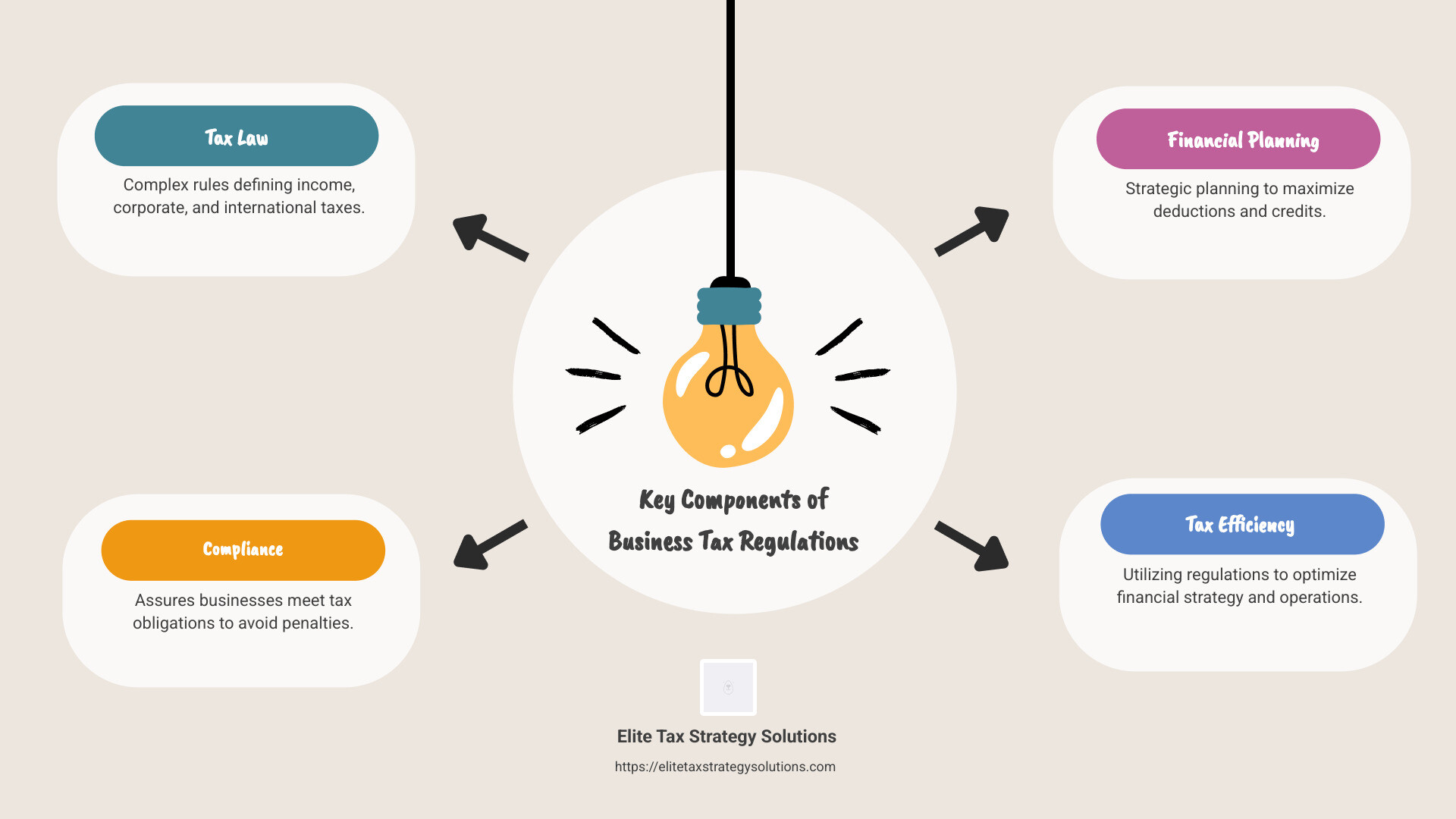
Business tax regulations are essential for any business, guiding compliance and strategic financial planning. These regulations encompass a variety of taxes, each with distinct rules impacting a business’s bottom line and operational efficiency. Here’s a quick overview:
- Tax Law: A complex web of rules that govern how businesses are taxed, including income, corporate, and international taxes.
- Compliance: Ensures businesses fulfill their tax obligations to avoid penalties and legal issues.
- Financial Planning: Strategic tax planning is crucial to maximize deductions, credits, and tax efficiency.
In short, mastering business tax regulations is critical to avoid costly mistakes and optimize your financial strategy. Throughout this guide, we will dig into the essentials of navigating the tax landscape to better position your business for success.
As David Fritch, with over 40 years of experience in tax law and business management, I have helped countless small business owners and high-income earners like yourself steer the intricacies of business tax regulations. From my time managing Fritch Law Office and CPA practice to founding Elite Tax Strategy Solutions, my focus has always been on assisting businesses in understanding and benefiting from these complex rules.
Now, let’s move on to understanding the various types of business taxes and how they apply to your operations.
Business tax regulations vocabulary:
– Business tax management
– Tax risk management
– Comprehensive tax planning
Understanding Business Tax Regulations
Navigating business tax regulations can feel like walking through a maze. But understanding the key components—income tax, corporate tax, and international tax—can simplify the journey.
Income Tax
Income tax is a tax on the earnings of businesses and individuals. For businesses, this tax is calculated based on the net income, which is total revenue minus expenses. The rate can vary widely depending on the business structure and location. For example, sole proprietorships and partnerships report income on their personal tax returns, while corporations file separately.

Corporate Tax
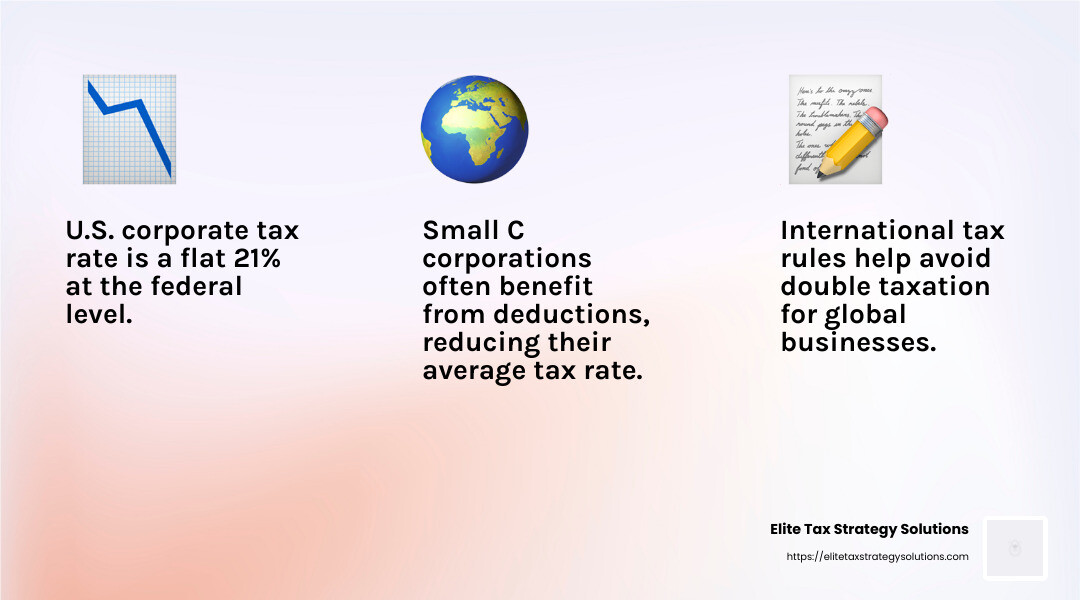
Corporate tax is specifically for corporations, taxing their profits at both the federal and state levels. The federal corporate tax rate is a flat 21% as of 2025. But remember, state rates can vary, adding another layer to consider. Corporations must stay updated on these rates to avoid surprises.
Interestingly, small C corporations pay an average rate of 17.5%, which is lower than the federal rate due to various deductions and credits they can claim.
International Tax
For businesses operating across borders, international tax comes into play. This involves navigating the laws and treaties between different countries. It’s crucial for businesses with international operations to understand these rules to avoid double taxation and optimize their global tax strategy.
The U.S. has unique provisions like the Global Intangible Low-Taxed Income (GILTI) and the Base Erosion and Anti-Abuse Tax (BEAT), which can impact international operations significantly. Staying informed about these regulations is essential, especially with potential changes on the horizon that could make them more restrictive.
Key Takeaways
- Income Tax: Applies to all business types, with rates depending on structure and income levels.
- Corporate Tax: Affects corporations, with a flat federal rate but varying state rates.
- International Tax: Crucial for global operations, involving treaties and cross-border rules.
Understanding these business tax regulations helps you make informed decisions, ensuring compliance and optimizing your tax strategy. With the right knowledge, you can steer this complex landscape effectively.
Next, let’s explore the different types of business taxes that affect your operations.
Types of Business Taxes
Running a business means dealing with various taxes. Let’s break down the main types you need to know: income tax, self-employment tax, excise tax, employment taxes, and estimated tax.
Income Tax
Every business, except partnerships, must file an annual income tax return. Partnerships file an information return instead. The type of form you use depends on your business structure. Sole proprietorships, for instance, report income on their personal tax returns, while corporations file separately.
Income tax is a pay-as-you-go tax. This means you pay as you earn throughout the year. If you don’t have taxes withheld, you might need to pay estimated taxes.
Self-Employment Tax
If you’re self-employed, you’re responsible for self-employment tax. This tax covers Social Security and Medicare, ensuring you get benefits like retirement and hospital insurance.
Here’s when you need to pay:
- If your net earnings from self-employment are $400 or more.
- If you work for a church or organization exempt from Social Security and Medicare taxes and earn $108.28 or more.
Self-employment tax is 15.3% of your earnings, with 12.4% for Social Security and 2.9% for Medicare.
Excise Tax
Excise tax applies to specific goods and services. It’s not about your income but rather what you produce or sell. For example:
- Fuel taxes
- Taxes on the first retail sale of heavy trucks
- Taxes on indoor tanning services
Businesses report excise taxes using different forms, like Form 720 for various products and services, or Form 2290 for heavy vehicles.
Employment Taxes
If you have employees, you must handle employment taxes. These include:
- Social Security and Medicare taxes: Both you and your employees contribute.
- Federal income tax withholding: You withhold taxes from employees’ wages.
- Federal unemployment (FUTA) tax: You pay this tax entirely.
Employment taxes are crucial, as they ensure your employees get benefits and the government gets its share.
Estimated Tax
Estimated tax is like a backup plan. If you don’t have enough tax withheld from your income, you pay estimated taxes quarterly. This is important for self-employed individuals or businesses with fluctuating income.
It helps you avoid penalties for underpayment. If your business doesn’t require estimated tax payments, you can pay any due tax when you file your return.
Understanding these business tax regulations is key to staying compliant and managing your finances effectively. Next, we’ll look at how to choose the right tax structure for your business.
Choosing the Right Tax Structure
Choosing the right tax structure is a big deal for any business. It affects everything from taxes to personal liability. Let’s explore some common business structures: LLC, sole proprietorship, corporation, S corporation, and partnership.
Sole Proprietorship
A sole proprietorship is the simplest business structure. It’s perfect for solo entrepreneurs. You don’t need to register it separately; your business is automatically considered a sole proprietorship if you’re the only owner.
Pros:
– Easy to set up
– Complete control over decisions
– Business income is reported on personal tax returns
Cons:
– Personal liability for business debts
– Harder to secure funding
Partnership
A partnership involves two or more people running a business together. There are two main types: limited partnerships (LPs) and limited liability partnerships (LLPs).
Pros:
– Shared responsibility and resources
– Business profits pass through to personal income tax returns
Cons:
– Potential for conflicts between partners
– At least one partner has unlimited liability in an LP
Limited Liability Company (LLC)
An LLC combines the benefits of partnerships and corporations. It offers limited liability to its owners, known as “members,” protecting personal assets from business debts.
Pros:
– Limited liability for members
– Avoids double taxation
– Flexible management structure
Cons:
– Can be more complex to set up than a sole proprietorship
– Varies by state regulations
Corporation
A corporation is a separate legal entity from its owners, who are called shareholders. Corporations are ideal for businesses seeking to limit personal liability and attract investors.
Pros:
– Strong personal liability protection
– Easier to raise capital
Cons:
– Double taxation (corporate and personal level)
– More regulations and paperwork
S Corporation
An S corporation is a special type of corporation that avoids double taxation by passing income directly to shareholders.
Pros:
– Avoids double taxation
– Limited liability protection
Cons:
– Strict eligibility requirements
– Limited to 100 shareholders
Choosing the right structure for your business depends on your goals, the level of liability protection you need, and how you plan to manage taxes. Each structure has its own set of business tax regulations, so understand how they apply to your situation.
Next, we’ll dive into federal and state tax obligations to help you steer your responsibilities effectively.
Federal and State Tax Obligations
When running a business, understanding your federal and state tax obligations is crucial. It’s not just about paying taxes; it’s about knowing which taxes apply to your business and how to manage them effectively.
Federal Taxes
Federal taxes are the starting point for most businesses. Key categories include:
-
Income Tax: All businesses, except partnerships, must file an annual income tax return. Partnerships file an information return instead.
-
Self-Employment Tax: If you’re self-employed, you must pay this tax, which covers Social Security and Medicare. The current rate is 15.3%.
-
Estimated Tax: Businesses need to pay taxes throughout the year. This usually involves making estimated tax payments on income that isn’t subject to withholding.
-
Excise Tax: Applies to specific goods and services like fuel and air transportation. Businesses involved in these areas must file the appropriate forms, like Form 720.
State Taxes
State taxes vary, so check the rules in your state. Common state taxes include:
-
Income Tax: Most states tax business income, but rates and rules differ. Some states, like Indiana, have a flat tax rate, while others have graduated rates.
-
Sales Tax: If you sell goods or services, you might need to collect sales tax. This tax is collected from customers and sent to the state. Rates can vary even within states due to local taxes.
-
Employment Taxes: If you have employees, you’ll need to pay state employment taxes. These often include unemployment insurance and workers’ compensation.
Employment Taxes
Employment taxes are critical if you have staff. They cover:
-
Social Security and Medicare Taxes: Both employers and employees share these costs. You withhold the employee’s portion from their paychecks.
-
Federal Unemployment (FUTA) Tax: Employers pay this tax to fund unemployment benefits. It’s separate from state unemployment taxes.
Sales Tax
Sales tax is a major revenue source for states. Here’s what you need to know:
-
Collection and Remission: Businesses must collect sales tax at the point of sale and remit it to the state. The rates and rules can vary widely.
-
Nexus: After the Supreme Court’s South Dakota v. Wayfair decision, states can require businesses to collect sales tax even without a physical presence, based on sales volume or transaction count.
Understanding your tax obligations helps you stay compliant and avoid penalties. Up next, we’ll explore tax deductions and credits that can ease your tax burden.
Tax Deductions and Credits
When it comes to business tax regulations, knowing how to use tax deductions and credits can make a big difference in how much tax you owe. Let’s break this down simply.
What Are Tax Deductions?
Tax deductions reduce your taxable income. This means the government taxes you on less money, which usually means you pay less tax. Common business deductions include:
-
Business Expenses: These are costs you incur to keep your business running. Think rent, utilities, employee wages, and office supplies. If you buy a new computer for your business, that cost can often be deducted.
-
Depreciation: Instead of deducting the full cost of a big purchase like machinery all at once, you spread the deduction over several years. This is called depreciation.
-
Home Office Deduction: If you use part of your home exclusively for business, you might be able to deduct a portion of your mortgage or rent, utilities, and repairs.
What Are Tax Credits?
Tax credits are even better than deductions because they reduce your tax bill dollar-for-dollar. Here are some examples:
-
Research and Development Credit: If your business invests in new products or processes, you might qualify for this credit. It’s a great way to offset the cost of innovation.
-
Small Business Health Care Credit: If you provide health insurance to your employees, you could get a credit to help cover those costs.
-
Work Opportunity Tax Credit: This credit rewards businesses for hiring individuals from certain groups, like veterans or those receiving public assistance.
How to Maximize Deductions and Credits
To get the most out of deductions and credits, keep detailed records of all your business expenses. Save receipts, invoices, and any other documentation that proves your spending. This not only helps you claim deductions and credits but also prepares you for any potential audits.
Pro Tip: Consider working with a tax professional. They can help you find deductions and credits you might not know about and ensure you’re following all the rules.
Understanding and utilizing tax deductions and credits can significantly reduce your tax liability. Next, we’ll tackle some frequently asked questions about business tax regulations to further clarify these concepts.
Frequently Asked Questions about Business Tax Regulations
What are the tax requirements for a small business?
Small businesses have to steer several business tax regulations. At the forefront is income tax. All businesses, except partnerships, must file an annual income tax return. Even if your business didn’t make a profit, you still need to file. If you’re a sole proprietor, you must file if your net earnings were $400 or more.
Estimated taxes are also crucial. Unlike individuals who pay taxes annually, businesses must estimate and pay taxes quarterly. This means you pay taxes as you earn income. The IRS has set deadlines: April 15, June 15, September 15, and January 15 of the following year. Missing these deadlines can lead to penalties.
Finally, there’s the self-employment tax. This is a tax for those who work for themselves and covers Social Security and Medicare. If you earn $400 or more from your business, you’re required to pay this tax.
How is an LLC taxed by the IRS?
An LLC, or Limited Liability Company, has a unique tax setup. It’s considered a pass-through entity. This means the business itself doesn’t pay taxes. Instead, the profits and losses pass through to the LLC members, who report them on their personal tax returns.
LLC members are responsible for paying self-employment tax on their share of the profits. This includes contributions to Social Security and Medicare.
However, LLCs have flexibility. They can choose to be taxed as a corporation if it benefits them. This decision can affect tax rates and liabilities, so it’s wise to consult a tax professional.
How much income can a small business make without paying taxes?
For most small businesses, the magic number is $400. If your net earnings from self-employment are $400 or more, you must file a tax return and pay self-employment tax. This applies to sole proprietors and independent contractors.
Even if your business doesn’t hit this threshold, you might still need to file if you have other income sources. Always check with a tax advisor to ensure compliance with all business tax regulations.
Understanding these requirements helps prevent surprises during tax season. Next, we’ll explore the various tax structures available to businesses and how they impact tax obligations.
Conclusion
Navigating business tax regulations can be daunting, but having a solid tax strategy makes it manageable. A well-planned approach ensures compliance and maximizes tax savings, ultimately contributing to financial stability.
At Elite Tax Strategy Solutions, we specialize in helping businesses and high earners optimize their tax positions. Our proactive and thorough approach means we stay ahead of changes in tax laws and regulations, ensuring that our clients are always compliant and taking full advantage of available deductions and credits.
Our team is dedicated to providing personalized services that align with your unique business needs. Whether you are a small business owner or part of a closely held business, we are here to help you steer the complexities of the tax landscape. By focusing on compliance and strategic planning, we free you to concentrate on growing your business and achieving your financial goals.
If you’re ready to take control of your business taxes and work towards a more financially secure future, explore our tax planning services today. Let us help you turn tax challenges into opportunities for growth and success.