Business tax management is crucial for maintaining financial health and ensuring compliance with ever-changing regulations. At its core, business tax management involves strategic planning to minimize tax liabilities while maximizing financial resources. For those eager to quickly grasp its essentials, here’s what you need to know:
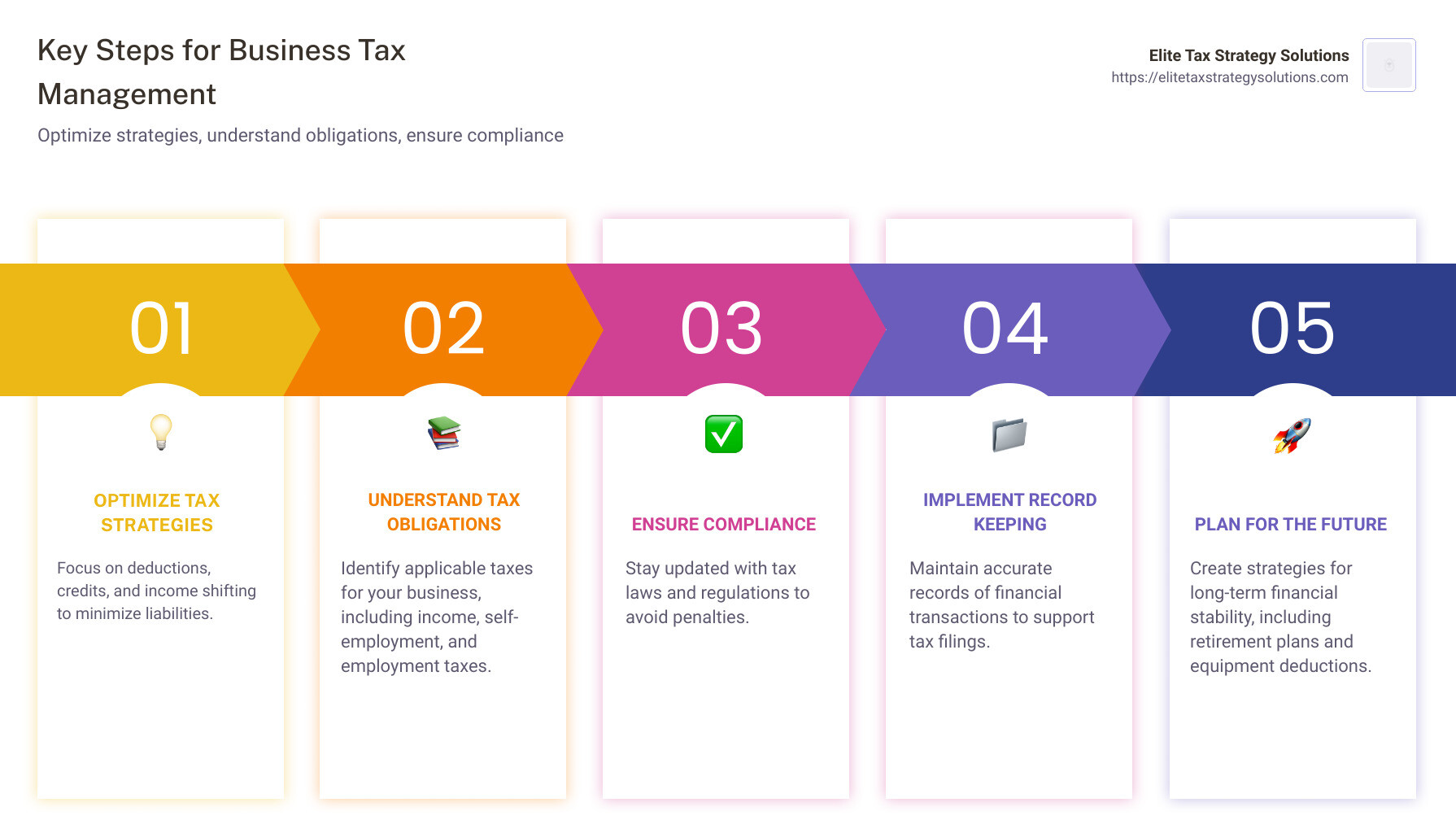
- Optimize tax strategies: Focus on deductions, credits, and income shifting.
- Understand tax obligations: Know the types of taxes applicable to your business.
- Compliance is key: Regularly update your knowledge of tax laws to avoid penalties.
Effective business tax management not only supports compliance but also strengthens the bottom line. By implementing well-crafted tax strategies, businesses can steer the intricate tax landscape and achieve long-term financial success. The complexity of tax regulations may seem daunting, but with the right guidance, it can become a manageable and even beneficial part of running a successful business.
My name is David Fritch, and I have dedicated over 40 years to helping businesses with effective tax management. With expertise in both legal and financial fields, I provide personalized strategies that can transform your tax challenges into opportunities for growth.
Understanding Business Tax Management
Business tax management is the backbone of a financially healthy company. It involves planning, strategizing, and complying with tax laws to ensure businesses pay the right amount of taxes—no more, no less.
Tax Management
At its core, tax management is about making informed decisions to reduce tax liabilities. This involves understanding the various taxes your business must pay, like income tax, estimated tax, self-employment tax, and employment taxes.
The aim is to optimize your tax position. This means using deductions, credits, and incentives to lower the amount of tax owed. For example, if your business invests in energy-efficient equipment, you might qualify for certain tax credits.
Tax Strategy
A strong tax strategy is crucial for effective tax management. It covers how you plan to handle your taxes throughout the year, not just during tax season.
Some strategies include:
- Income Shifting: Moving income to a lower-tax jurisdiction or deferring income to a future year when tax rates might be lower.
- Entity Structure: Choosing the right business structure (like an LLC or S-Corp) can impact how much tax you pay.
- Timing of Expenses: Accelerating expenses into the current year can lower taxable income.
Each strategy should align with your business goals and be custom to your specific situation.
Compliance
Compliance is the foundation of business tax management. Staying compliant means understanding and following tax laws and regulations. This involves keeping up with changes in tax legislation and ensuring that your business meets all filing requirements.
Failure to comply can lead to penalties and interest, which can harm your business financially and reputationally. Regularly consulting with tax professionals or attending tax seminars can help you stay informed.
In summary, business tax management is not just about paying taxes. It’s about strategically planning and managing taxes in a way that supports your business’s financial goals. By understanding tax obligations, optimizing strategies, and ensuring compliance, businesses can turn tax management from a daunting task into a powerful tool for success.
Key Business Tax Planning Strategies
To master business tax management, you need a solid understanding of tax planning strategies. Let’s explore some key strategies that can help optimize your tax position and reduce your tax burden.
Income Shifting
Income shifting is a powerful strategy. It involves moving income to different periods or entities to take advantage of lower tax rates. For example, you might defer income to a future year when you expect to be in a lower tax bracket. Or, you could allocate income to family members in lower tax brackets. This tactic requires careful planning but can lead to significant tax savings.
Tax Deductions
Tax deductions are expenses that you can subtract from your taxable income. The more deductions you claim, the lower your taxable income. Common business deductions include wages, rent, utilities, and office supplies. Even the cost of a home office can be deductible if it’s used exclusively for business. Keep detailed records to support your claims and maximize your deductions.
Tax Credits
Tax credits reduce your tax bill dollar-for-dollar. They are different from deductions, which only reduce taxable income. Some credits are designed to encourage specific business activities. For instance, the Work Opportunity Tax Credit rewards businesses for hiring from certain groups, like veterans. Explore all available credits to see which ones your business can use.
Entity Structure
Choosing the right business structure is crucial. Whether you’re a sole proprietorship, partnership, LLC, or corporation, your structure affects your tax obligations. For example, S Corporations offer pass-through taxation, which can avoid double taxation seen in C Corporations. Each structure has its benefits and drawbacks, so consider consulting a tax professional to find the best fit for your business.
Incorporating these strategies into your tax planning can transform tax season from a stressor into a strategic advantage. By understanding and applying these tactics, you can effectively manage your business taxes and support your financial goals.
Next, we’ll explore the different types of business taxes you need to be aware of.
Types of Business Taxes
Understanding the different types of business taxes is essential for effective business tax management. Each tax type has its own rules and requirements. Let’s break them down:
Income Tax
Almost every business must deal with income tax. This is the tax on the profits a business makes. All businesses, except partnerships, must file an annual income tax return. Partnerships file an information return because the income is passed through to individual partners. The form you use depends on your business structure. For instance, sole proprietors use Form 1040 along with Schedule C, while corporations use Form 1120.
Estimated Tax
Estimated taxes are periodic payments made throughout the year. They cover income that isn’t subject to withholding, like earnings from self-employment. If you expect to owe at least $1,000 in taxes after subtracting withholdings and credits, you should pay estimated taxes. These payments help avoid penalties for underpayment. Check out Publication 583 for more on estimated taxes.
Self-Employment Tax
If you’re self-employed, you pay self-employment tax. This tax covers Social Security and Medicare. The rate is 15.3%, which includes 12.4% for Social Security and 2.9% for Medicare. If your net earnings from self-employment are $400 or more, you must file Schedule SE with your tax return. This tax ensures you’re contributing to your future benefits, like retirement and Medicare.
Employment Taxes
Employment taxes are critical if you have employees. These include Social Security and Medicare taxes, federal income tax withholding, and federal unemployment (FUTA) tax. Employers must withhold and pay these taxes on behalf of their employees. Forms like 941 and 940 are used to report these taxes. Keeping accurate records is crucial to ensure compliance.
Excise Tax
Excise taxes apply to specific goods and services. They can be imposed by both federal and state governments. For example, businesses that manufacture or sell certain products, like fuel or heavy trucks, may need to pay excise taxes. Forms like 720 and 2290 are used to report these taxes. Understanding which excise taxes apply to your business can prevent unexpected liabilities.
Navigating these taxes can be complex, but understanding each type helps in strategic planning. Next, we’ll dig into effective tax management techniques to streamline your tax processes and maximize savings.
Effective Tax Management Techniques
Proper business tax management can save you money and stress. Here are some key techniques to help streamline your tax processes and maximize savings:
Record Keeping
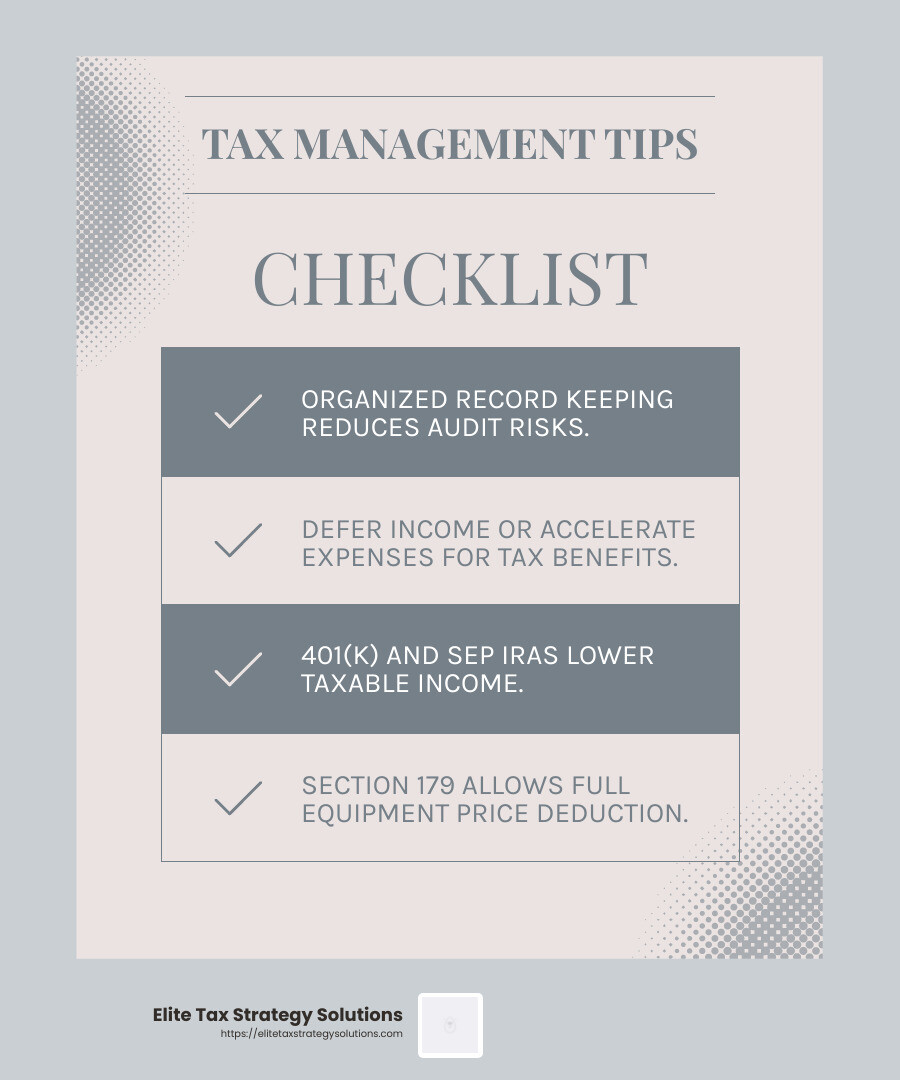
Keeping accurate and organized records is crucial. It helps you track income, expenses, and deductions. Good records support your tax returns and protect you during audits. Use software or apps to digitize receipts and invoices. This makes everything easy to find and reduces clutter.
Timing Income and Expenses
Timing is everything. Consider deferring income or accelerating expenses to manage your tax liability. For instance, if you expect a lower tax rate next year, delay invoicing until then. Alternatively, prepay expenses like rent or insurance to get deductions this year. These strategies can help smooth out your tax obligations.
Retirement Plans
Setting up a retirement plan benefits both you and your employees. Plans like 401(k)s or SEP IRAs offer tax advantages. Contributions are often tax-deductible, reducing your taxable income. Plus, retirement plans can attract and retain talented employees. Consult your tax advisor to find the best plan for your business.
Equipment Deductions
Buying new or used equipment? You might qualify for deductions under Section 179. This allows you to deduct the full purchase price in the year you buy it. As of 2024, the limit is $1,220,000, with a phase-out starting at $3.05 million. Timing your purchases strategically can maximize these deductions. If you’ve reached the limit, bonus depreciation might still offer benefits.
By implementing these techniques, you can improve your tax strategy and boost your bottom line. Next, we’ll answer some frequently asked questions about business tax management.
Frequently Asked Questions about Business Tax Management
What are the four basic types of business taxes?
Understanding the four basic types of business taxes is essential for effective business tax management. Here they are:
-
Income Tax: Almost all businesses must file an annual income tax return, except partnerships, which file an information return. This tax is based on the net income of the business and varies depending on the business structure. For example, corporations pay a flat federal income tax rate of 21%, as established by the Tax Cuts and Jobs Act (TCJA) in 2017.
-
Estimated Tax: Businesses often need to pay taxes on income throughout the year, not just at the end. This is known as estimated tax. It’s especially crucial for self-employed individuals who don’t have taxes withheld from their earnings.
-
Self-Employment Tax: This tax covers Social Security and Medicare for those who work for themselves. If your net earnings from self-employment are $400 or more, you need to file Schedule SE. The current rate is 15.3%, which includes 12.4% for Social Security and 2.9% for Medicare.
-
Employment Taxes: If you have employees, you must handle employment taxes. These include Social Security and Medicare taxes, federal income tax withholding, and federal unemployment tax (FUTA). Employers file various forms for these taxes, such as Form 941 for Social Security and Medicare taxes.
How much income can a small business make without paying taxes?
This depends on the business structure and type of income. For self-employed individuals, you need to pay self-employment tax on net earnings of $400 or more. However, the amount of income that is taxable can be reduced by taking advantage of deductions. For example, business expenses like office supplies, travel, and marketing can lower your taxable income. Always consult with a tax professional to understand how deductions apply to your specific situation.
How to pay no taxes as a business owner?
While paying no taxes might be unrealistic, you can significantly reduce your tax liability with strategic planning:
-
Maximize Deductions: Use all available deductions, such as business expenses, home office deductions, and vehicle expenses. Accurate record-keeping is key here.
-
Leverage Retirement Funds: Contributing to retirement plans like a 401(k) or SEP IRA can reduce taxable income. These contributions are often tax-deductible, lowering your overall tax bill.
-
Choose the Right Business Structure: The structure of your business affects your tax obligations. For instance, S corporations can pass income directly to shareholders, potentially reducing overall tax burdens.
-
Consider Timing: Timing income and expenses strategically can defer tax payments. For example, delaying income to a lower-tax year or prepaying expenses can help manage tax liability.
It’s crucial to work with a tax advisor to tailor these strategies to your business needs. Next, we’ll explore some effective tax management techniques to keep your business finances in top shape.
Conclusion
At Elite Tax Strategy Solutions, we believe that effective tax management is more than just a necessity—it’s a pathway to financial stability and growth. Our custom approach to tax optimization helps businesses steer the complexities of tax laws, ensuring compliance while maximizing savings.
We specialize in creating personalized strategies that align with your business goals. Whether it’s leveraging deductions, optimizing your entity structure, or timing income and expenses, we focus on the details that make a difference. Our team of experts is dedicated to finding innovative solutions that improve your financial well-being.
Financial stability is not just about minimizing tax liabilities; it’s about creating a solid foundation for future success. By integrating tax planning into your broader financial strategy, we help you focus on what truly matters—growing your business.
Ready to open up the full potential of your business tax management? Contact us today to learn more about our comprehensive services and how we can tailor a strategy to fit your unique needs.
Explore our small business tax planning services to see how we can assist you in achieving your financial goals.