Navigating the Maze of Modern Tax Obligations
A tax compliance platform is a cloud-based software solution that automates tax calculations, reporting, and filing across multiple jurisdictions to help businesses manage their tax obligations efficiently and accurately.
Types of Tax Compliance Platforms You’ll Encounter:
- Enterprise-grade suites built for large, multi-entity organizations
- E-commerce & digital-focused tools that plug directly into shopping carts and payment gateways
- SMB-oriented solutions offering out-of-the-box automation at an accessible price point
- Specialized niche platforms designed for emerging areas like cryptocurrency and digital assets
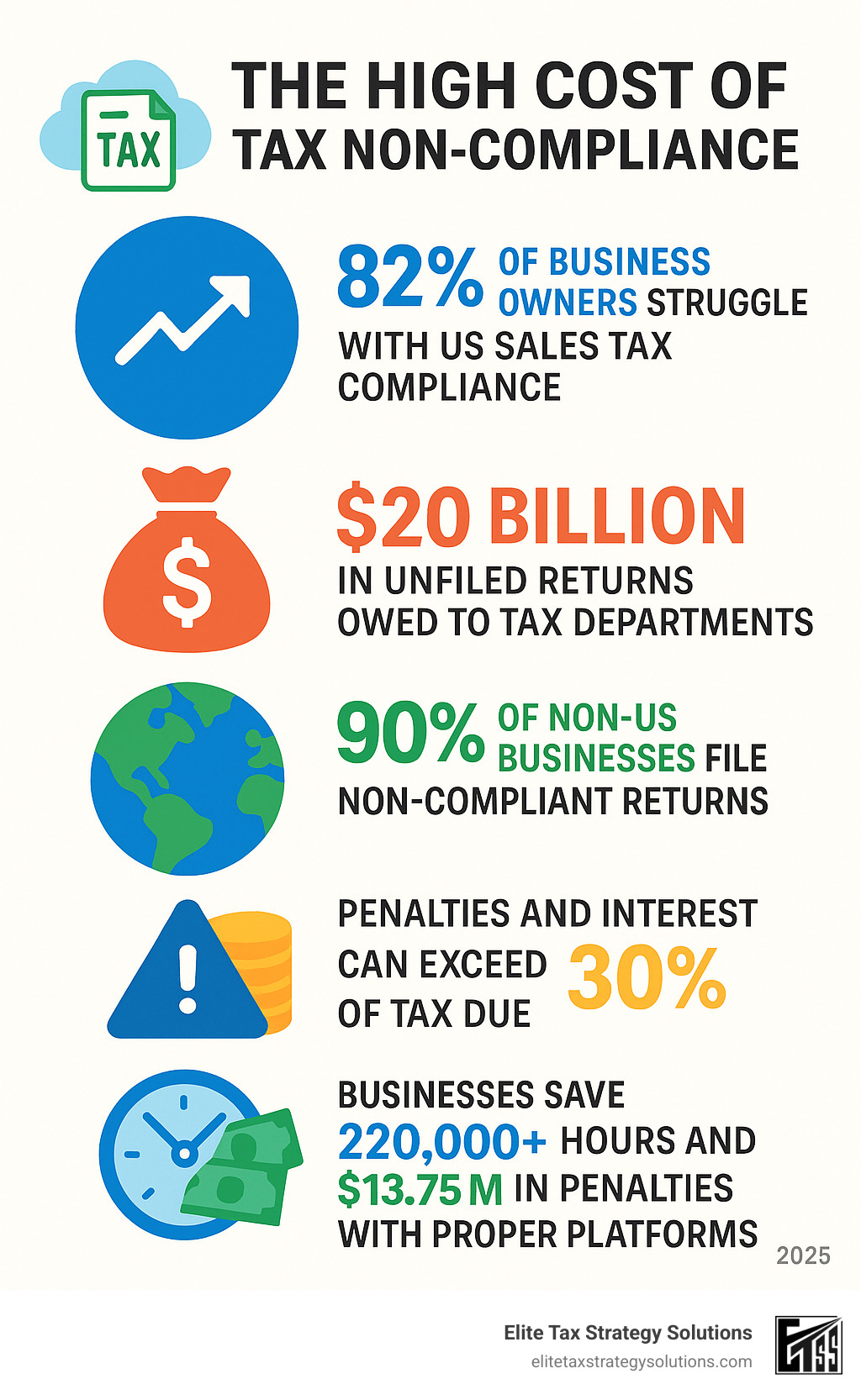
Modern businesses face an overwhelming maze of tax complexity. With over 12,000 tax jurisdictions in the US alone and more than 130 countries requiring tax collection, staying compliant has become a full-time challenge. The stakes are high—interest and penalties on uncollected sales tax can easily exceed 30% of the tax due, while 72% of online businesses see compliance as a barrier to international growth.
The traditional approach of managing taxes manually through spreadsheets and multiple providers creates audit fatigue and burns through resources. As one tax director noted: “I knew we needed a software solution that was easy to use, easy to plug in, and had the back-end side of tax compliance Zillow Group needed.”
Tax compliance platforms have emerged as the solution, changing complex regulatory requirements from a burden into a competitive advantage. These cloud-native systems automate everything from nexus monitoring to direct filing with tax authorities, processing 40,000 tax calculations per minute while maintaining 99.999% uptime.
I’m David Fritch. With 40 years of experience in tax compliance, I’ve seen how the right tax compliance platform transforms financial operations. At Elite Tax Strategy Solutions, I help clients leverage technology and expert guidance to optimize tax outcomes and ensure bulletproof compliance.
Tax compliance platform terms to know:
What is a Tax Compliance Platform and How Does It Work?
For a growing business, tax season can be overwhelming. With different rules in every state and constantly changing rates, a small mistake can cost thousands. Tax compliance platforms exist to solve this, acting as a digital tax expert that never sleeps.
At its core, a tax compliance platform is a centralized system that automates your business’s tax obligations. These platforms tackle the specific problems that keep business owners awake at night. Manual errors become virtually extinct when you’re no longer relying on spreadsheets. The administrative burden that once consumed entire departments gets reduced, freeing your team to focus on growth.
Crucially, these systems reduce audit risk by maintaining accurate records and applying tax rules uniformly. This ensures you have bulletproof documentation ready for any audit. For businesses eyeing expansion, a tax compliance platform removes the compliance roadblock that stops 72% of online businesses from going global, handling the complexity of international regulations automatically.
The process is straightforward. Automated calculation instantly applies the correct tax rates at the moment of sale based on location, product, and exemptions. Real-time data updates keep you current with the shifting tax landscape, as platforms update their databases hundreds of times per year. You’re always working with the latest rates and rules.
Streamlined reporting and filing takes the pain out of tax season. The platform automatically aggregates transaction data, generates reports, and can even file returns directly with tax authorities.
Consider the scope: over 12,000 tax jurisdictions in the US and requirements in more than 130 countries. This complexity is why our Business Tax Compliance services work with technology solutions. While platforms handle the heavy lifting, expert guidance ensures you’re maximizing every opportunity and avoiding costly missteps.
Core Features and Capabilities of a Modern Tax Platform
A modern tax compliance platform acts as your business’s tax brain, powered by automation and AI. It handles tedious, repetitive tasks, while machine learning algorithms validate data and AI-powered product categorization sorts your inventory, applying the correct tax rules to all products.
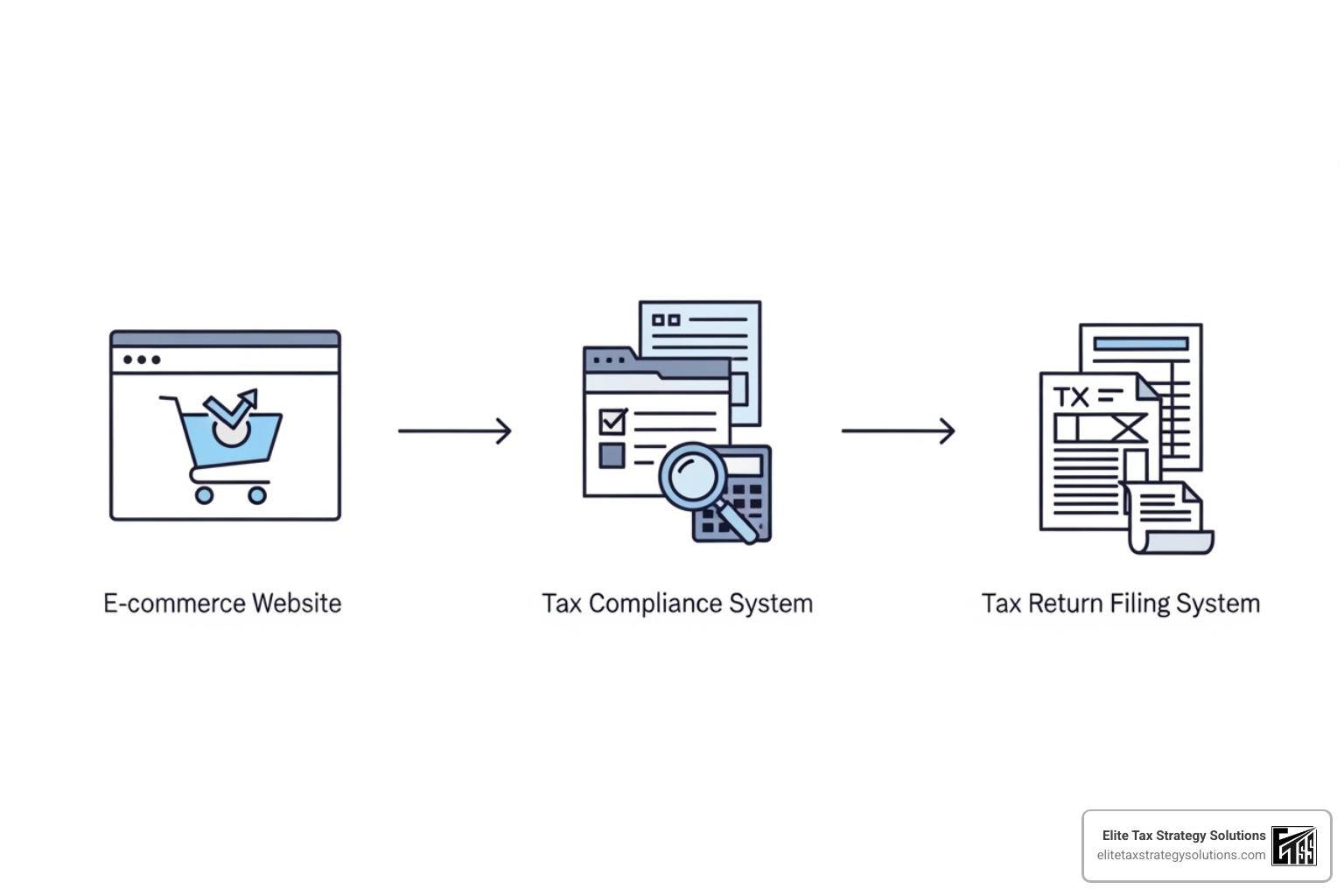
Seamless integration with your existing business systems is crucial. A tax compliance platform should connect with your ERP system, eCommerce platform, and payment processors via direct integrations or flexible API connections. This automates tax calculations at checkout and ensures taxes are collected within your normal payment flow. With some platforms offering over 1,400 partner integrations, compatibility is rarely an issue. This creates a single source of truth for all tax data, eliminating discrepancies. Our Tax Compliance For Companies approach emphasizes this integrated solution.
Key Functionalities to Look For
When evaluating a tax compliance platform, certain features are essential. Real-time tax calculation is at the top of the list, ensuring taxes are calculated instantly as transactions happen.
Nexus monitoring is a game-changer for growing businesses. The platform tracks when you hit economic thresholds (like Michigan’s $100,000 in sales) or establish physical presence, providing proactive alerts to register in new states.
Exemption certificate management simplifies B2B sales by automatically collecting, validating, and storing certificates, saving some businesses 50% of their time on this task. Automated reporting and filing aggregates transaction data and generates reports, with many platforms offering direct submission to tax authorities.
For businesses expanding internationally, global capabilities are essential. Your platform needs to handle everything from European VAT to Canadian GST. Our Multi-State Sales Tax Compliance services help businesses steer these complex waters.
What Types of Taxes Can a Platform Manage?
A comprehensive tax compliance platform handles a full spectrum of taxes. Indirect taxes like sales tax, Value-Added Tax (VAT), and Goods and Services Tax (GST) are the core of most platforms. Our VAT Compliance Services provide specialized support for these.
Direct taxes like corporate income tax also benefit from the consolidated financial data these platforms provide, streamlining tax return preparation.
A key development is handling specialized taxes for the digital economy, particularly digital assets and cryptocurrency. The IRS defines “digital asset” and requires reporting on forms like the Form 1040. Specialized platforms now offer support across 140 countries for digital asset compliance. Our Digital Tax Compliance services help businesses steer this evolving landscape.
The Tangible Benefits: Opening up ROI and Ensuring Peace of Mind
The key question for any business owner is the bottom-line impact. A tax compliance platform is an investment that pays for itself many times over through dramatic financial returns.
- Time Savings: Businesses report an 85% reduction in time spent on tax returns, freeing up your team for growth-focused activities.
- Efficiency Gains: With instant, accurate answers, businesses see a 90% increase in tax research efficiency.
- Penalty Avoidance: The savings are significant. One platform’s users have saved over $13.75 million in tax penalties and interest while reclaiming 220,000+ hours.

Beyond cost savings, there are operational benefits. Your finance team can shift from reactive tasks to strategic planning, becoming proactive partners in the business. This is especially powerful for growing businesses, as a tax compliance platform scales with you, handling increased complexity without becoming a bottleneck. Our Accounting And Tax Compliance approach focuses on this kind of scalable, strategic thinking.
How a tax compliance platform ensures accuracy and security
When it comes to taxes, accuracy is everything. Modern tax compliance platforms are built for data accuracy and security to prevent costly errors and audits.
Automated validation systems and real-time rate updates catch errors before they become problems. Security is also crucial. Platforms use military-grade encryption and undergo regular SOC audits to protect your sensitive financial data.
The audit readiness benefit alone is significant. Instead of scrambling for documents, everything is organized and instantly accessible. Users report an 85% increase in audit preparation efficiency, leading to less stress and faster resolutions. Our Tax Compliance Audit services complement these platforms, providing both technology and expertise.
The role of a tax compliance platform in global business
For businesses expanding internationally, a tax compliance platform is essential. Global tax regulations are far more complex than domestic ones.
These platforms handle cross-border transaction logic, multi-currency support, and evolving e-invoicing mandates, where countries require specific electronic invoice formats. The platform automates this process, ensuring your invoices meet local requirements. A robust tax compliance platform also helps you adapt to global initiatives like BEPS and Pillar Two without missing a beat. Our International Tax Compliance expertise combines platform capabilities with strategic guidance for optimal international growth.
Who Benefits Most from a Tax Compliance Platform?
The beauty of a tax compliance platform is its versatility. While the specific features might appeal more to one group than another, the underlying benefits of automation, accuracy, and peace of mind are universal. Let me walk you through who sees the biggest wins from these systems.

E-commerce and multichannel sellers are perhaps the most obvious beneficiaries. If you’ve ever tried to figure out whether that widget you’re selling is taxable in Ohio but not in Oregon, you know the headache. Physical nexus can be triggered in 45+ states, and US sales-tax registration thresholds for remote sellers are all over the map—most states require registration at $100,000 in sales or 200 transactions, but California, New York, and Texas bump that up to $500,000.
These platforms are purpose-built for managing sales-tax chaos across numerous states and countries. Instead of drowning in spreadsheets and rate tables, you get automated calculations that adjust instantly based on where your customer is located and what they’re buying. Our Ecommerce Tax Compliance services work hand-in-hand with these platforms to keep your business running smoothly.
SaaS and digital goods businesses face their own special brand of tax confusion. The taxability of digital products is about as clear as mud. Here’s a fun fact: SaaS sales are 100% taxable in New York, 80% taxable in Texas, and completely non-taxable in California. Over 100 countries are now taxing digital goods, and that number keeps growing.
A tax compliance platform takes this complexity and makes it manageable. Instead of hiring a team of tax researchers to figure out the rules in each jurisdiction, the platform already knows whether your software subscription is taxable in Tennessee (it is) or your digital downloads need GST in Australia (they do).
Global enterprises operating across multiple countries face a different kind of challenge—scale. Managing VAT, GST, and other international regulations across dozens of countries while staying compliant with complex initiatives like BEPS and Pillar Two is a monumental task. These platforms provide the infrastructure and intelligence needed to maintain compliance at enterprise scale without hiring an army of tax professionals.
Small and medium-sized businesses (SMBs) shouldn’t feel left out. In fact, SMBs often see the biggest relative benefit. Small businesses are collectively paying billions in tax penalties every year, mostly for simple mistakes like filing forms late or making calculation errors. By adopting user-friendly automation, many SMBs essentially gain access to enterprise-level tax management tools without the enterprise price tag.
Think of it this way: a tax compliance platform levels the playing field. Your small business can now have the same sophisticated tax management capabilities as a Fortune 500 company, without the Fortune 500 budget.
High-growth startups represent another sweet spot for these platforms. When you’re scaling rapidly, the last thing you want is to get bogged down in tax compliance issues. A tax compliance platform grows with you, handling increasing transaction volumes and new market expansions without breaking a sweat.
I’ve seen too many promising startups stumble because they didn’t plan for tax complexity early enough. The smart ones implement a platform before they need it, ensuring compliance never becomes a bottleneck to their growth ambitions.
Frequently Asked Questions about Tax Compliance Platforms
When clients first explore tax compliance platforms, they often have the same burning questions. Let me address the most common concerns I hear in my practice.
How much does a tax compliance platform cost?
The honest answer? It depends on your business needs, but think of it as an investment rather than an expense.
Most platforms use subscription-based pricing with monthly or annual fees. You’ll typically see tiered pricing structures based on your transaction volume, number of users, or features you need. Some providers offer basic plans starting around $9.99 per month for small businesses, while enterprise solutions can run significantly higher.
Here’s what I tell my clients: don’t just look at the price tag. Consider the return on investment. When you factor in the time savings, penalty avoidance, and increased accuracy, most businesses see the platform pay for itself within months. I’ve watched clients save thousands in penalties alone during their first year.
The key is evaluating what tax headaches cost you now – both in actual dollars and lost sleep – versus what a platform would cost to solve them.
How long does it take to implement a tax compliance platform?
This varies quite a bit, but modern cloud-native solutions have made implementation much faster than you might expect.
For straightforward businesses, some platforms let you start collecting taxes with just a few clicks or a single line of code. It’s pretty remarkable how quickly you can go from tax chaos to automated compliance.
The timeline really depends on your complexity. Integration with existing systems – your ERP, eCommerce platform, or payment processors – is usually the biggest factor. Platforms with extensive partner networks (some have over 1,400 integrations) tend to make this process smoother.
Most providers offer onboarding support to guide you through data migration and system setup. While some businesses avoid months of custom development work, others with more complex operations might need a more structured implementation approach.
The good news? Most businesses are up and running much faster than they expected, often within weeks rather than months.
Can a platform replace my accountant or tax advisor?
This is probably the question I hear most often, and I always smile when clients ask it. The short answer is absolutely not – and that’s actually great news for you.
A tax compliance platform and a skilled tax advisor work together like a perfectly matched team. The platform handles the heavy lifting – calculating rates, monitoring nexus requirements, generating reports, and processing data with speed and accuracy no human could match.
But here’s where human expertise becomes invaluable: strategic tax planning, interpreting complex regulations, and navigating unique situations that require professional judgment. For high earners and closely held businesses especially, this strategic guidance can save far more than any platform ever could.
Think of it this way: the platform is your incredibly efficient assistant, handling all the routine tasks flawlessly. Your tax advisor is your strategic partner, using that clean data to optimize your overall tax position and plan for the future.
At Elite Tax Strategy Solutions, we often combine platform automation with our expert oversight through services like Outsourcing Sales Tax Compliance. This gives you the best of both worlds – technological efficiency with human wisdom guiding your tax strategy.
The platform frees up your advisor to focus on what really matters: keeping more money in your pocket through smart tax planning.
Is a Tax Platform the Right Move for Your Business?
After diving deep into tax compliance platforms, one thing becomes crystal clear: these aren’t just fancy software tools anymore. For most businesses wrestling with today’s tangled web of tax rules, they’ve become as essential as your accounting software or CRM system.
Let me paint the picture of what you’re really getting when you invest in a tax compliance platform. The benefits stack up quickly and meaningfully:
Time savings might be the most immediate relief you’ll feel. Instead of your team spending hours hunched over spreadsheets, double-checking calculations, and manually filing returns, that time gets freed up for activities that actually grow your business. We’re talking about an 85% reduction in time spent on tax returns – that’s not a typo.
Cost reduction happens in two powerful ways. First, you eliminate the inefficiencies of manual processes. Second, and perhaps more importantly, you dodge those painful penalties that can easily exceed 30% of your tax due. When you consider that small businesses are collectively paying billions in preventable tax penalties each year, the math becomes pretty compelling.
Risk mitigation is where you really sleep better at night. With automated validation, real-time updates, and complete audit trails, you’re not crossing your fingers and hoping you got everything right. You know you did. When audit time comes around (and it will), you’re prepared instead of panicked.
Scalability might be the most strategic benefit of all. Your tax compliance platform grows with you, whether you’re expanding into new states, launching internationally, or simply handling more transactions. What once would have been a compliance nightmare becomes just another day at the office.
Here’s what really excites me about this shift: you’re changing compliance from a dreaded cost center into a genuine competitive advantage. When your tax operations run smoothly and accurately, you gain clearer insights into your business, make better-informed decisions, and can redirect your energy toward innovation and growth. Your competitors who are still drowning in manual tax work? They’re falling behind while you’re moving forward.
But let’s keep something important in perspective. Technology is incredibly powerful, but it’s still just a tool. The real magic happens when you combine that automation with expert guidance from someone who understands both the technology and the nuances of tax strategy.
Think of it this way: a tax compliance platform gives you the data and handles the heavy lifting, but you still need an experienced professional to interpret that data, spot strategic opportunities, and ensure your unique situation is optimized. The platform tells you what happened; a good tax advisor helps you understand what it means and what to do next.
At Elite Tax Strategy Solutions, we’ve built our practice around this exact philosophy. We combine cutting-edge technology with deep expertise in proactive tax planning, specifically for high earners and closely held businesses. From our base in Jasper, Indiana, we serve clients in suburban areas near major cities, bringing both the personal touch and the strategic thinking that technology alone can’t provide.
We don’t just help you stay compliant – though that’s certainly important. We help you thrive by turning your tax strategy into a tool for building wealth and achieving your financial goals.
Ready to see what this combination of technology and expertise can do for your business? Take control of your tax strategy and let’s start optimizing your tax position today.