Tax compliance audit is a crucial process that ensures businesses and individuals adhere to tax laws and regulations, set primarily by the IRS. The importance of these audits can’t be overstated, as they help maintain financial health by preventing potential penalties and fines due to non-compliance.
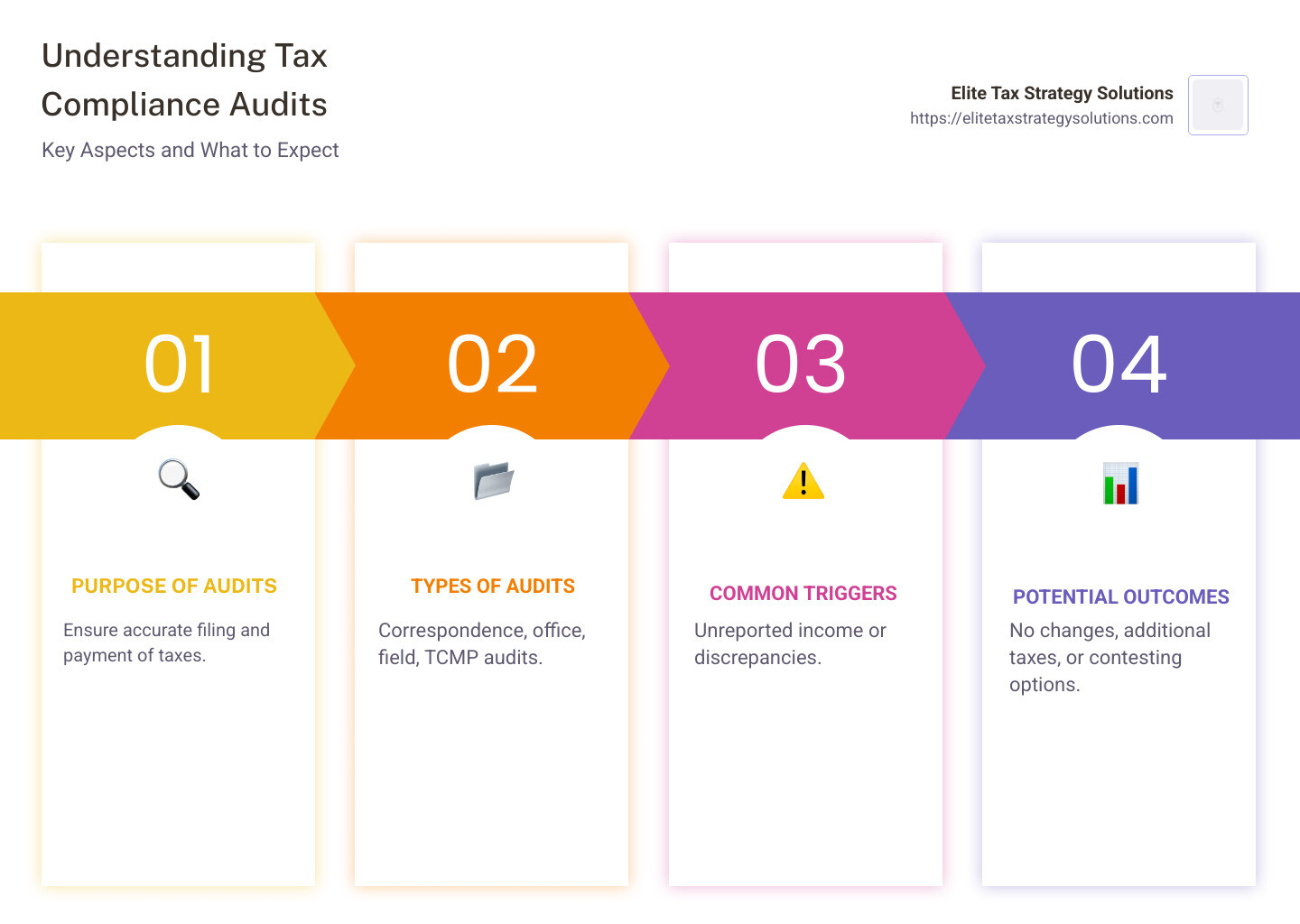
Here’s what you need to know about tax compliance audits:
- Purpose: Confirm accurate tax return filing and payment.
- Types: Correspondence, office, field, and TCMP audits.
- Triggers: Unreported income or discrepancies in tax returns.
- Outcome: May result in no changes, additional taxes, or the opportunity to contest findings.
By understanding the functions and potential risks associated with tax compliance audit, you can better prepare and protect your financial interests.
I’m David Fritch, with over 40 years of experience managing my tax law firm. Having worked with entities like Arthur Andersen, I specialize in helping individuals and businesses steer the complexities of tax compliance audit to ensure accuracy and optimize their financial standing.
Tax compliance audit helpful reading:
Understanding Tax Compliance Audits
Tax compliance audits are essential for ensuring that taxpayers adhere to IRS regulations. They help keep financial systems fair and transparent. Let’s explore the different types of IRS audits and what might trigger them.
Types of Tax Audits
1. Correspondence Audit
This is the most common type of audit, making up about 75% of all IRS audits. It involves the IRS sending a letter, often a 566 letter, requesting more information about certain parts of your tax return. For instance, they might ask for receipts to justify a deduction.
2. Office Audit
In this scenario, you’re asked to visit an IRS office. These audits are more detailed than correspondence audits and usually focus on complex issues like itemized deductions or business profits. It’s essential to be cautious, as these audits can expand if the IRS finds other concerns.
3. Field Audit
This is the most comprehensive type of audit. An IRS agent visits your home or business to examine your financial records. Field audits are more intrusive and can involve interviews with employees about your business operations. It’s wise to have a tax attorney present during these audits to avoid any potential pitfalls.
4. Taxpayer Compliance Measurement Program (TCMP) Audit
These audits are rare and thorough, used primarily for research purposes. They examine every part of a taxpayer’s return to ensure full compliance.
What Triggers a Tax Compliance Audit?
Several factors can trigger a tax compliance audit:
Unreported Income
If the IRS detects income that wasn’t reported, it raises a red flag. This can happen through data mismatch between what you reported and what third parties, like employers or banks, have submitted.
Discrepancies in Tax Returns
Inconsistencies in your tax filings, such as claiming deductions that don’t align with your income level, can lead to an audit.
Random Selection
Sometimes, audits happen randomly. The IRS uses statistical formulas to select returns for auditing, ensuring that everyone is held accountable.
High Income Levels
Taxpayers with higher incomes are more likely to be audited. For example, the audit rate for individuals reporting a total positive income of $10 million or more was 11% for tax year 2019.
Understanding these triggers and types of audits can help you stay prepared and compliant, minimizing the risk of penalties or additional taxes.
Preparing for a Tax Compliance Audit
Getting ready for a tax compliance audit can feel overwhelming, but being organized and informed can make a big difference. Let’s break down what you need to prepare and how a tax attorney can help.
Key Documentation Required
Having the right documents ready is crucial. Here’s a checklist of what you might need:
-
Receipts and Invoices: Gather all receipts and invoices related to your deductions and income. This helps verify your claims and shows transparency.
-
Checks and Bank Statements: Keep copies of canceled checks and bank statements. These documents are essential for proving transactions and income sources.
-
Contracts: If you have business dealings or rental properties, contracts can serve as proof of agreements and income.
-
General Ledgers and Journals: These are especially important for businesses, as they provide a comprehensive view of financial activities.
-
Tax Returns: Both federal and state tax returns from previous years can provide context and help clarify any discrepancies.
Keeping these documents in order can streamline the audit process and reduce stress. Make sure everything is easily accessible and organized by year or category.
The Role of a Tax Attorney
A tax attorney can be your best ally during an audit. Here’s how they can assist:
-
Legal Advice: Tax laws are complex. A tax attorney can explain your rights and obligations, ensuring you don’t accidentally provide too much information.
-
Audit Resolution: If disputes arise during the audit, a tax attorney can negotiate with the IRS on your behalf. They can help resolve issues and potentially limit any penalties.
-
IRS Communication: Let your attorney handle communication with the IRS. They know how to keep the conversation focused and prevent the audit from expanding unnecessarily.
Having a tax attorney by your side can provide peace of mind. They ensure that the audit process is fair and that your interests are protected.
Conducting a Tax Compliance Audit
IRS Examination Methods
When it comes to a tax compliance audit, the IRS uses a few different methods to examine your financial records. Understanding these methods can help you know what to expect.
Correspondence Audits
These are the most common type of audit, making up about 75% of all IRS audits. They are conducted through the mail. The IRS sends you a letter, often a 566 letter, requesting more information about specific parts of your tax return. For instance, they might ask for receipts to support a deduction. If your documents are in order, you can handle these audits yourself. Just make sure to respond promptly and provide the requested information.
Office Audits
If your tax situation is too complex for a correspondence audit, you might be asked to visit an IRS office. During an office audit, an IRS agent will review your documents and ask questions. These audits often focus on specific issues like itemized deductions or rental income. Be prepared to answer questions about your financial situation and lifestyle, as this could lead to further inquiries.
Field Audits
Field audits are the most thorough type of audit. They are conducted in person at your home, business, or accountant’s office. An IRS agent will review your records and might interview employees if you own a business. Field audits can be intrusive, so having a tax attorney present is advisable. They can help you steer the process and ensure you don’t accidentally provide information that could expand the audit.
Compliance with Due Diligence
Due diligence is crucial during a tax compliance audit. The IRS wants to ensure that tax preparers follow all necessary steps to verify their clients’ eligibility for certain tax benefits.
Preparer Compliance
The IRS has a Preparer Compliance Program that focuses on ensuring tax preparers meet due diligence requirements, especially for credits like the Earned Income Tax Credit (EITC). During an audit, the IRS will check if you have:
- Met Knowledge Requirements: You need to know the tax laws and ask the right questions to verify your client’s information.
- Documented Client Interactions: Keep records of the questions you asked and the answers provided by your client.
- Retained Necessary Documents: Maintain copies of any documents relied upon to compute credits or determine eligibility for filing statuses like Head of Household.
The IRS may conduct face-to-face or correspondence due diligence visits. They might review a minimum of 25 client returns to check for compliance. If they find issues, they could expand their review to more returns.
Ensuring compliance with due diligence requirements is vital. It not only helps you avoid penalties but also ensures the integrity of the tax system.
By understanding the IRS’s examination methods and due diligence requirements, you can better prepare for a tax compliance audit. Next, we’ll answer some frequently asked questions about these audits and what happens if you don’t comply.
Frequently Asked Questions about Tax Compliance Audits
What is a Tax Compliance Audit?
A tax compliance audit is an examination of your financial records by the IRS to ensure you’ve accurately reported your income and paid the correct amount of taxes. Think of it as a check-up on your financial health. The IRS uses different audit methods, including correspondence, office, and field audits, to verify the accuracy of your tax returns.
These audits aren’t always about finding errors. Sometimes, they’re just routine checks to ensure compliance. The IRS selects taxpayers for audits based on various factors, including random selection and red flags in your tax return.
What Happens if You Don’t Comply with a Tax Audit?
Ignoring a tax audit is not a good idea. If you don’t comply, you might face penalties, additional taxes, or even IRS collection actions. The IRS can impose fines and interest on any underpaid taxes, which can add up quickly. In severe cases, they might place liens on your property or garnish your wages.
It’s crucial to respond promptly to any audit notices and provide the requested documentation. If you disagree with the audit findings, you can appeal, but ignoring the process won’t make it go away.
Can a Tax Compliance Inspection Turn into a Tax Audit?
Yes, a tax compliance inspection can sometimes transition into a full-blown tax audit. Inspections are usually preliminary reviews of your records to check for compliance with specific tax requirements. If the IRS finds discrepancies or areas of concern during an inspection, they might decide to conduct a more thorough audit.
The transition from an inspection to an audit involves more detailed scrutiny of your financial records. The IRS will notify you if this happens, and be prepared. Having organized records and seeking legal advice can help you steer this process smoothly.
Understanding these aspects of tax compliance audits can help you stay on top of your tax obligations and avoid potential pitfalls. Let’s continue to explore more about how Elite Tax Strategy Solutions can assist you in managing your tax compliance effectively.
Conclusion
Navigating tax compliance can be challenging, but it’s essential for maintaining your financial health and peace of mind. Tax compliance audits are not just about identifying errors; they ensure that businesses and individuals adhere to tax laws. At Elite Tax Strategy Solutions, we believe in a proactive approach to managing these audits, helping you stay ahead of potential issues before they arise.
Our team offers personalized tax planning services custom to high earners and closely held businesses. We focus on maximizing tax savings while ensuring compliance with all tax laws. By keeping your financial records organized and up-to-date, we help you minimize the risks associated with audits.
Why choose Elite Tax Strategy Solutions?
-
Proactive Approach: We don’t just react to tax issues; we anticipate them. Our experts continually monitor changes in tax laws to ensure your strategies remain compliant and effective.
-
Comprehensive Support: From tax preparation to IRS representation, we provide a full suite of services to manage your tax obligations efficiently.
-
Expert Guidance: With locations in Jasper, Indiana, and suburban areas near major cities, our team is ready to offer local expertise and personalized attention.
By partnering with us, you can transform tax compliance from a potential burden into a strategic advantage. Learn more about our Tax Support and Compliance Services and how we can help you achieve financial stability and success.
With Elite Tax Strategy Solutions by your side, you can confidently steer the complexities of tax compliance audits and focus on what truly matters—growing your business and achieving your financial goals.