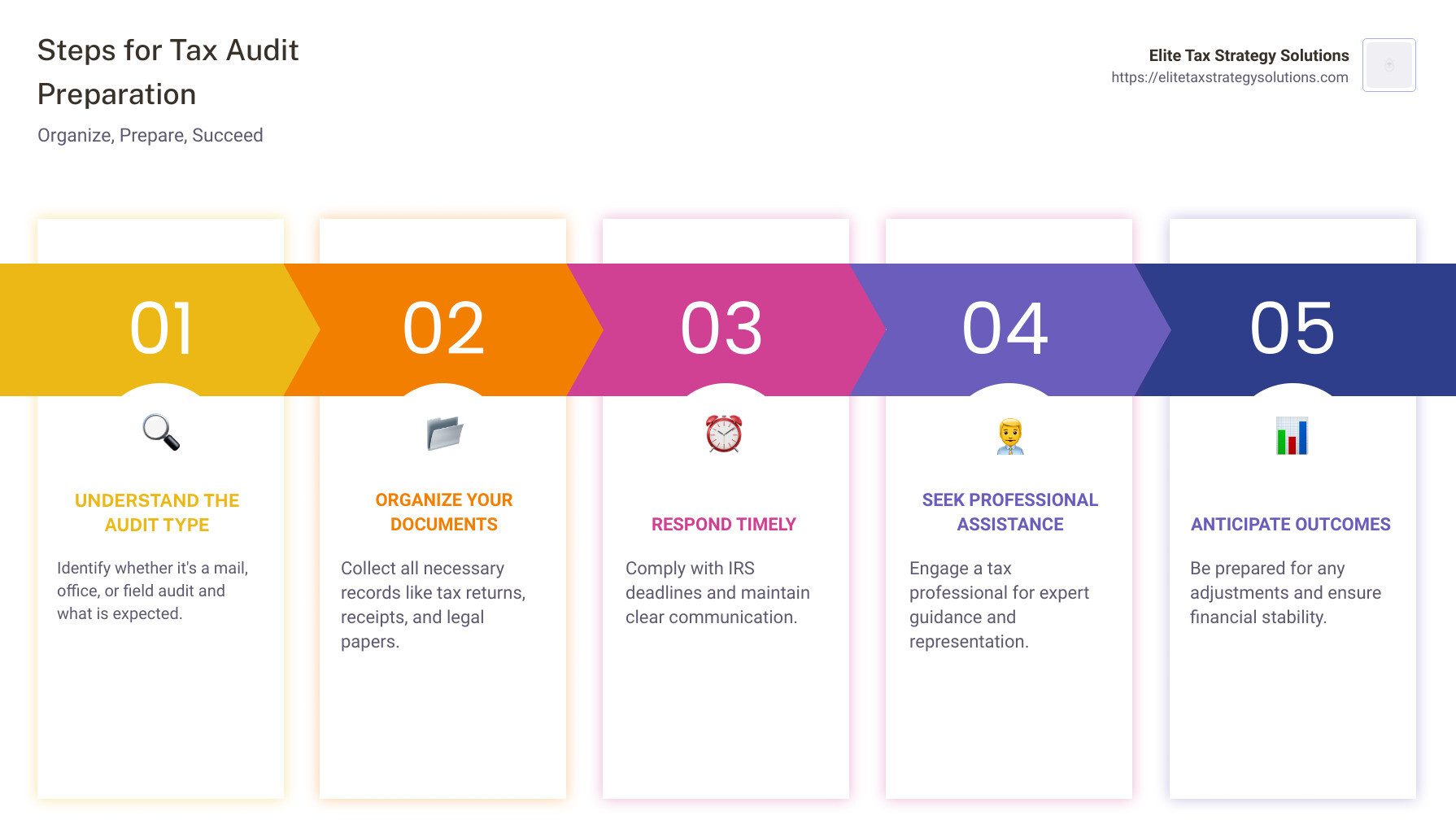
Tax audit preparation is crucial for any business or high-income earner aiming to steer the complexities of IRS procedures smoothly. A well-prepared approach not only reduces stress but also ensures compliance and financial stability. Here’s a quick checklist to get you started:
-
Understand the Scope: Know the type of audit (mail, office, field) and what is expected.
-
Organize Documents: Gather all necessary records such as tax returns, receipts, and legal papers.
-
Respond Timely: Meet IRS deadlines and communicate clearly to establish a positive rapport.
-
Seek Professional Help: Consider hiring a tax professional for thorough preparation and representation.
Navigating the intricacies of an IRS audit might seem daunting, but understanding the tax audit process can alleviate much of the anxiety. Being organized and proactive can dramatically improve the outcome of your audit experience.
— I’m David Fritch, a seasoned professional with over 40 years of experience in tax audit preparation. Having assisted numerous clients in managing their tax processes, I’ve witnessed the impact of a well-prepared audit strategy firsthand. Let’s dive deeper into how you can prepare effectively.
Essential tax audit preparation terms:
– comprehensive financial planning
– deduction optimization
– tax planning for businesses
Understanding Tax Audits
When it comes to IRS audits, understanding the different types and triggers can help you stay prepared and avoid potential pitfalls.
IRS Audit Types
The IRS conducts several types of audits, each with its own level of scrutiny:
-
Mail Audit: This is the simplest form of audit. The IRS sends a letter requesting more information about specific items on your tax return. You’ll need to mail back the documents they ask for.
-
Office Audit: This requires you to visit an IRS office. You’ll bring the requested documents and discuss your tax return with an IRS agent. It’s more detailed than a mail audit.
-
Field Audit: The most thorough type, where an IRS agent visits your home or business. They review your records on-site, assessing all aspects of your financial activities.
Audit Triggers
Certain factors can increase the likelihood of an IRS audit. Here are some common audit triggers:
-
Unreported Income: Failing to report all your income, including side jobs or investments, can raise a red flag.
-
Excessive Deductions: Claiming unusually high deductions compared to your income level might attract attention.
-
Discrepancies: Mismatches between your tax return and information the IRS receives from other sources (like your employer) can prompt an audit.
-
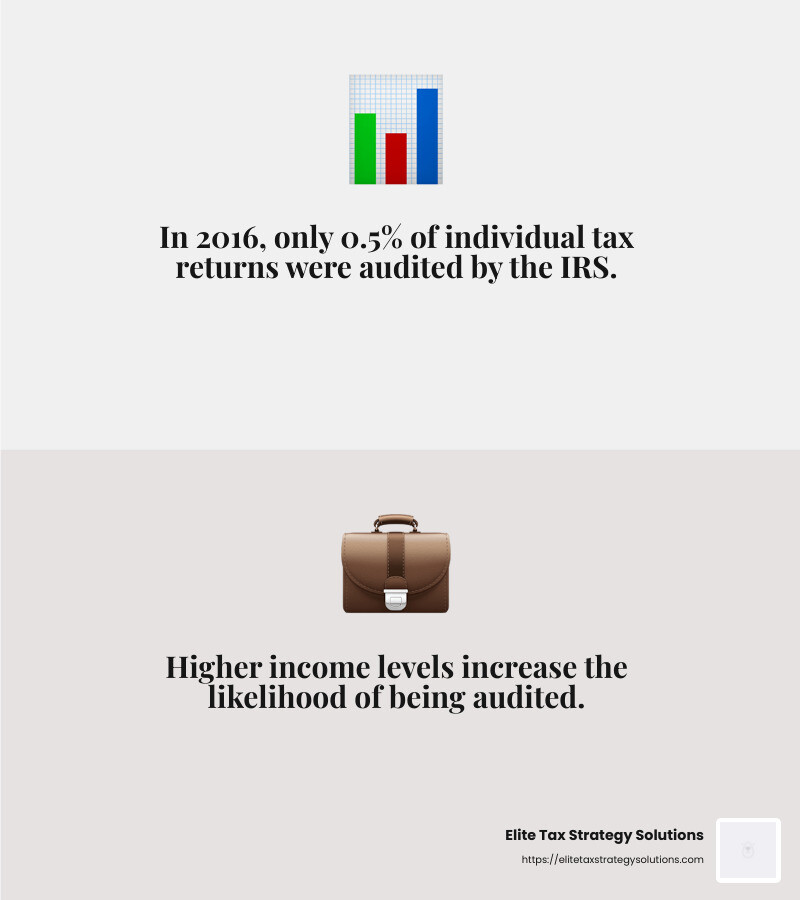
High-Income Earners: Those with higher incomes tend to be audited more frequently.
Audit Notification
If you’re selected for an audit, the IRS will notify you by mail. Audit notifications are never sent via phone or email, so be wary of scams. The letter will specify the type of audit, what records are needed, and how to proceed.
Key Steps After Receiving an Audit Notification:
-
Read the Notification Carefully: Understand what the IRS is asking for and the deadline for responding.
-
Gather Documents: Collect the specific documents mentioned in the audit notice.
-
Consult a Professional: Consider contacting a tax professional to help you steer the audit process.
Understanding these components of a tax audit can help you stay calm and organized, reducing the stress of the audit process.
Essential Steps for Tax Audit Preparation
Preparation is key to handling a tax audit smoothly. Here’s how to get started with tax audit preparation:
Document Organization
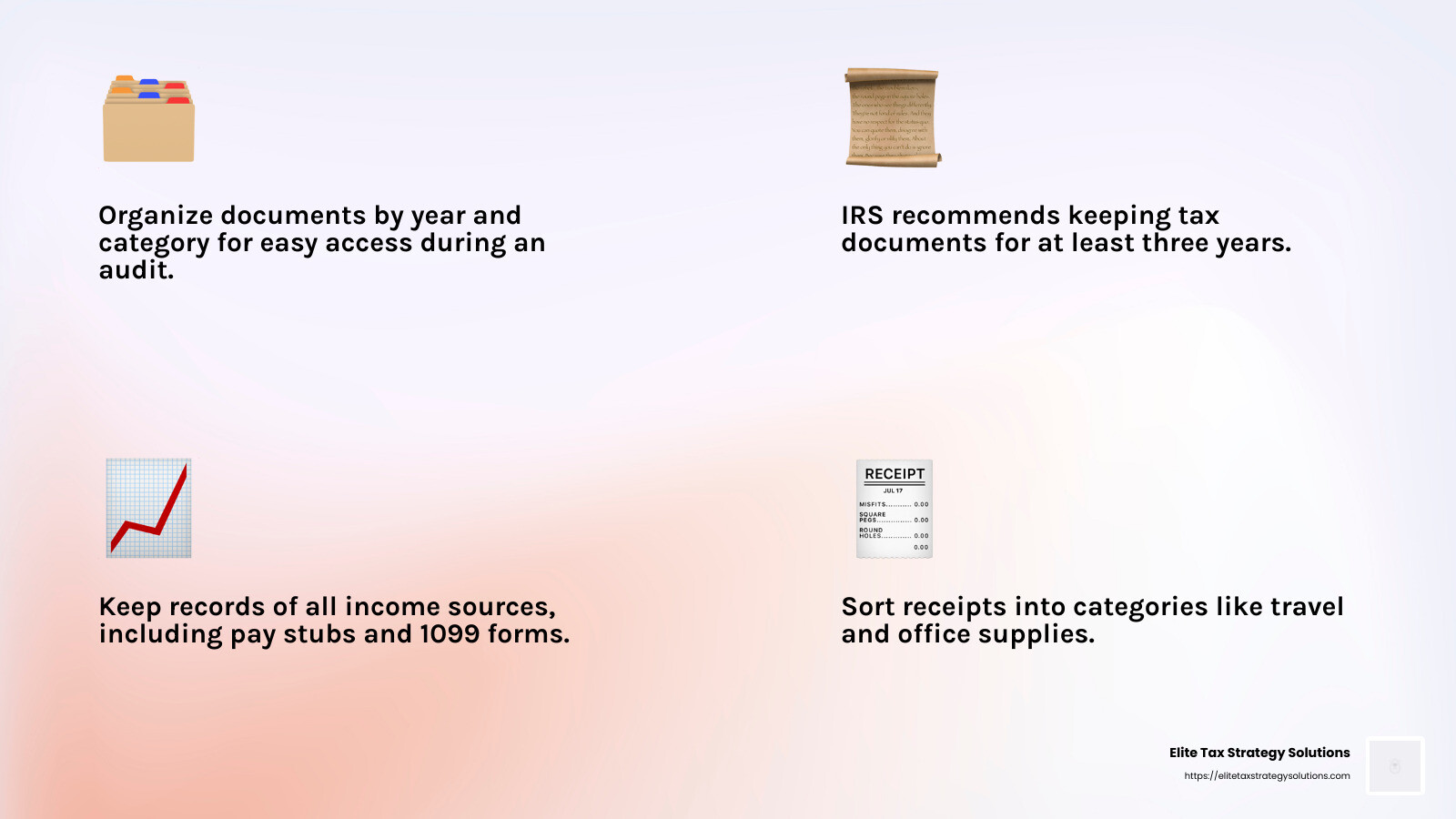
Keeping your documents organized can save you a lot of stress. Start by sorting your records by year and category—such as income, expenses, and deductions. This makes it easier to find what you need when the IRS asks for specific information.
Organize your documents by:
- Income: Keep records of all income sources, including pay stubs, bank statements, and 1099 forms.
- Expenses: Sort receipts and bills into categories like travel, meals, and office supplies.
- Deductions: Collect documents that support any deductions you claim, such as mortgage interest or charitable contributions.
Record-Keeping
Good record-keeping practices are crucial. The IRS recommends keeping tax-related documents for at least three years, but some records, like those related to fraud, should be kept indefinitely.
Maintain records for:
- Sales and Purchases: Keep invoices and receipts for all business transactions.
- Tax Payments: Document all tax payments, including dates and amounts.
- Exemptions: If you claim any tax exemptions, ensure you have the proper documentation, like exemption certificates.
Regular Reviews and Updates
Regularly review your financial records to ensure they are complete and accurate. Doing internal audits can help catch and correct mistakes before the IRS does.
Steps to follow:
- Conduct Internal Audits: Regularly review your records to identify discrepancies early.
- Update Records: Ensure your financial records are up-to-date, reflecting any changes in your business or personal finances.
Technology and Professional Assistance
Use technology to help with record-keeping, like accounting software that tracks expenses and income automatically. Also, consider working with a tax professional who can provide guidance and help identify potential red flags.
Tools and resources:
- Accounting Software: Use tools like QuickBooks to automate record-keeping.
- Tax Professionals: Engage experts to ensure your records meet IRS standards and to provide advice on complex tax issues.
By following these essential steps for tax audit preparation, you can approach the audit process with confidence and ease. This proactive approach not only prepares you for an audit but can also streamline your financial management practices overall.
Key Documents to Gather
When preparing for a tax audit, having the right documents ready is crucial. Here’s a breakdown of the key documents you should gather:
Receipts
Receipts are more than just proof of purchase. They can demonstrate business expenses, validate deductions, and even show mileage for business travel. Organize them by date and note how each relates to your business. For example, a receipt for office supplies should be noted as a business expense.
Bills
Bills provide a record of services and goods you’ve paid for. Make sure to include the name of the person or organization you paid, the type of service, and the payment dates. This documentation is essential for verifying expenses and deductions.
Legal Papers
Legal documents can have significant tax implications. Include papers related to:
- Property Acquisition: Documents showing purchase details.
- Tax Preparation or Advice: Any legal advice related to taxes.
These papers should describe the case, when it happened, and how it relates to your business or taxes.
Loan Agreements
If you’ve taken out loans, gather all related agreements. Include the original loan document with:
- Names of the borrowers
- Loan amount and terms
- Financial institution details
Also, if the loan was from a non-institution, provide a statement from the payee with interest details and their Social Security number.
Employment Documents
These might include uniform policies, W-2 forms, and any continued education requirements. Employment documents help verify income and any work-related deductions or reimbursements.
Having these documents well-organized and accessible will make the tax audit process much smoother. Keeping them in order not only helps during an audit but also ensures your financial records are accurate and up-to-date.
Next, we’ll explore how to effectively respond to an IRS audit, covering response timelines, communication methods, and understanding your audit rights.
How to Respond to an IRS Audit
Facing an IRS audit can be intimidating, but knowing how to respond can make the process smoother and less stressful. Here’s a guide to help you steer the audit response process effectively.
Response Timeline
Timeliness is crucial. Once you receive an audit notification, it’s important to respond promptly. The IRS usually provides a deadline by which you must reply. Missing this deadline can complicate your situation, potentially leading to penalties or assumptions against you.
Mail Audits: If you’re dealing with a mail audit, ensure you send all requested documents by the specified date.
Office or Field Audits: These require more preparation. Schedule a meeting with the IRS agent as soon as possible and be ready with all necessary documentation.
Communication Methods
Clear and Professional Communication is key. Whether you’re communicating through mail, phone, or in-person, ensure your responses are clear and concise.
-
Written Communication: Always keep a copy of any correspondence with the IRS. This includes letters, emails, and forms.
-
Phone Calls: If you discuss your audit over the phone, take detailed notes, including the date, time, and the name of the IRS representative you spoke with.
-
In-Person Meetings: Bring all requested documents and be prepared to discuss them. It might be helpful to have a tax professional with you to answer complex questions.
Understanding Your Audit Rights
You have several rights during an audit, which are outlined in Publication 1, Your Rights as a Taxpayer. Here are a few key rights:
-
Right to Representation: You can represent yourself or hire a tax professional, such as a CPA or an attorney, to represent you.
-
Right to Privacy and Confidentiality: The IRS must respect your privacy and keep your information confidential.
-
Right to Understand the Process: You should be informed why the IRS is requesting certain information and how it will be used.
-
Right to Appeal: If you disagree with the audit findings, you have the right to appeal within the IRS and, if necessary, take your case to court.
By understanding and exercising these rights, you can ensure a fair and respectful audit process.
Next, we’ll dive into frequently asked questions about tax audits, including how to prepare, what might trigger an audit, and how long the process typically takes.
Frequently Asked Questions about Tax Audits
How to prepare for a tax audit?
Preparation is key when it comes to a tax audit. Start by gathering all your tax returns, receipts, and any information related to deductions. This includes bills, legal papers, loan agreements, and employment documents. Keep these organized and easily accessible.
-
Tax Returns: Ensure you have copies of your tax returns for the years under audit and the two previous years. This helps provide context and a complete financial picture.
-
Receipts and Deductible Information: Keep all receipts that support your deductions. If you claimed a home office deduction, for example, have proof of your home office expenses.
-
Document Organization: Use folders or digital files to keep everything in order. Label each document clearly so you can quickly find what you need.
Being well-prepared can ease the audit process and show the IRS that you take your tax responsibilities seriously.
How long does a tax audit usually take?
The duration of a tax audit can vary based on several factors, including the type of audit and the complexity of your tax situation.
-
Mail Audits: These are generally quicker, often resolved within a few months, as they involve sending documents through mail.
-
Office Audits: These can take longer, depending on the complexity of the issues being examined. Expect anywhere from a few months to a year.
-
Field Audits: These are the most comprehensive and can take the longest, sometimes over a year. They involve an IRS agent visiting your business or home.
The key to a faster resolution is providing all requested documents promptly and accurately.
What will trigger an IRS audit?
Several factors can trigger an IRS audit, and understanding them can help you avoid common pitfalls.
-
Unreported Income: Failing to report income, such as freelance work or investment earnings, is a common trigger. Ensure all income is reported accurately.
-
Discrepancies: Mismatches between your tax return and third-party information (like W-2s or 1099s) can raise red flags.
-
Audit Triggers: Certain deductions or credits, like the home office deduction or large charitable contributions, can attract scrutiny if they seem unusually high compared to your income.
By maintaining accurate records and honest reporting, you can minimize the risk of triggering an audit.
In the next section, we’ll explore the role of Elite Tax Strategy Solutions in proactive tax planning and ensuring compliance, helping you stay prepared for any tax challenges that may arise.
Conclusion
At Elite Tax Strategy Solutions, we understand that navigating the complexities of tax audits can be daunting. That’s why we focus on proactive tax planning and ensuring compliance to help our clients stay ahead of potential challenges.
Our approach is simple but effective: anticipate, prepare, and act. We work closely with high earners and closely held businesses to maximize tax savings while maintaining financial stability. Our team of experts keeps up with the latest tax laws and regulations, ensuring you are always in compliance without missing out on any opportunities for optimization.
Why Choose Us?
-
Custom Tax Planning: We design personalized tax strategies that align with your financial goals. By understanding your unique situation, we help you implement tax-saving measures that work best for you.
-
Comprehensive Compliance Support: Our services include thorough documentation reviews and regular updates on tax legislation changes, so you’re never caught off guard.
-
Expert Guidance: With our team by your side, you gain access to seasoned professionals who can steer the intricacies of tax audits and provide the support you need.
-
Peace of Mind: Knowing that your tax affairs are in order allows you to focus on what truly matters—growing your business and achieving your financial aspirations.
Incorporating proactive tax strategies not only helps in tax audit preparation but also ensures long-term success. We invite you to explore our High-Income Individual Tax Planning services to see how we can support your journey to financial success.
By choosing Elite Tax Strategy Solutions, you’re not just preparing for the present; you’re safeguarding your future.