Why Estate and Gift Tax Planning Matters for Your Financial Legacy
Estate and gift tax planning is the process of structuring how you transfer wealth to minimize taxes and achieve your financial goals. Without a sound strategy, your estate could face a 40% federal tax rate, plus state taxes that can push the combined rate over 50%.
Quick Answer: Estate and Gift Tax Planning Essentials
- Estate Tax – A federal tax (up to 40%) on assets you leave to heirs at death.
- Gift Tax – A federal tax on large gifts made during your lifetime.
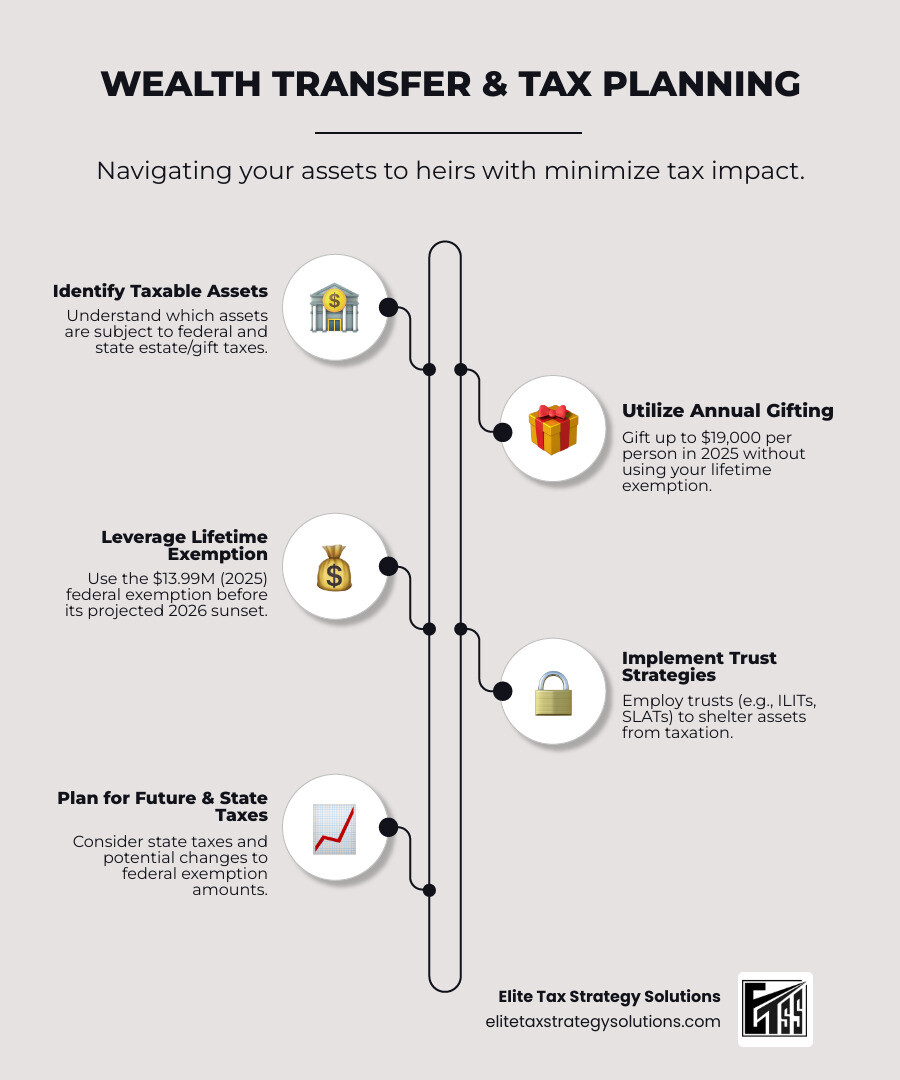
- 2025 Exemption – $13.99 million per person ($27.98 million for married couples).
- 2026 Sunset – Exemption drops to approximately $7 million unless Congress acts.
- Annual Exclusion – Gift up to $19,000 per person in 2025 without using your lifetime exemption.
- Key Strategy – Act before 2026 to lock in the current high exemption amounts.
The current estate and gift tax exemption of $13.99 million per person is historically high, but it’s temporary. After 2025, this amount is scheduled to drop by roughly half. For high-net-worth individuals and business owners, this creates both urgency and a significant planning opportunity.
I’m David Fritch, and with 40 years of experience in tax planning and estate management through my law firm and CPA practice, I’ve helped countless clients steer the complexities of estate and gift tax planning. My work focuses on developing personalized strategies that protect wealth for future generations while minimizing tax burdens.
Estate and gift tax planning terms you need:
- financial planning for high income earners
- retirement tax strategies for high income earners
- advanced tax planning strategies
Understanding the Wealth Transfer Tax System
Transferring wealth involves a complex federal tax system. Understanding how the estate and gift taxes work is the first step toward protecting your assets. These taxes work together to ensure that significant wealth transfers—whether during your lifetime or after—are taxed. While the federal government leads the charge, individual states can add their own layers of taxation. For a deeper look at how these taxes interact with trusts and estates, visit our page on Trust and Estate Taxes.
What Are Estate and Gift Taxes?
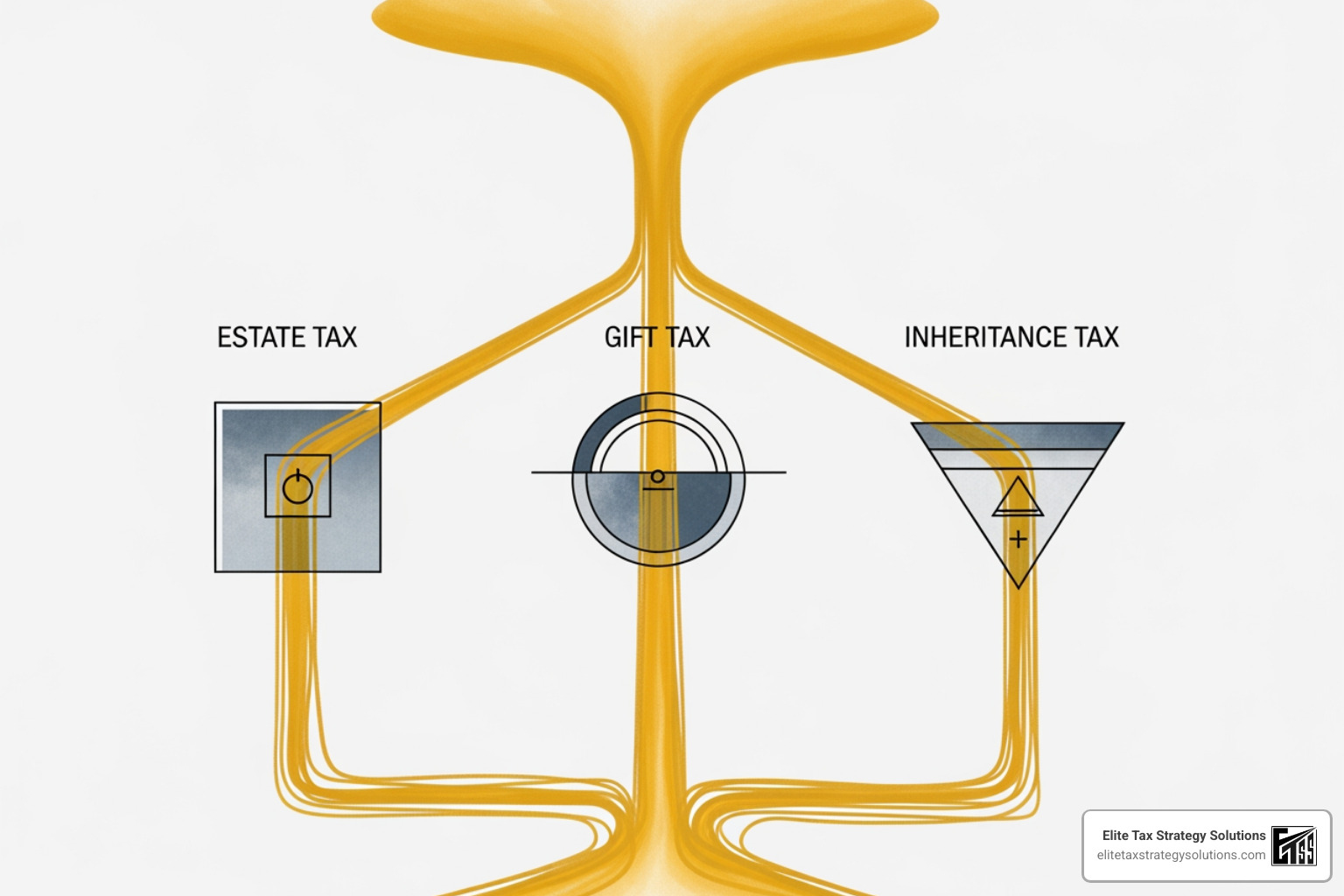
Estate and gift tax planning involves navigating two sides of the same coin. Both taxes target wealth transfers, just at different times.
The estate tax is a tax on the total value of your assets at death, applied to amounts exceeding a certain exemption. The current federal rate is 40% on the taxable portion, though very few estates are large enough to be subject to it. In 2019, for example, only 0.07% of Americans faced this tax.
The gift tax applies to transfers made during your lifetime, preventing people from giving away their entire estate to avoid the estate tax. The giver, not the recipient, is responsible for the tax. However, you can gift up to a certain amount annually ($19,000 per person in 2025) without tax implications. Gifts above this annual exclusion reduce your lifetime exemption.
These two taxes operate under a unified rate schedule. Your lifetime taxable gifts and your taxable estate are combined and taxed under one system. The applicable exclusion amount is the total value you can transfer tax-free throughout your life and at death combined. Any exemption used for gifts during life reduces what’s available for your estate.
There is a key difference in how these taxes are calculated. The estate tax is tax-inclusive, calculated on the full estate value, including assets used to pay the tax. The gift tax is tax-exclusive, calculated only on the gift amount. This distinction often makes lifetime gifting more tax-efficient.
The Current Tax Landscape: Exemptions and Rates
We are in a temporary window of extraordinary opportunity for estate and gift tax planning. The Tax Cuts and Jobs Act (TCJA) of 2017 nearly doubled the amount you can transfer tax-free. For 2025, that exemption is $13.99 million per person ($27.98 million for a married couple).
However, this provision will sunset on December 31, 2025. In 2026, the exemption is expected to drop to approximately $7 million per person (adjusted for inflation). This creates urgency for families with significant wealth. The federal estate tax rate remains at 40% on any amount above the exemption.
Married couples can use portability, which allows a surviving spouse to use any of their deceased spouse’s unused exemption. To claim portability, an estate tax return (Form 706) must be filed on time, even if no tax is due.
| Category | 2025 Federal Exemption | Projected 2026 Federal Exemption |
|---|---|---|
| Individual | $13.99 million | ~$7 million |
| Married Couples | $27.98 million | ~$14 million |
Note: The 2026 figures are estimates based on pre-2018 levels adjusted for inflation.
The IRS has confirmed there is no “clawback.” If you use the higher exemption for gifts before 2026, your estate won’t be penalized when the exemption drops. Your estate can calculate its tax credit using the higher of the exemption in effect when you made the gifts or when you die. This means you can act now with confidence. For more details, see the IRS guidance on the TCJA “clawback” issue.
The message is clear: if you have significant wealth, now is the time to update your estate plan. The current high exemptions won’t last forever.
Core Strategies for Estate and Gift Tax Planning
Let’s explore proactive strategies to protect your wealth and minimize tax liability. Effective estate and gift tax planning is about ensuring your wealth benefits your loved ones and the causes you care about, exactly as you intend. For a comprehensive approach, explore our page on Strategic Tax Planning.

The Power of Annual Gifting and Direct Payments
One of the simplest strategies is annual gifting. The IRS allows you to give up to $19,000 per person in 2025 without incurring gift tax or using your lifetime exemption. You can give this amount to as many people as you want. If you’re married, you and your spouse can combine gifts through gift splitting, effectively giving $38,000 per person each year. For example, a couple with three children and six grandchildren could transfer $342,000 annually tax-free, removing millions from their taxable estate over a decade.
Additionally, you can make direct payments for education expenses (tuition) and healthcare expenses by paying the institution or provider directly. These payments do not count as gifts and do not use your annual exclusion or lifetime exemption, offering a powerful way to reduce your estate while supporting family.
If your gifts exceed the annual exclusion, you must file a gift tax return using IRS Form 709. Married couples splitting gifts must always file this form.
Advanced estate and gift tax planning with trusts
Trusts are versatile tools for advanced planning. By transferring assets to an irrevocable trust, you give up control, but you also remove those assets and their future growth from your taxable estate.
- Irrevocable Life Insurance Trust (ILIT): This trust owns your life insurance policies, ensuring the death benefit is excluded from your taxable estate. Annual gifts to the trust can cover premiums tax-free.
- Spousal Lifetime Access Trusts (SLATs): One spouse creates a trust for the other, using the high exemption now while the beneficiary spouse retains access to the funds. This removes assets from the grantor’s estate.
- Qualified Personal Residence Trust (QPRT): This transfers your home to a trust at a reduced gift value, as you retain the right to live in it for a set term. If you outlive the term, the home passes to heirs free of estate tax.
- Grantor Retained Annuity Trusts (GRATs): Ideal for appreciating assets. You transfer assets and receive an annuity. If the assets grow faster than the IRS interest rate, the excess growth passes to beneficiaries tax-free, often without using any exemption.
Each trust strategy is nuanced. We help clients choose the right approach for their unique circumstances. For more insights, visit our High Net Worth Tax Planning page.
Using Charitable Donations to Reduce Your Estate
Philanthropy and estate and gift tax planning work well together. Assets left to qualified charities receive a full charitable deduction, avoiding estate tax entirely.
- Charitable Remainder Trust (CRT): You transfer assets, receive an income stream, and the remainder goes to charity. You get an immediate income tax deduction, avoid capital gains on asset sales within the trust, and remove the assets from your estate.
- Donor-Advised Funds (DAFs): These act like a charitable savings account. You contribute assets, get an immediate tax deduction, and recommend grants to charities over time. The assets are removed from your estate, and you can avoid capital gains on appreciated property.
- Private Foundation: This offers maximum control over your charitable giving, making it a powerful tool for a family legacy, though it is more complex to administer. It also removes assets from your taxable estate.
Lifetime Gifting vs. Inheritance: A Strategic Choice
One of the most important decisions in estate and gift tax planning is timing: should you transfer wealth now, or wait? The answer depends on your assets, family needs, and financial goals. It’s a balancing act between the tax benefits of lifetime giving and the advantages of holding assets until death. Our Tax-Efficient Estate Planning page offers additional insights.

The role of lifetime gifting in estate and gift tax planning
Strategic lifetime gifting offers several powerful advantages. When you gift an asset, you remove not only its current value from your taxable estate but also all its future appreciation. With the federal exemption at a historic high of $13.99 million per person before its scheduled reduction in 2026, making substantial gifts now allows you to lock in this benefit.
Lifetime gifts also let you see your heirs benefit from your generosity. Furthermore, the gift tax is “tax-exclusive” (calculated only on the gift), while the estate tax is “tax-inclusive” (calculated on the entire estate, including money used for taxes). This difference can result in significant tax savings for lifetime gifts compared to transfers at death.
Understanding Basis: Step-Up vs. Carryover
Before gifting assets, it’s crucial to understand basis—what you originally paid for an asset. Basis determines the capital gains tax when an asset is sold.
When an heir inherits an asset, it receives a step-up in basis to its fair market value at the date of death. For example, if you bought stock for $200,000 that is worth $1.2 million at your death, your heirs inherit it with a new basis of $1.2 million. They can sell it for that price and owe zero capital gains tax on the $1 million of appreciation.
In contrast, if you gift that same stock during your lifetime, the recipient takes your original $200,000 basis, known as a carryover basis. If they sell it for $1.2 million, they will owe capital gains tax on the $1 million gain.
This distinction is why we analyze each asset. Cash and assets with little appreciation are great for gifting. Highly appreciated assets are often better held until death to receive the step-up in basis, as the capital gains tax savings may outweigh the estate tax benefits of gifting. We also consider gifting income-producing assets to family members in lower tax brackets to shift the income tax burden.
Navigating State Taxes and Other Transfer Taxes
Federal taxes are only part of the picture; state-level taxes can also significantly impact your estate and gift tax planning. Some states impose their own state estate tax, while others have a state inheritance tax, which is paid by the beneficiaries. State exemption amounts are often much lower than the federal exemption.
Fortunately for our local clients, Indiana does not have a state estate or inheritance tax. However, if you own property or have residency ties to other states, their laws become a crucial part of your plan.
Your legal domicile, or permanent home, determines which state’s tax laws apply. States consider factors like where you vote, hold a driver’s license, and maintain social ties. If you split time between states, careful planning is needed to establish your intended domicile and align it with your tax strategy.
Another federal tax to consider is the Generation-Skipping Transfer Tax (GSTT). This 40% tax applies to transfers to “skip persons” (e.g., grandchildren) and is in addition to any estate or gift tax. The good news is that the GSTT has its own exemption, equal to the federal estate tax exemption ($13.99 million in 2025). By properly allocating your GSTT exemption, often through a Dynasty Trust, you can protect assets for multiple generations from future transfer taxes. Learn more in our Multi-Generational Wealth Planning resources.
For clients with family businesses or farms, a key concern is whether estate taxes will force a sale. The tax code offers relief, including provisions that allow estate taxes to be paid in installments over many years. Another rule, special use valuation, allows qualifying land to be valued for its current use (e.g., agricultural) rather than its higher market value for development. These tools, combined with proactive planning, can help preserve your family’s legacy business or farm.
Frequently Asked Questions about Estate and Gift Tax Planning
Here are answers to some of the most common questions we hear from clients at Elite Tax Strategy Solutions.
What happens if I make large gifts now and the exemption amount drops in 2026?
You are protected by the IRS’s “anti-clawback” regulations. These rules guarantee you won’t be penalized for using the high exemption amounts available through 2025. When your estate tax is calculated, the credit will be based on the higher of the exemption amount you used for the gift or the exemption in effect at your death. This allows you to confidently take advantage of the current opportunity.
What is the difference between an estate tax and an inheritance tax?
The key difference is who pays the tax.
- Estate tax is paid by the deceased’s estate from its assets before they are distributed to heirs. The federal government and some states impose an estate tax.
- Inheritance tax is paid by the beneficiaries who receive the assets. The federal government does not have an inheritance tax, but a few states do. Indiana is not one of them.
For our clients in Jasper, this means you primarily need to plan for federal estate tax and any state taxes from property owned outside Indiana.
Can I still reduce my estate if I’ve already used my entire lifetime exemption?
Yes. Your estate and gift tax planning is not over. Several powerful strategies remain available:
- Annual Exclusion Gifts: You can still gift up to $19,000 per person in 2025 to as many people as you wish, year after year, tax-free.
- Direct Payments: Paying directly for someone’s educational tuition or medical expenses does not count as a taxable gift and has no annual limit.
- Advanced Trusts: Strategies like Grantor Retained Annuity Trusts (GRATs) can transfer future asset appreciation to heirs without using additional exemption.
- Charitable Giving: Donations to qualified charities, either directly or through trusts, are fully deductible from your estate.
- Life Insurance: A properly structured Irrevocable Life Insurance Trust (ILIT) can provide liquidity for taxes while keeping the death benefit out of your taxable estate.
Even after using your exemption, we have strategies to help you continue protecting your legacy.
Conclusion
Estate and gift tax planning is about more than just taxes—it’s about protecting what you’ve built and shaping your family’s future. We’ve covered the fundamentals of wealth transfer taxes, strategic gifting, trusts, and the critical, time-sensitive opportunity presented by the current $13.99 million exemption, which is set to be cut in half after 2025.
The clock is ticking on these historically high exemptions. With IRS anti-clawback rules in place, the window to act is now. An effective plan, however, is not one-size-fits-all. It must be custom to your unique family dynamics, assets, and goals.
At Elite Tax Strategy Solutions, we’ve spent decades helping clients in Jasper, Indiana and beyond make these complex decisions. Our proactive approach means we get to know you and your goals to craft a personalized strategy that minimizes taxes and honors your intentions. We help you steer changing laws, implement sophisticated strategies, and decide when to gift assets versus when to hold them for a step-up in basis at death.
Your legacy deserves a thoughtful, strategic plan that protects what matters most.
Ready to take control of your financial future and protect your legacy?
Develop your innovative tax plan with our experts