Proactive tax planning is a vital component for anyone aiming to improve financial efficiency. Here’s a quick breakdown of why you shouldn’t wait until tax season to start thinking about your taxes:
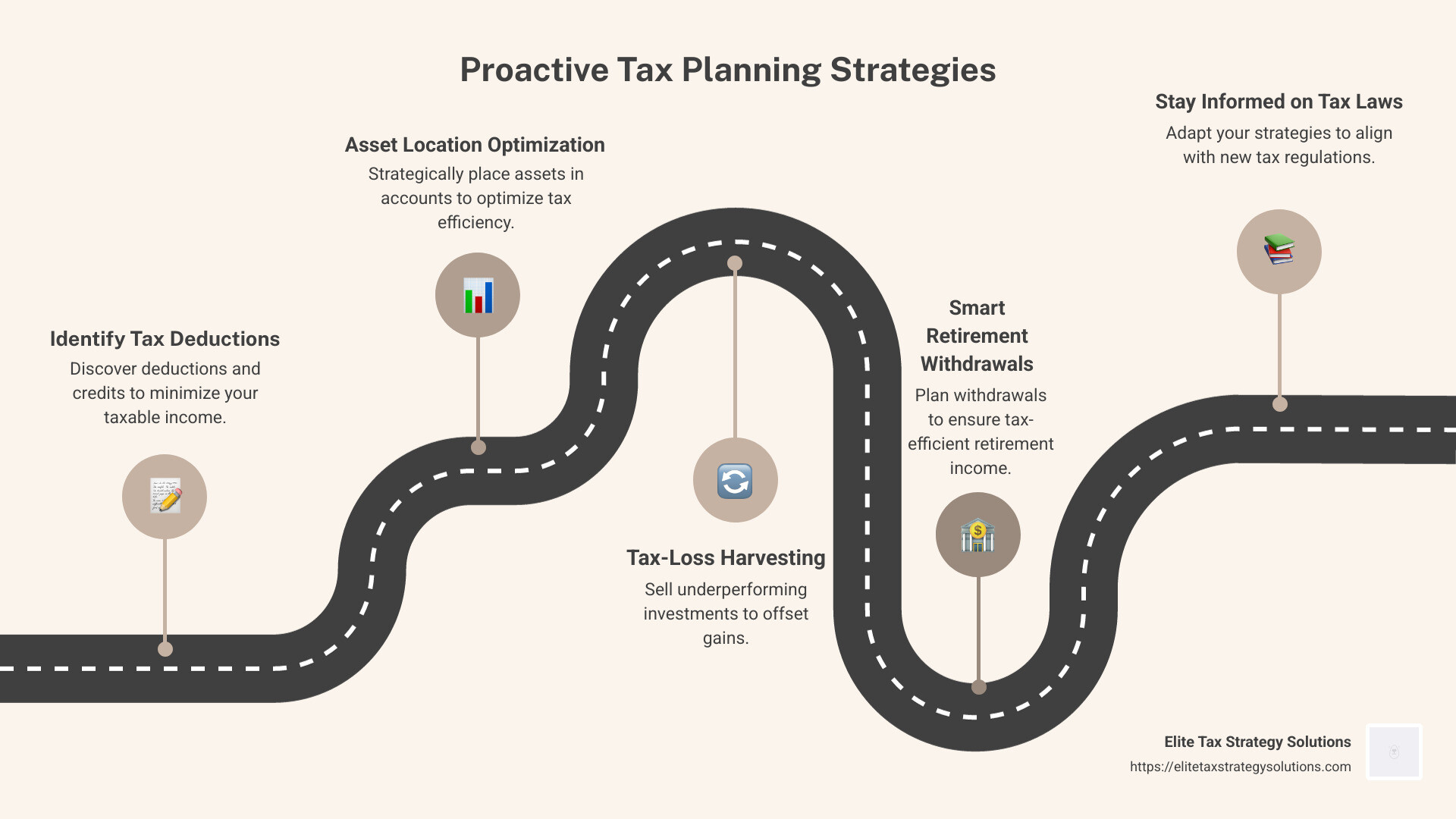
- Save Money: Proactive tax planning can identify tax deductions and credits you might otherwise miss.
- Boost Investments: Strategies like asset location and tax-loss harvesting can improve your investment returns.
- Secure Retirement: Thoughtful planning ensures your withdrawal strategy is tax-efficient, helping you enjoy your golden years.
- Long-Term Success: By making informed financial decisions now, you set yourself up for future security and growth.
Combining foresight with expert knowledge, proactive tax planning allows individuals and businesses to reduce tax liabilities and align their financial actions with long-term objectives. Effective planning doesn’t just plug holes; it builds a robust strategy that empowers you to face new tax laws with confidence, maximizing the savings they offer. It’s like a financial GPS, guiding you through the intricate tax landscape to reach your financial goals without unnecessary detours.
With over forty years of experience as a CPA and former investment advisor, I’m David Fritch. I specialize in proactive tax planning to help achieve financial efficiency for high-income earners and small business owners. Let’s dive into the strategies that can make this possible.
Proactive tax planning definitions:
– how to defer taxes
– tax savings for high earners
– tax optimization strategies
Understanding Proactive Tax Planning
Navigating the tax landscape can feel overwhelming, but understanding the basics of proactive tax planning can make a world of difference. Let’s break it down into three key elements: tax brackets, withholding strategies, and tax-saving opportunities.
Tax Brackets
The U.S. tax system uses a progressive tax structure, meaning the more you earn, the higher your tax rate. There are seven federal tax brackets ranging from 10% to 37%. Understanding your tax bracket is crucial because it influences how much tax you owe.
Imagine you’re on the edge of a tax bracket. A small increase in income could push you into a higher bracket, increasing your tax bill. However, with proactive tax planning, you can use strategies to manage your taxable income and potentially stay in a lower bracket.

Withholding Strategies
Withholding refers to the amount your employer takes from your paycheck for taxes. Getting this right is essential. If you withhold too much, you’re giving the government an interest-free loan. Withhold too little, and you might face a hefty tax bill.
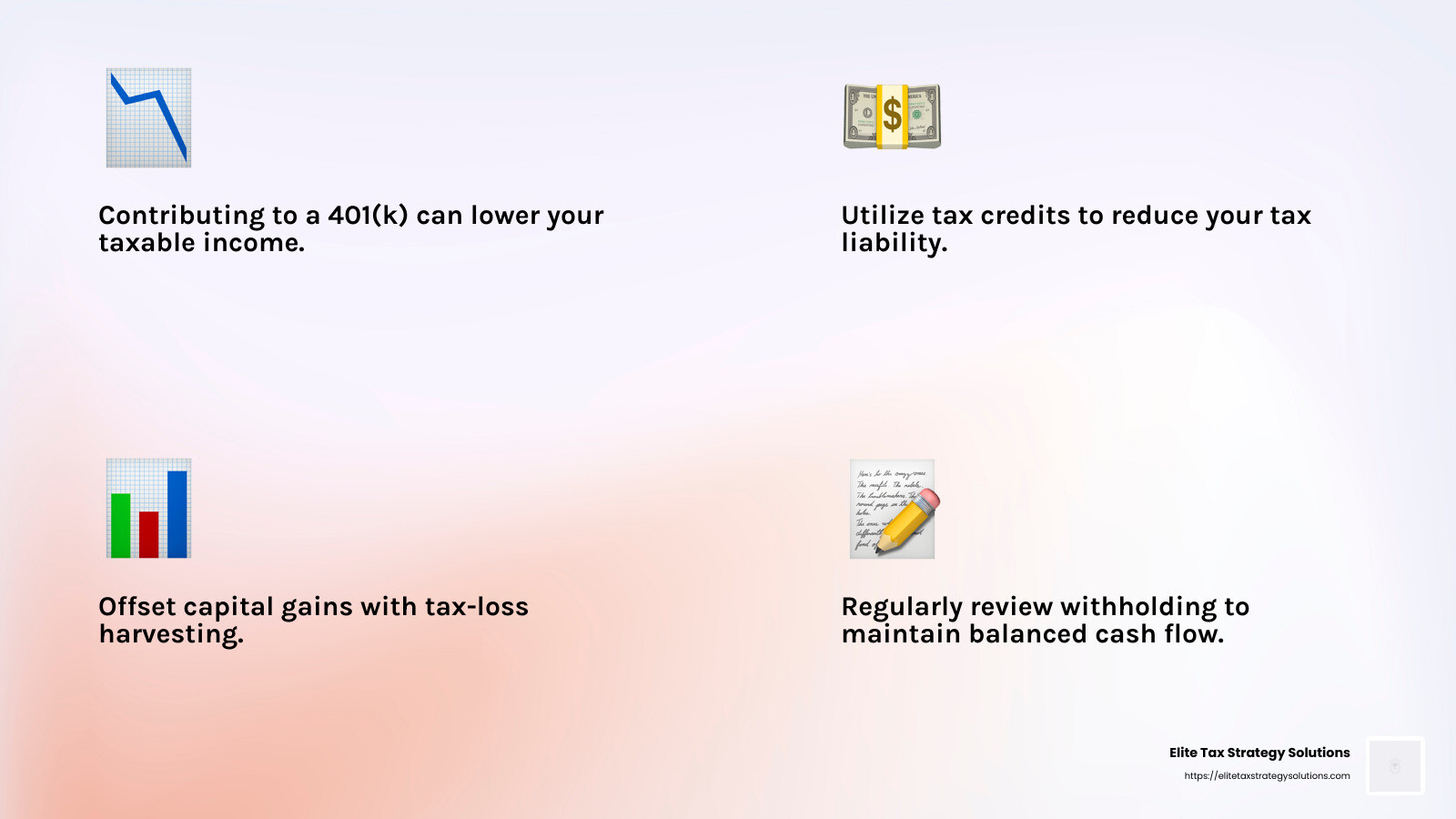
By reviewing your withholding regularly, you can ensure it aligns with your current financial situation. This is where tools like the IRS tax withholding estimator come in handy. Adjusting your withholding can help you maintain a balanced cash flow throughout the year.
Tax-Saving Opportunities
Proactive tax planning opens up various avenues to reduce your tax burden. Here are some strategies:
- Contribute to Retirement Accounts: Save pre-tax dollars in accounts like a 401(k) or IRA to lower your taxable income.
- Use Tax Credits and Deductions: Maximize your deductions and credits to decrease your tax liability.
- Engage in Tax-Loss Harvesting: Offset capital gains with losses to reduce your tax bill.
By leveraging these opportunities, you can not only reduce your tax liability but also improve your overall financial health.
Proactive tax planning isn’t just about checking boxes. It’s about understanding how each piece of the tax puzzle fits into your larger financial picture. With the right strategies, you can steer the complexities of the tax system with confidence and efficiency.
Essential Strategies for Proactive Tax Planning
When it comes to proactive tax planning, having a strategy can make all the difference. Here are some essential strategies to consider:
Deferring Income
Deferring income means postponing the receipt of income to a future period, usually when you expect to be in a lower tax bracket. This strategy can be especially useful during high-income years.
Consider using a nonqualified deferred compensation plan if your employer offers one. This allows you to defer a portion of your compensation until you retire or leave the company, potentially reducing your current taxable income.
Accelerating Income
In contrast, there are times when accelerating income makes sense, such as during a low-tax year. You might have switched jobs, experienced a temporary reduction in work hours, or had a slow business year.
Accelerating income can involve taking on additional work, selling investments, or even converting a traditional IRA to a Roth IRA. A Roth conversion can be particularly beneficial because it allows you to pay taxes on your retirement savings at a lower rate, potentially leading to tax-free withdrawals in the future.
Tax-Loss Harvesting
Tax-loss harvesting involves selling investments that have decreased in value to offset gains from other investments. This strategy can help reduce your overall tax liability by balancing out capital gains with capital losses.
Remember the 30-day wash sale rule: you can’t buy back the same or a substantially identical investment within 30 days before or after the sale to claim the loss.
Bunching Expenses
Bunching expenses means grouping deductible expenses into a single tax year to exceed the standard deduction threshold. This can make itemizing deductions worthwhile.
For example, you might pay two years’ worth of property taxes in one year or schedule medical procedures in the same year to maximize deductions.
By implementing these strategies, you can manage your tax liabilities more effectively. Each approach has its unique benefits, and the right combination can lead to significant tax savings and improved financial health.
Benefits of Proactive Tax Planning
When you think of taxes, it’s easy to feel overwhelmed. But with proactive tax planning, you can take control and reap some amazing benefits.
Tax Liability Reduction
One of the biggest perks is reducing how much tax you owe. By using strategies like tax-loss harvesting, you can lower your taxable income. This means you pay less in taxes. For instance, if you sell investments that have lost value, you can use those losses to offset gains, potentially saving you thousands of dollars.
Cash Flow Improvement
Another advantage is improved cash flow. By understanding your tax bracket and reviewing your withholding amounts, you can ensure you’re not overpaying taxes throughout the year. This means more money in your pocket now, rather than waiting for a refund. Imagine being able to use that extra cash for investments, paying off debt, or even a family vacation!
Wealth Preservation
Finally, proactive tax planning helps preserve your wealth. By strategically planning when to take income and how to invest, you can minimize taxes and keep more of your hard-earned money. For example, placing high-return investments in tax-advantaged accounts can boost your investment growth without a hefty tax bill.
In short, proactive tax planning isn’t just about paying less tax. It’s about making smart decisions that improve your overall financial health. As you plan, consider how each strategy can fit into your unique situation to maximize your financial efficiency.
Frequently Asked Questions about Proactive Tax Planning
What does it mean to be proactive in tax?
Being proactive in tax means taking charge of your tax situation throughout the year, not just at tax time. It involves a continuous review of your financial activities to spot tax-saving opportunities. This way, you can make informed decisions that help you pay the least amount of taxes legally possible. Regularly updating yourself on tax laws and working with a tax professional can help you stay ahead.
What are some ways to take a proactive approach to tax planning?
To take a proactive approach, start by understanding your tax bracket. This helps you see how changes in your income might affect your taxes. Next, review your withholding. If you’re getting a large refund, you might be withholding too much. Adjust your W-4 form to keep more money in your paycheck throughout the year.
Another key strategy is to reduce your taxable income. You can do this by maximizing deductions and credits, contributing to retirement accounts, or using tax-loss harvesting.
What are the three basic tax planning strategies?
The three basic strategies in tax planning are timing, income shifting, and conversion.
-
Timing: This involves deciding when to receive income or make expenditures. For example, deferring income to a lower tax year can reduce your tax bill.
-
Income Shifting: This strategy involves moving income to family members in lower tax brackets. For instance, you might transfer investment income to a child who pays taxes at a lower rate.
-
Conversion: This involves changing the nature of your income or investment to benefit from lower tax rates. An example is converting a traditional IRA to a Roth IRA, which can result in tax-free withdrawals in retirement.
Being proactive with these strategies can greatly impact your tax outcome, helping you save money and achieve financial efficiency.
Conclusion
At Elite Tax Strategy Solutions, we believe that personalized tax planning is more than just a yearly task; it’s a powerful tool for achieving financial stability. Our approach is custom to each client’s unique situation, focusing on maximizing tax savings and ensuring compliance with ever-changing tax laws.
Our team of seasoned professionals is dedicated to helping high earners and closely held businesses steer the complexities of tax regulations. We offer over 100 custom strategies designed to optimize your tax position, reduce liabilities, and improve your overall financial well-being.
Proactive tax planning is about making informed decisions today to secure a better financial future. By integrating tax planning with your long-term goals, you can improve cash flow, preserve wealth, and reduce your tax burden. This approach not only helps you save money but also provides peace of mind knowing you are financially prepared for whatever comes your way.
Whether you’re in Jasper, Indiana, or in the suburban areas near major cities, we’re here to help you take control of your tax situation. By partnering with us, you gain access to a wealth of knowledge and expertise that can transform your financial outlook.
The key to effective tax planning is being proactive. Don’t wait for tax season to start thinking about your taxes. Reach out to us today to explore how our personalized strategies can lead you to financial success.