Why Business Tax Filing Doesn’t Have to Be Overwhelming
Learning how to do business taxes starts with understanding your obligations and maintaining good records. The essential process involves:
- Determine your business structure (sole proprietorship, partnership, LLC, or corporation)
- Obtain an EIN if required for your business type
- Track income and expenses with organized record-keeping
- Make quarterly estimated tax payments if you expect to owe $1,000 or more
- File the correct tax forms by your business’s deadline
- Claim all eligible deductions and credits to reduce your tax burden
While small businesses face various taxes—from income and self-employment to state and local—the process is manageable when broken down into clear steps. Many owners feel intimidated, but tax compliance is simpler than it seems. The key is organization and knowing which rules apply to you.
The good news? You don’t need to steer this alone. With a systematic approach, filing business taxes can become a routine part of your success.
I’m David Fritch. With 40 years of experience as a CPA and attorney, I’ve helped countless small business owners master how to do business taxes while minimizing stress. My goal is to provide a clear roadmap to make tax compliance straightforward.
How to do business taxes terms to remember:
Step 1: Understanding Your Core Tax Obligations
When you’re learning how to do business taxes, the first step is understanding which taxes apply to your business. The tax landscape includes federal, state, and local obligations. The IRS Small Business and Self-Employed Tax Center is your go-to resource for federal requirements.
The Main Types of Business Taxes
Not every business pays every type of tax. Here are the main ones you might encounter:
Income tax is paid on your business’s profits. Nearly all businesses file an annual federal income tax return, and the form you use depends on your business structure.
Self-employment tax applies if you’re a sole proprietor, partner, or LLC member. It covers both the employee and employer portions of Social Security and Medicare taxes, totaling 15.3% (12.4% for Social Security up to an annual limit, plus 2.9% for Medicare). It funds your future retirement and healthcare benefits. The IRS provides detailed information about Self-Employment Tax (Social Security and Medicare Taxes).
Employment taxes are required once you hire employees. This involves withholding taxes from their paychecks, matching their Social Security and Medicare contributions, and paying Federal Unemployment Tax (FUTA).
Excise taxes apply to specific goods or services, like fuel, tobacco, or alcohol. Most businesses don’t encounter them.
State and local taxes vary significantly by location and can include income, sales, and property taxes. For example, five states (Alaska, Delaware, Montana, New Hampshire, and Oregon) have no statewide sales tax, but local taxes may still apply. Property taxes can apply to real estate and business equipment.
Do I Need an Employer Identification Number (EIN)?
An Employer Identification Number (EIN) is a nine-digit number the IRS uses to identify your business for tax purposes.
You need an EIN if your business is a corporation or partnership, has employees, files excise tax returns, or withholds taxes from payments to non-resident aliens.
Sole proprietors without employees can use their Social Security number, but getting an EIN is often wise. It helps separate business and personal finances, simplifies opening a business bank account, and adds privacy.
Applying for an EIN is free and easy on the IRS website. The IRS guide Do You Need an EIN? walks you through the process.
Step 2: How Your Business Structure Dictates Your Taxes
How to do business taxes isn’t a one-size-fits-all process. Your legal structure fundamentally shapes your tax experience, from the forms you file to the amount you pay.

Business structures fall into two main categories: pass-through entities (sole proprietorships, partnerships, LLCs, S corporations) and C corporations. Pass-through entities avoid “double taxation” because profits flow directly to the owners’ personal tax returns and are taxed once. C corporations are separate tax entities; the corporation pays tax, and owners pay tax again on any dividends they receive.
How to do business taxes as a Sole Proprietor or Single-Member LLC
As a sole proprietorship or single-member LLC, your tax filing is straightforward. Business income and expenses flow through to your personal Form 1040, so there’s no separate business tax return. You’ll use Schedule C (Profit or Loss From Business) to report all business income and expenses. Your net business profit is added to your personal income and taxed at your individual rate. You are also responsible for self-employment tax on your business earnings, calculated on Schedule SE. Filing is required if your net business income is $400 or more. See Publication 334: Tax Guide for Small Business for details.
Tax Implications for Partnerships and Multi-Member LLCs
Partnerships and multi-member LLCs are also pass-through entities. The partnership files an information return, Form 1065, to report its total income and expenses. The business itself does not pay income tax. The partnership then issues a Schedule K-1 to each partner, detailing their share of profits and losses. Partners use their K-1 to report this information on their personal Form 1040. Accurate distribution according to the partnership agreement is crucial. The IRS offers detailed Tax Information for Partnerships.
Understanding Corporate Taxes (S Corp vs. C Corp)
The choice between an S Corp and a C Corp significantly impacts your tax obligations.
C Corporations are separate tax entities that file Form 1120 and pay corporate income tax. When profits are distributed to shareholders as dividends, they are taxed again at the personal level, leading to “double taxation.”
S Corporations avoid double taxation by operating as pass-through entities. They file Form 1120-S, and profits and losses flow to owners’ personal returns via Schedule K-1. Shareholders who work in the business must receive a reasonable salary subject to payroll taxes. Any remaining profits can be distributed as income not subject to self-employment tax, which can lead to significant tax savings. Choosing between these structures is a complex decision. The IRS’s S Corporations page offers more details.
Step 3: Maximizing Deductions and Credits to Lower Your Tax Bill
Here’s where how to do business taxes gets rewarding. Understanding deductions and credits is key to lowering your tax bill.
Deductions reduce your taxable income, while credits provide a more powerful dollar-for-dollar reduction of your actual tax bill. A $1,000 credit saves you $1,000 in taxes, whereas a $1,000 deduction saves you an amount equal to your tax rate (e.g., $250 in a 25% tax bracket).
Claiming Common Business Expense Deductions
The IRS rule is that business expenses must be “ordinary and necessary” for your business—common in your industry and helpful for your operations.
Common deductions include:
- Cost of Goods Sold (COGS): Direct costs of producing your goods, like materials and labor.
- Startup Costs: You can deduct up to $5,000 in startup and $5,000 in organizational costs in your first year.
- Vehicle Expenses: Use either the standard mileage rate or track actual expenses. A detailed mileage log is essential.
- Office Expenses and Supplies: Includes rent, utilities, software, and supplies.
- Professional Fees: Fees paid to accountants, attorneys, and consultants.
- Business Travel and Meals: Deduct costs like airfare and lodging for business travel. Business meals are generally 50% deductible.
- Insurance Premiums: Premiums for health, liability, and property insurance.
- Depreciation and Section 179: While large assets are typically depreciated over time, Section 179 may allow you to deduct the full cost in the year of purchase.
The IRS provides comprehensive guidance in Publication 535: Business Expenses.
The Home Office Deduction Explained
The home office deduction is valuable but has strict requirements. You must meet the exclusive and regular use test, meaning a specific area of your home is used only for your business on a regular basis. It must also be your principal place of business.
You can use the simplified method (a deduction of $5 per square foot, up to 300 sq. ft.) or the actual expense method. The actual expense method requires more tracking but often yields a larger deduction by allowing you to deduct a percentage of actual home expenses like mortgage interest, utilities, and insurance. For complete guidance, refer to the IRS’s Topic No. 509, Business Use of Home.
Leveraging Powerful Business Tax Credits
Tax credits provide dollar-for-dollar reductions in your tax liability, making them incredibly powerful. Key credits include:
- Work Opportunity Tax Credit: For hiring individuals from certain groups facing employment barriers.
- Small Business Health Care Tax Credit: Helps small employers who pay at least 50% of employee health insurance premiums.
- Employer-Provided Childcare Credit: For businesses that provide childcare assistance to employees.
- Research and Development (R&D) Credit: For businesses engaging in qualified research activities.
For an overview, visit the IRS’s Business Tax Credits page, but professional guidance can be invaluable in maximizing these savings.
Step 4: The Nuts and Bolts of How to Do Business Taxes
Now let’s cover the practicalities of how to do business taxes: paying them, keeping records, and choosing a filing method. Tax management is an ongoing responsibility, but solid systems make it second nature.
How to do business taxes with Estimated Payments
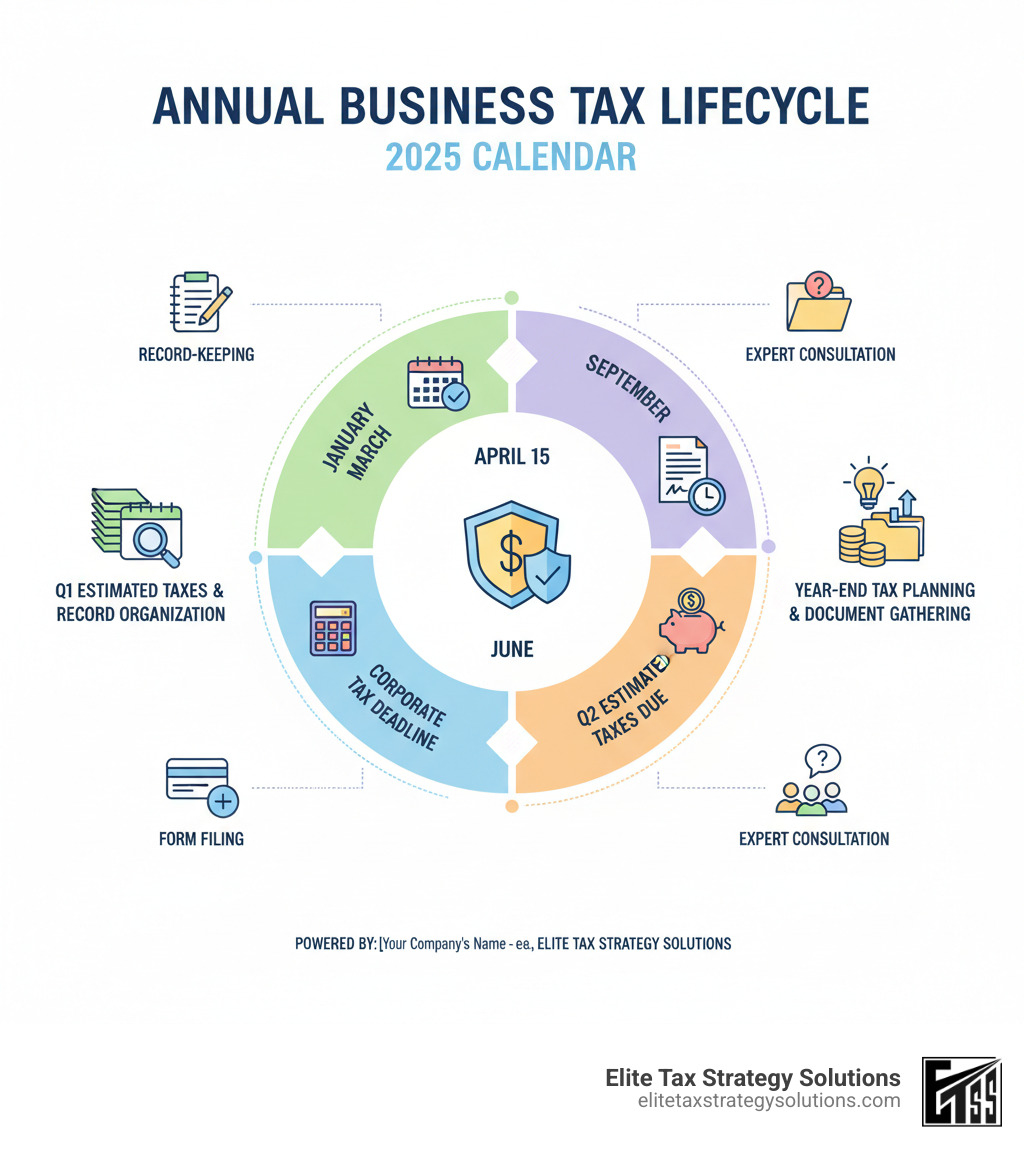
Since taxes aren’t withheld from business income, most owners must make estimated tax payments throughout the year. You must pay estimated taxes if you expect to owe $1,000 or more ($500 for corporations) when you file. To calculate, you’ll estimate your annual income, deductions, and credits.
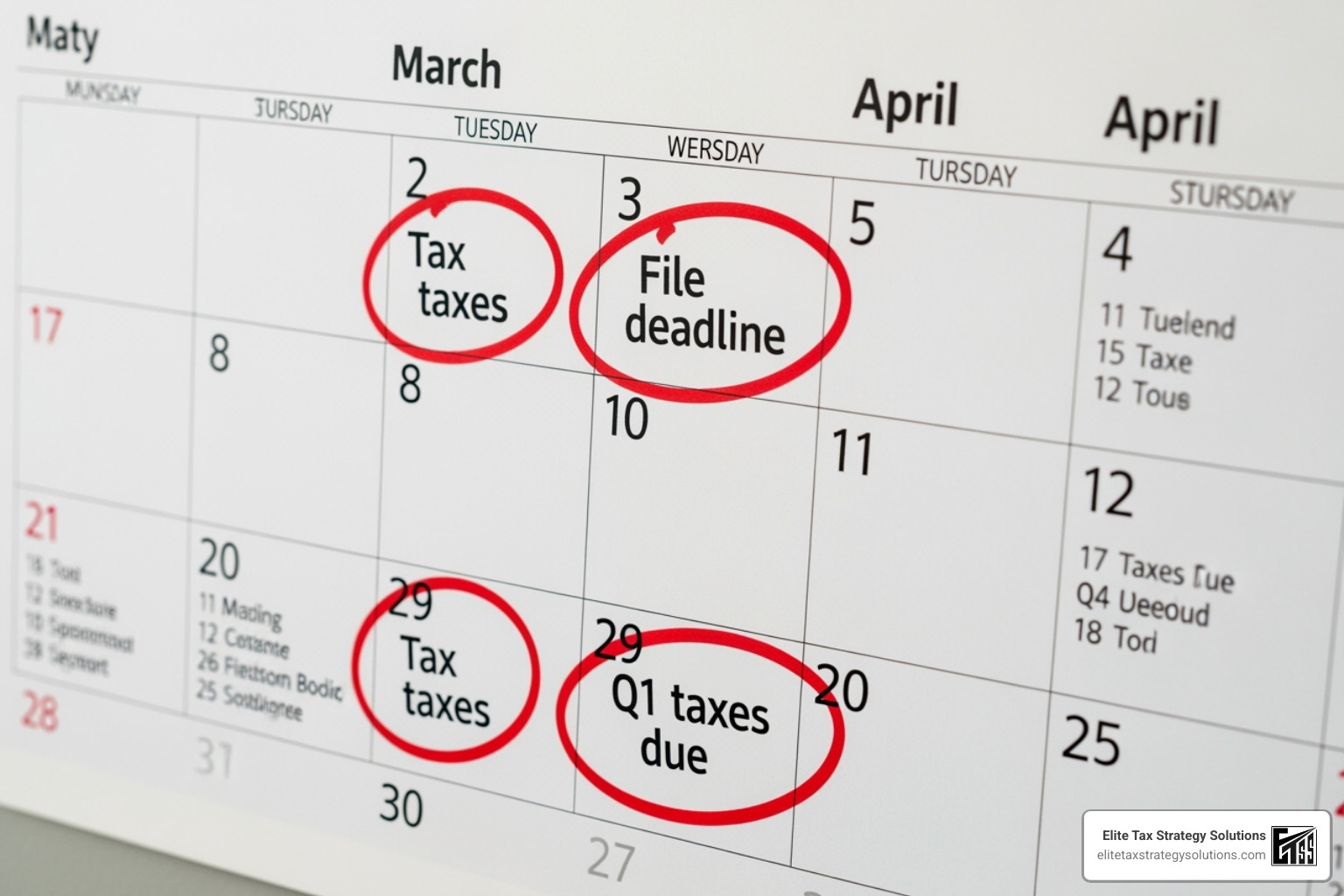
The quarterly payment deadlines are typically April 15, June 15, September 15, and January 15. You can pay via the Electronic Federal Tax Payment System (EFTPS) or by mail. To avoid underpayment penalties, you generally need to pay at least 90% of the current year’s tax or 100% of the prior year’s tax (110% for higher-income taxpayers). For details, see the IRS page on Estimated Taxes.
Best Practices for Record-Keeping
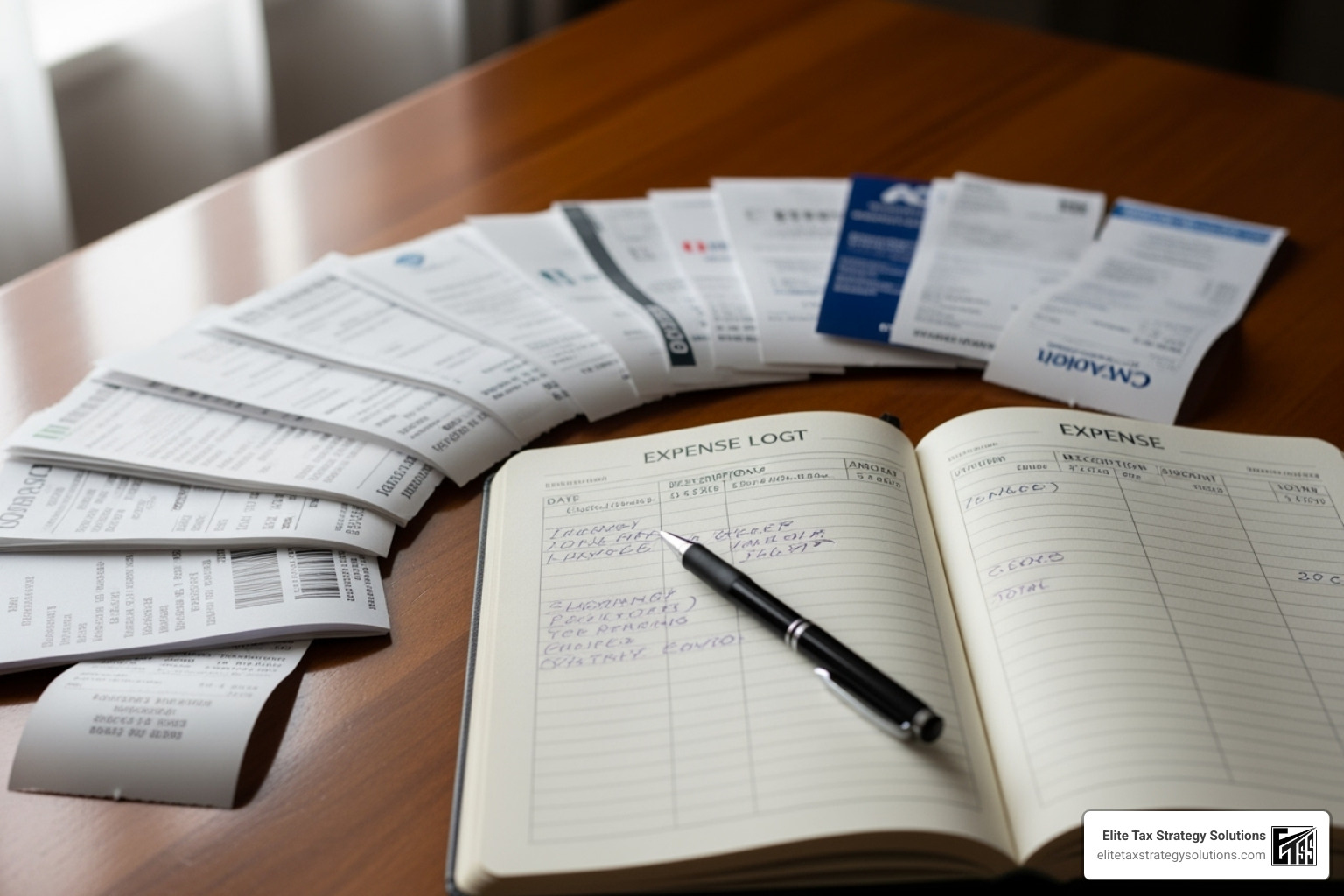
Good records are your best defense at tax time. Poor records can cost you thousands in lost deductions.

Diligently track all income and keep proof (receipts, invoices) for every business expense. Maintain supporting documents like bank statements and payroll records. While both paper and electronic records are acceptable, electronic record-keeping using accounting software is highly recommended for its automation, accessibility, and backup capabilities.
How long should you keep records? The general rule is three years after filing. However, some situations require longer retention. Keep records for seven years for bad debt deductions, six years for significantly underreported income, and at least four years for employment tax records. Property records should be kept until you dispose of the property. Consult the IRS guidance on record retention for specifics. Also, mark key deadlines from Publication 509: Tax Calendars on your calendar.
Choosing Your Filing Method: DIY vs. Professional Help
This decision depends on your business’s complexity. Tax software is a cost-effective option for simple returns but lacks strategic insight and robust audit support. Hiring a CPA or tax professional offers expertise and strategic planning that becomes more valuable as your business grows, especially for complex situations like having employees or operating in multiple states. A key benefit is audit support, where a professional can represent you before the IRS. The time savings alone often justify the cost, allowing you to focus on your business while an expert handles tax complexities and provides year-round strategic advice.
Frequently Asked Questions about Business Taxes
After four decades in practice, I’ve heard nearly every question about business taxes. Here are the most common ones.
Do I have to file business taxes if I didn’t make a profit?
Yes, you generally must file a tax return even if your business lost money. Filing allows you to claim a Net Operating Loss (NOL), which can offset other income and reduce your overall tax bill. It also ensures you remain compliant with IRS requirements. For sole proprietors, filing is required if net earnings are $400 or more, but it’s often wise to file even with a loss to claim that loss.
What’s the difference between a bookkeeper and an accountant for tax purposes?
Think of it this way: a bookkeeper records the day-to-day financial data, while an accountant uses that data to strategize. A bookkeeper manages daily tasks like recording transactions and paying bills. An accountant or CPA analyzes that data to prepare tax returns and provide strategic advice, like the best way to deduct a large purchase. Many businesses use both for optimal organization and tax savings.
How much does a small business have to make to be taxed?
The filing threshold depends on your business structure. Sole proprietors must file if their net income is $400 or more. Corporations (both C and S Corps) and Partnerships must file a return every year, regardless of profit or loss. In short, if you’re operating a legitimate business, you should plan on filing a tax return. It’s a fundamental part of being a responsible business owner.
Conclusion: Moving from Tax Compliance to Tax Strategy
You now have a roadmap for how to do business taxes. The next step is to move beyond simple compliance and toward active tax strategy.
Tax compliance is about following the rules; tax strategy is about using the rules to your advantage. It involves making smart, year-round decisions to legally minimize your tax bill and keep more money in your business. This proactive approach means making informed choices about purchases and timing transactions to benefit your bottom line, rather than scrambling at tax time.
Financial stability comes from keeping more of what you earn. Smart tax planning allows you to reinvest savings into growth, build cash reserves, and gain peace of mind. As your business grows, the power of tax strategy increases, open uping more significant savings.
At Elite Tax Strategy Solutions, we specialize in personalized tax planning for high earners and closely held businesses. Our proactive approach transforms tax season from a stressful obligation into a strategic advantage. Your business deserves a tax strategy that works as hard as you do.
Learn more about strategic tax planning for small businesses