
Financial stability plan is a crucial strategy for anyone hoping to achieve long-term economic resilience. Whether you’re a high-income earner or a small business owner, understanding the components of a financial stability plan can significantly improve how you manage your assets and liabilities. In simple terms, a financial stability plan ensures that your financial resources are organized and ready to withstand economic shocks, providing peace of mind and steady growth.
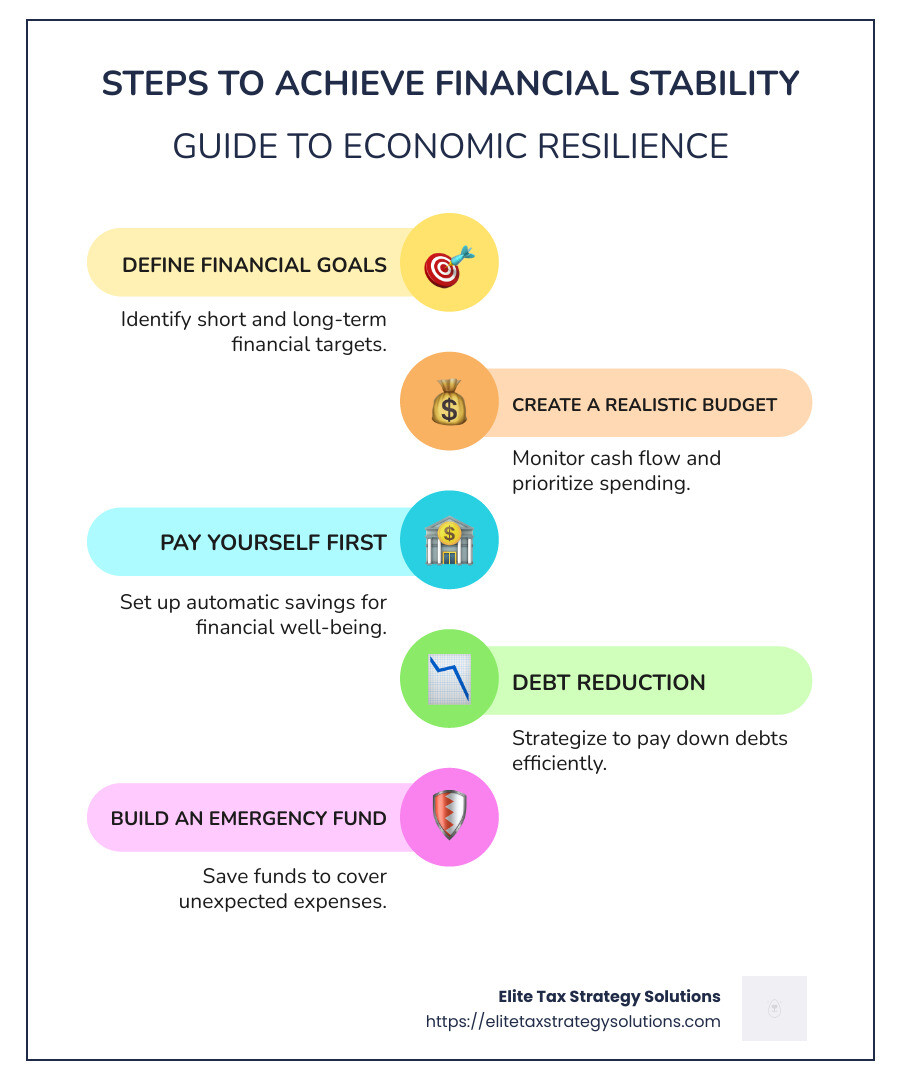
- Define Your Financial Goals: Identify where you want to be financially in the short and long term.
- Create a Realistic Budget: Monitor your cash flow, prioritize spending, and save effectively.
- Pay Yourself First: Set up automatic savings to prioritize your financial well-being.
Having a financial stability plan is not just about numbers; it’s about creating a life that’s free from financial stress and full of opportunities.
As David Fritch, an expert with over 40 years in tax and financial planning, my aim is to break down complex concepts like the financial stability plan into actionable steps. This approach helps you leverage your financial resources for lasting stability and growth. Let’s dive deeper into understanding what financial stability means and how to achieve it.
Financial stability plan definitions:
– financial stability of any pension plan
– financial stability planning
– business tax planning
Understanding Financial Stability
Financial stability is like the backbone of a healthy economy. But what does it really mean? Let’s break it down into three main parts: the financial system, resource allocation, and risk management.
Financial System
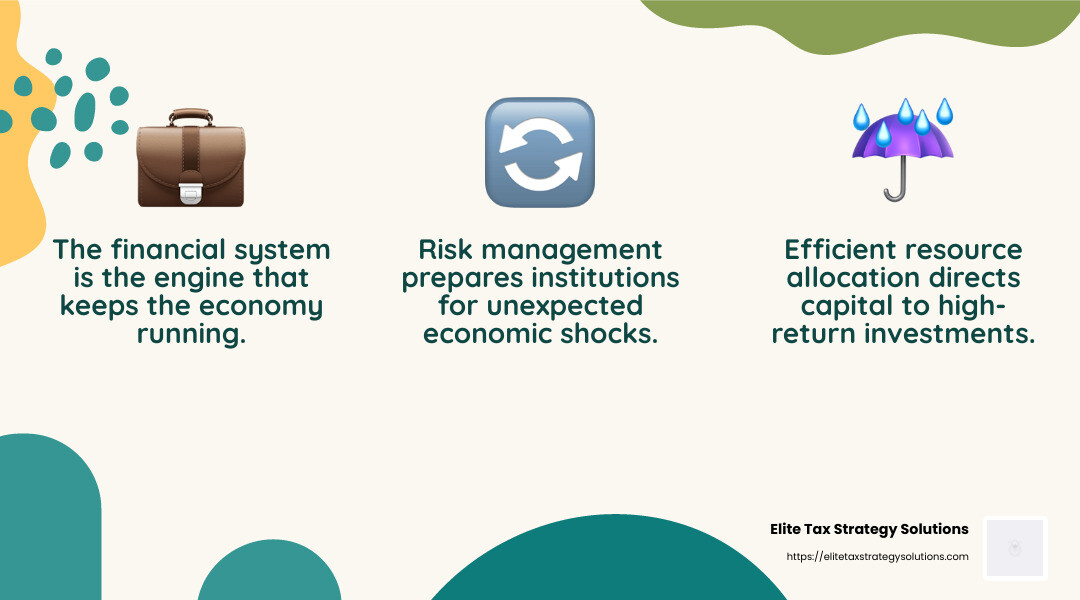
Think of the financial system as the engine that keeps the economy running. It includes banks, stock markets, insurance companies, and more. These institutions help money flow from savers to borrowers, making sure businesses can grow and people can buy homes or start new ventures.
When the financial system is stable, it can handle surprises like a sudden drop in the stock market or an unexpected crisis. This stability means that households and businesses can continue to get loans and make payments, keeping the economy moving smoothly.
Resource Allocation
Resource allocation is all about how money and assets are distributed. In a stable financial environment, resources are used efficiently. This means that capital is directed towards investments that offer the best returns, fostering innovation and economic growth.
Efficient resource allocation also means reducing waste. For example, investing in renewable energy instead of outdated technologies can lead to a more sustainable future. It’s about making smart choices that benefit both the economy and the environment.
Risk Management
Risk management is like having an umbrella on a rainy day. It’s about being prepared for the unexpected. Financial institutions and individuals alike need to identify potential risks and have plans in place to deal with them.
For banks, this might mean having enough capital on hand to cover losses during a downturn. For individuals, it could involve having an emergency fund to cover unexpected expenses.
The Federal Reserve plays a key role here by monitoring vulnerabilities in the financial system. They assess potential risks and work with other agencies to ensure that the system can withstand shocks.
Understanding financial stability is crucial for anyone looking to plan their financial future. It’s about ensuring that your financial resources are not only well-managed but also resilient enough to handle whatever comes your way. This foundation allows for a life free from financial stress, enabling you to seize new opportunities and achieve your goals.
Next, we’ll explore the components of a financial stability plan and how they contribute to a robust economic framework.
The Financial Stability Plan
The Financial Stability Plan (FSP) was a key initiative by the U.S. Treasury during the Obama administration in early 2009. It was designed to implement the Emergency Economic Stabilization Act of 2008, a response to the financial crisis of 2008-2009. This plan was not a standalone policy but a roadmap to manage the Troubled Asset Relief Program (TARP) and other measures aimed at boosting lending and easing credit conditions in U.S. financial markets.
U.S. Treasury and the Federal Reserve
The U.S. Treasury, under the leadership of Treasury Secretary Timothy Geithner, took the lead in executing the FSP. However, this was a collaborative effort involving the Federal Reserve and several other financial regulators. The Federal Reserve played a crucial role in monitoring risks and ensuring the financial system’s stability, working alongside the Treasury to deploy resources effectively.
The FSP aimed to stabilize the banking sector, securities markets, and mortgage and consumer credit markets. One of its goals was to create a new public-private governmental fund to absorb toxic assets, leveraging private capital to stimulate financial markets.
Emergency Economic Stabilization Act
The Emergency Economic Stabilization Act of 2008 was the legislative backbone for the FSP. It granted the U.S. Treasury the authority to purchase distressed assets and inject capital into banks to prevent a collapse of the financial system. This act was pivotal in pulling the financial system back from the brink of catastrophic failure.
Key Measures and Initiatives
The FSP introduced several measures to strengthen the financial system:
-
Stress Testing for Banks: This was a critical step to ensure that major financial institutions had the necessary assets to continue lending. It demanded new levels of transparency and accountability from banks.
-
Stabilizing the Housing Market: The plan committed $50 billion to help prevent foreclosures through mortgage adjustments. It also aimed to lower mortgage rates and provide flexibility for borrowers at risk of foreclosure.
-
Public-Private Investment Fund: This initiative was designed to leverage government and private capital to help clear toxic assets from financial institutions’ balance sheets.
-
Transparency and Accountability: Financial firms receiving government assistance had to submit monthly reports detailing how the funds were used. This information was made publicly available to ensure transparency and allow taxpayers to assess the plan’s success.
The Financial Stability Plan was a comprehensive approach to restoring confidence in the financial system and ensuring that credit continued to flow to businesses and households. It was a coordinated effort by the U.S. government to address the financial crisis with the urgency and scope required to prevent further economic decline.
Next, we’ll dig into the key components of a financial stability plan and how they contribute to building a robust economic framework.
Key Components of a Financial Stability Plan
A financial stability plan is like a safety net for the economy. It ensures that banks, businesses, and individuals can weather financial storms. Let’s break down the key components that make this plan effective.
Stress Testing
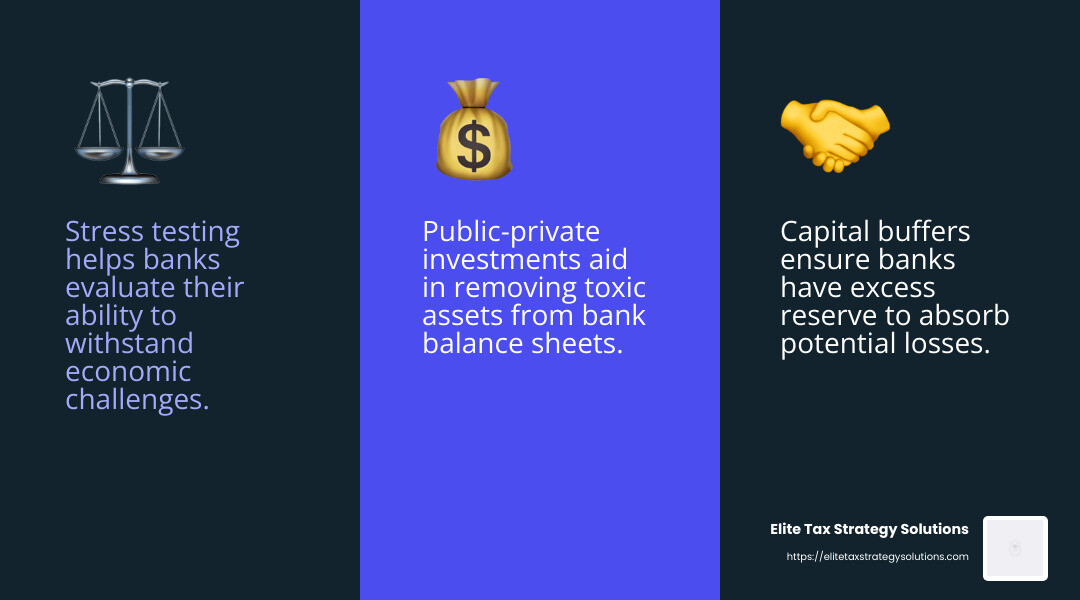
Stress testing is like a health check-up for banks. It evaluates whether banks have enough resources to handle tough economic times. All U.S. banks with assets over $100 billion must go through these tests. The goal? To spot weak spots on their balance sheets and ensure they have enough capital to keep lending. If a bank doesn’t pass, it can get help through the Capital Assistance Program (CAP).
Wells Fargo Chairman Richard Kovacevich once criticized these tests for imposing strict rules even on banks that didn’t need TARP funds. Despite this, stress tests are crucial for maintaining trust in the banking system.
Capital Buffer
A capital buffer acts like a financial cushion. It ensures banks have extra money set aside to absorb losses when the economy hits a rough patch. The CAP provides this buffer, helping banks stay stable while they look for private investors. The Treasury also set up the Financial Stability Trust to manage government investments in banks. This approach ensures banks keep lending as much as they can, which is vital for economic growth.
Public-Private Investments
Public-private investments are a team effort between the government and private companies. They help clear toxic assets from banks’ balance sheets. By working together, they can leverage more funds to stabilize financial markets.
The Financial Stability Plan introduced a public-private investment fund. This fund absorbed toxic assets and encouraged private capital to flow into financial markets. It was a key move to restore confidence and get the economy back on track.
These components of a financial stability plan work together to create a resilient economic framework. They ensure that banks are strong, investments are safe, and credit keeps flowing to those who need it.
Next, we’ll explore steps you can take to achieve personal financial stability.
Steps to Achieve Financial Stability
Achieving personal financial stability might seem daunting, but breaking it down into simple steps can make it manageable. Here are some key steps you can take:
Goal Setting
Setting clear financial goals is the first step. Ask yourself:
- Where do I want to be financially in the next year? Five years?
- What are my top priorities, like buying a house or retiring early?
Tip: Write down your goals. A study by the University of Stirling found that people who set financial goals are more likely to succeed. They also tend to invest in assets with higher long-term returns.
Budgeting
Creating a budget helps you control your spending. Use the 50/30/20 rule:
- 50% for needs (rent, groceries)
- 30% for wants (dining out, hobbies)
- 20% for savings or debt repayment
A budget is like a roadmap for your money. Without it, you might overspend and dip into savings.
Example: If you earn $2,000 a month, set aside $400 for savings. This simple step can help you reach your financial goals faster.
Debt Reduction
Debt can be a major roadblock to financial stability. Paying it off should be a priority. Here are some strategies:
- Avalanche Method: Pay off high-interest debts first.
- Snowball Method: Start with the smallest debts to gain momentum.
Fact: Carrying high-interest debt can delay your financial goals. By focusing on debt reduction, you can free up money for savings and investments.
Emergency Fund
An emergency fund is your financial safety net. It covers unexpected expenses like medical bills or job loss. Aim to save enough to cover three to six months of living expenses.
Statistic: A 2021 study found that 51% of Brits lack sufficient emergency funds. Without this safety net, you risk financial instability during tough times.
Tip: Start small. Even saving $500 can make a difference. Once you have a basic fund, keep building it to increase your financial security.
By following these steps—goal setting, budgeting, debt reduction, and building an emergency fund—you can work towards personal financial stability. These actions create a solid foundation, allowing you to handle life’s financial challenges with confidence.
Next, we’ll address some frequently asked questions about financial stability plans.
Frequently Asked Questions about Financial Stability Plans
What is an example of financial stability?
Financial stability means being able to meet your financial obligations without stress. Imagine having a steady job, manageable debt, and enough savings to cover unexpected expenses. This is financial stability in action.
Example: A family with consistent employment, a budget that balances needs and wants, and a robust emergency fund is financially stable. They can handle surprises like car repairs or medical bills without falling into debt.
Monetary stability is also key. It means having a stable currency and predictable inflation rates, which help maintain the value of savings and investments over time. The Federal Reserve plays a crucial role in ensuring this stability.
How do you plan to achieve financial stability?
Achieving financial stability requires a plan. Here are some steps to consider:
-
Invest in Yourself: Education and skills can increase your earning potential. Consider taking courses or gaining certifications that improve your career prospects.
-
Set Saving and Expense Budgets: Use the 50/30/20 rule to allocate your income. This helps ensure you save regularly and avoid unnecessary spending.
-
Reduce Debt: Focus on paying down high-interest debts first. This frees up money for savings and investments.
Tip: Start small. Even modest savings can grow over time with interest and smart investments.
What is a stability plan?
A stability plan outlines strategies to maintain or achieve financial stability. It can apply to personal finances, housing, or even broader economic contexts.
Housing Stability: Ensures you have a secure and affordable place to live. This might involve budgeting for rent or mortgage payments and setting aside funds for maintenance.
Case Manager: In a broader context, a case manager might help individuals steer financial challenges, providing resources and support to achieve stability.
Example: A stability plan for a community might include initiatives to increase employment levels and provide affordable housing, contributing to overall economic resilience.
By understanding these aspects, you can better steer your own path to financial stability. Next, we’ll conclude with how Elite Tax Strategy Solutions can assist you in creating a personalized plan.
Conclusion
Achieving financial stability is a journey that requires careful planning and a proactive approach. At Elite Tax Strategy Solutions, we understand the complexities involved in maintaining and enhancing your financial well-being. Our personalized tax planning services are designed to help high earners and closely held businesses maximize tax savings while ensuring long-term financial stability.
Why Choose Us?
-
Personalized Planning: We believe that every financial situation is unique. Our approach tailors strategies to align with your specific goals and circumstances, ensuring that you receive the most effective solutions.
-
Proactive Approach: We don’t just react to changes; we anticipate them. Our team stays updated on the latest tax laws and financial regulations to provide you with strategies that are both innovative and compliant.
-
Comprehensive Services: From tax optimization to compliance, we cover all bases to secure your financial future. Our services are designed to not only meet but exceed your expectations.
Your Path to Financial Stability
By working with us, you are not just choosing a service; you are choosing a partner committed to your financial success. Whether you’re looking to reduce your tax burden, plan for retirement, or ensure compliance with evolving regulations, we have the expertise to guide you every step of the way.
Visit our Comprehensive Financial Planning page to learn more about how we can help you open up your financial potential. Let us help you create a financial stability plan custom to your needs, so you can focus on what truly matters.
With Elite Tax Strategy Solutions, your financial stability is not just a goal—it’s our mission.