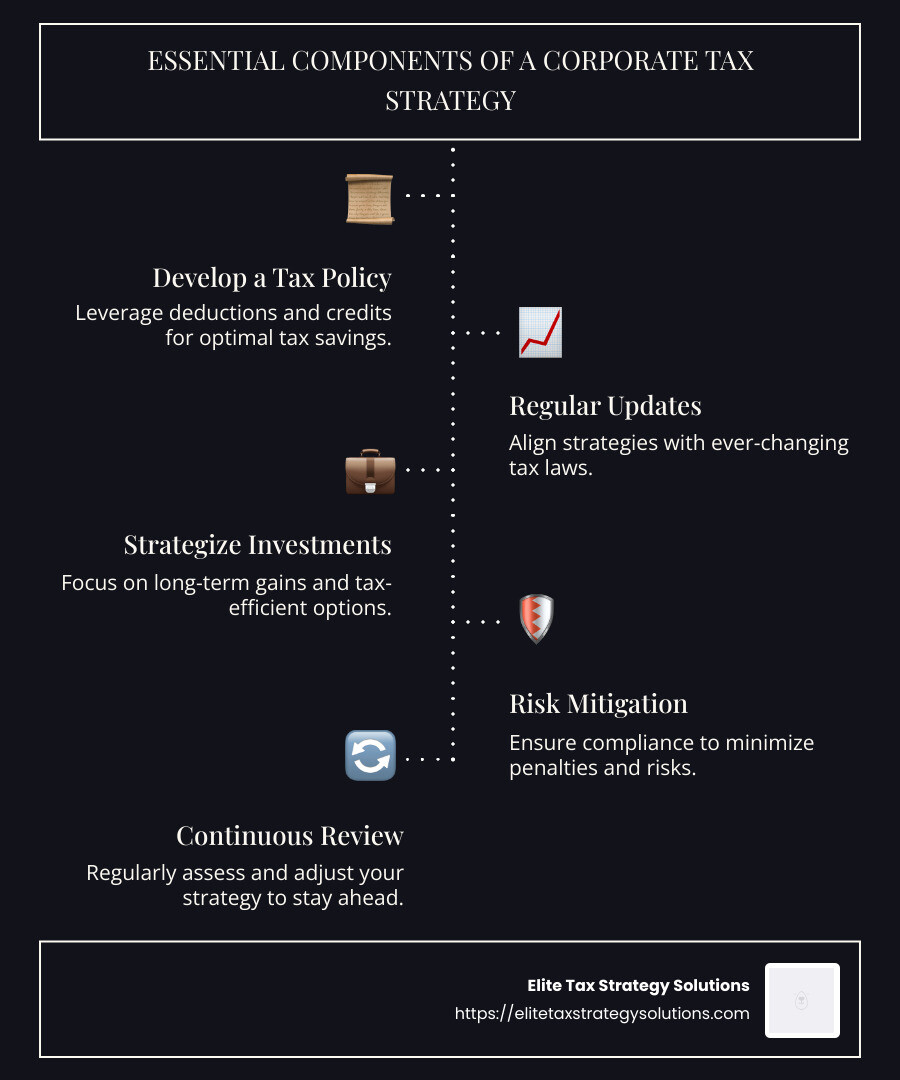
Corporate tax strategy can be the backbone of a company’s financial success. Here are the essentials for ensuring your business optimizes its tax position:
- Develop a Tax Policy: Focus on leveraging deductions and credits.
- Regular Updates: Align strategies with changing tax laws.
- Strategize Investments: Concentrate on long-term gains and tax-efficient options.
- Risk Mitigation: Ensure compliance to minimize penalties.
- Continuous Review: Regularly assess and adjust your strategy.
In today’s dynamic business environment, having a well-structured corporate tax strategy is vital for enhancing financial stability and ensuring future growth. Effective tax planning enables businesses to steer the complex landscape of tax regulations, ultimately optimizing their financial outcomes. By proactively managing corporate taxes, businesses not only ensure compliance but also find opportunities to improve profitability and sustainability.
My name is David Fritch, and I have decades of experience in developing corporate tax strategies for high-income earners and small businesses. I am committed to helping clients steer the complexities of tax regulations to achieve long-term financial stability. Up next, we will dig deeper into the essential components that comprise an effective corporate tax strategy.
Corporate tax strategy terms to remember:
– Business tax management
– Tax management services
– Tax risk management
Understanding Corporate Tax Strategy
Corporate tax strategy is a crucial tool for any business aiming to minimize tax liabilities and maximize financial health. Let’s break down what this means in simple terms.
Tax Liabilities
Tax liabilities are the total amount of tax a company owes to the government. This includes federal, state, and sometimes local taxes. Understanding your tax liabilities is the first step in crafting an effective tax strategy. The goal is to accurately calculate these liabilities and identify areas where they can be legally minimized.
Compliance
Compliance is all about following the rules. The IRS and other tax authorities have specific guidelines that businesses must adhere to. This includes reporting all income accurately and claiming only legitimate deductions and credits. Non-compliance can lead to hefty penalties, so keep meticulous records and stay updated on tax laws.
Tax Optimization
Tax optimization involves strategically planning your financial activities to reduce tax liabilities. This can be achieved through various methods, such as:
- Deductions and Credits: Identify all eligible deductions and tax credits. For example, research and development (R&D) credits can significantly lower your tax bill.
- Income Shifting: This involves moving income to a lower-tax jurisdiction or timing income recognition to a period with lower tax rates.
- Depreciation: Use accelerated depreciation methods to reduce taxable income in the short term.
By focusing on these areas, a company can effectively manage its tax burden and reinvest savings into the business for growth and innovation.
Incorporating these elements into your corporate tax strategy ensures not only compliance but also positions your business for financial success. Up next, we’ll explore the key components that make up a comprehensive tax strategy, providing a roadmap to optimize your tax obligations.
Key Components of a Corporate Tax Strategy
When you’re developing a corporate tax strategy, understand the key components that can help minimize taxes while keeping your business compliant. Let’s explore the most important elements: deductions, credits, income shifting, and depreciation.
Deductions
Deductions are expenses that the IRS allows you to subtract from your total income, reducing your taxable income. Common deductions include operating expenses, employee benefits, and travel costs. For example, if your company invests in research and development, you can claim R&D expenses as deductions. This is a government incentive to encourage innovation and growth.
Pro Tip: Keep detailed records of all business expenses to ensure you can justify your deductions during an audit.
Credits
Tax credits are even more powerful than deductions because they directly reduce the amount of tax you owe. They are designed to encourage specific business activities, such as hiring employees from targeted groups or investing in renewable energy. For instance, the Inflation Reduction Act of 2022 introduced numerous tax credits to promote clean energy investments across various sectors.
Pro Tip: Prioritize tax credits that align with your business activities to maximize your tax savings.
Income Shifting
Income shifting involves moving income to a lower-tax jurisdiction or adjusting the timing of income recognition. This strategy is particularly beneficial for businesses with international operations. For example, by strategically allocating income to a subsidiary in a lower-tax country, you can reduce your overall tax burden. However, it’s crucial to comply with international tax laws and transfer pricing regulations to avoid penalties.
Pro Tip: Consult a tax professional to steer the complexities of international tax laws effectively.
Depreciation
Depreciation allows you to spread the cost of a tangible asset over its useful life, reducing taxable income. There are several methods to consider:
- Section 179 Deduction: Deduct the full purchase price of qualifying equipment and software in the tax year it was purchased.
- Bonus Depreciation: Deduct a significant portion of the purchase price of eligible business assets in the first year they are placed in service.
- MACRS (Modified Accelerated Cost Recovery System): Accelerates asset expense recovery, offering faster tax deductions.
Choosing the right depreciation method depends on your current taxable income and future earnings expectations. For instance, businesses with higher current income might benefit from bonus depreciation to maximize immediate tax savings.
Pro Tip: Evaluate your business’s cash flow needs and future growth plans when selecting a depreciation strategy.
By integrating these components into your corporate tax strategy, you can effectively reduce your tax liabilities and reinvest savings into your business. Next, we’ll explore how to develop a tax planning policy that identifies tax-saving opportunities while ensuring compliance and mitigating risks.
Developing a Tax Planning Policy
Creating a tax planning policy is a smart way to manage your business’s tax obligations and optimize financial performance. A well-crafted policy not only identifies tax-saving opportunities but also ensures compliance and mitigates risks.
Identify Tax-Saving Opportunities
The first step in developing a tax planning policy is to identify potential tax-saving opportunities. This involves a detailed examination of your company’s financial activities, including income streams, expenses, and investments. Look for areas where you can legally reduce your tax liabilities.
For example, investing in research and development can qualify your business for tax credits, as mentioned in the Inflation Reduction Act of 2022, which offers incentives for clean energy investments. Similarly, consider tax-friendly investments like municipal bonds, which provide tax-free interest at the federal level.
Pro Tip: Regularly review and update your tax strategies to align with changing tax laws and business conditions.
Ensure Compliance
Compliance with tax regulations is crucial to avoid penalties and maintain a good standing with tax authorities. A robust tax planning policy should include processes to ensure accurate reporting and timely filing of tax returns. This involves staying informed about current tax laws and understanding how they apply to your business.
It’s also important to maintain thorough documentation of all transactions, deductions, and credits. This not only helps in substantiating your tax filings but also prepares you for any potential audits.
Pro Tip: Use software tools or hire a tax professional to keep track of tax law changes and ensure compliance.
Mitigate Risks
Risk mitigation is a key component of a successful tax planning policy. This involves identifying potential risks associated with tax liabilities and developing strategies to minimize them. For instance, understanding the implications of expiring provisions under the Tax Cuts and Jobs Act (TCJA) can help you plan for future tax obligations.
To mitigate risks effectively, businesses should evaluate the impact of tax provisions on their operations and develop a narrative to support any advocacy efforts. Engaging with legislative champions who align with your business objectives can also help in advocating for favorable tax policies.
Pro Tip: Build a coalition with other businesses to collectively address shared tax concerns and influence policy changes.
By developing a comprehensive tax planning policy, your business can proactively address tax matters, avoid unexpected tax burdens, and foster long-term financial stability. In the next section, we’ll discuss strategies for reducing corporate tax, including accelerated depreciation and offshoring profits.
Strategies for Reducing Corporate Tax
Reducing corporate tax is a key goal for many businesses, and there are several strategies that can help achieve this. Let’s explore some effective methods: accelerated depreciation, offshoring profits, and employee stock options.
Accelerated Depreciation
Accelerated depreciation allows businesses to write off the cost of capital assets faster than the normal depreciation schedule. This means you can deduct the full cost of qualifying assets, like machinery or equipment, in the year they are purchased. Under the Tax Cuts and Jobs Act (TCJA), this provision is available but will start phasing out after 2023.
Example: If your company buys $100,000 worth of equipment, you can deduct the entire amount in the first year. This immediate deduction lowers your taxable income, providing significant tax savings.
Pro Tip: Plan asset purchases before the phase-out to maximize tax benefits.
Offshoring Profits
Offshoring profits involves shifting some of your company’s earnings to subsidiaries in countries with lower tax rates. While the TCJA has tightened regulations, this strategy can still be viable if done correctly. It requires careful navigation of rules like the Global Intangible Low-Taxed Income (GILTI) provisions.
Example: By transferring intellectual property to a subsidiary in a tax-friendly jurisdiction, you can charge your U.S. operations for using this IP, effectively moving profits to a lower-tax area.
Pro Tip: Work with a tax professional to ensure compliance with international tax laws.
Employee Stock Options
Offering employee stock options (ESOs) is not only a way to attract talent but also a strategic tax planning tool. Stock options are taxed when they are exercised, not when they are granted, which can benefit both the company and employees.
Example: If employees exercise their options when the stock price is high, they gain more value, and the company can deduct the difference between the exercise price and market price, reducing its tax bill.
Pro Tip: Time the exercise of stock options to align with favorable market conditions for maximum benefit.
These strategies—accelerated depreciation, offshoring profits, and employee stock options—can be powerful tools in reducing your corporate tax liabilities. However, each comes with its own complexities and must adhere to IRS regulations. Consulting with tax experts can help tailor these strategies to your specific business needs.
In the following section, we’ll dive into how to manage corporate tax strategy for international operations, focusing on global tax implications and transfer pricing.
Corporate Tax Strategy for International Operations
Navigating the global tax landscape is crucial for businesses operating across borders. Understanding transfer pricing, tax treaties, and other international regulations can significantly impact your corporate tax strategy.
Global Tax Implications
When your company operates in multiple countries, you must comply with each jurisdiction’s tax rules. This can be complex, as you need to manage different tax rates and regulations. The Organization for Economic Cooperation and Development (OECD) has been pushing for more transparency and consistency in international tax laws, especially concerning Base Erosion and Profit Shifting (BEPS).
Example: A U.S. company with a subsidiary in Germany must adhere to both U.S. and German tax laws. This includes reporting income accurately to avoid penalties.
Pro Tip: Keep up-to-date with OECD guidelines to ensure compliance and optimize your tax strategy.
Transfer Pricing
Transfer pricing refers to the rules and methods for pricing transactions between related entities within an international business. It’s a critical area because it affects how profits are allocated among different countries.
Example: If a U.S.-based parent company sells products to its subsidiary in France, the price set for these goods must be at arm’s length—meaning it should be the same as if the subsidiary were an independent entity.
Pro Tip: Document your transfer pricing policies thoroughly to defend against audits and potential adjustments by tax authorities.
Tax Treaties
Tax treaties are agreements between two countries that determine how income from cross-border activities is taxed. These treaties aim to prevent double taxation and provide clear rules for taxing business income.
Example: The U.S.-India tax treaty may reduce withholding taxes on dividends, royalties, or interest payments between entities in these countries.
Pro Tip: Leverage tax treaties to minimize withholding taxes and optimize your global tax strategy.
Managing a corporate tax strategy for international operations requires a deep understanding of global tax implications, transfer pricing, and tax treaties. By staying informed and compliant, you can reduce tax liabilities and improve your business’s international competitiveness.
In the next section, we’ll address frequently asked questions about corporate tax strategy, including the 5-year rule for C corporations and strategies for optimizing tax obligations.
Frequently Asked Questions about Corporate Tax Strategy
What is the 5-year rule for C corporations?
The 5-year rule is a crucial consideration for C corporations contemplating a switch to an S corporation status. When a C corporation elects to become an S corporation, it must be aware of the built-in gains tax. Built-in gains are profits that were unrealized at the time of conversion from a C corporation to an S corporation. If these gains are recognized within five years of the conversion, they are subject to corporate-level taxation.
Example: If a C corporation with appreciated assets converts to an S corporation, and those assets are sold within five years, the gains are taxed at the corporate level.
Pro Tip: Plan asset sales carefully after conversion to avoid unnecessary taxes.
What are the best strategies for optimizing corporate tax obligations?
Optimizing corporate tax obligations involves leveraging tax credits, depreciation deductions, and other strategies to minimize liabilities.
Tax Credits: Tax credits directly reduce the amount of tax owed. They are valuable tools for reducing corporate tax liabilities. For instance, the Research and Development (R&D) tax credit encourages businesses to invest in innovation by offsetting some of the costs associated with research activities.
Depreciation Deductions: Accelerated depreciation allows businesses to write off the cost of assets faster, reducing taxable income in the early years. This strategy can improve cash flow and reinvestment capabilities.
Example: A manufacturing company purchases new equipment and uses accelerated depreciation to lower its taxable income, reducing its tax bill.
Pro Tip: Stay informed about available tax credits and depreciation methods to maximize tax savings.
What are the three basic tax planning strategies?
Tax planning can be boiled down to three fundamental strategies: timing, income shifting, and conversion.
Timing: This strategy involves deferring or accelerating income and expenses to optimize tax outcomes. For example, a business might delay income recognition to a lower-tax year or accelerate expenses to the current year to reduce taxable income.
Income Shifting: This involves transferring income to a lower-tax entity or jurisdiction to reduce overall tax liability. For multinational companies, this might mean shifting profits to subsidiaries in countries with lower tax rates.
Conversion: This strategy involves changing the nature of income or expenses to achieve more favorable tax treatment. For instance, converting ordinary income into capital gains can result in lower tax rates.
Example: A company might shift income to a subsidiary in a low-tax country to reduce its global tax bill.
Pro Tip: Use these strategies in combination to effectively manage and minimize tax liabilities.
In the next section, we’ll conclude by discussing how Elite Tax Strategy Solutions can provide personalized tax planning and a proactive approach to corporate tax strategy.
Conclusion
At Elite Tax Strategy Solutions, we understand that navigating the complexities of corporate tax can be daunting. That’s why we offer personalized tax planning services custom to the unique needs of high earners and closely held businesses. Our approach focuses on maximizing tax savings while ensuring compliance and financial stability.
We believe in a proactive approach to tax strategy. Instead of waiting for tax season to arrive, we work with you year-round to identify tax-saving opportunities and mitigate risks. This forward-thinking mindset allows us to stay ahead of changes in tax laws and adapt your strategy accordingly.
Our team of seasoned professionals is dedicated to understanding your business goals and aligning your tax strategy to support them. Whether it’s exploring new deductions, optimizing your entity structure, or implementing innovative accounting techniques, we ensure that every aspect of your tax planning is strategic and compliant.
By partnering with us, you are not only ensuring compliance with current tax regulations but also positioning your business for growth and resilience in an ever-changing tax landscape. Let us handle the complexities of your corporate tax strategy so you can focus on what you do best—growing your business.
For more information on how we can assist with your tax planning needs, visit our Tax Planning for Small Businesses page. We’re here to help you achieve financial success through strategic tax planning.