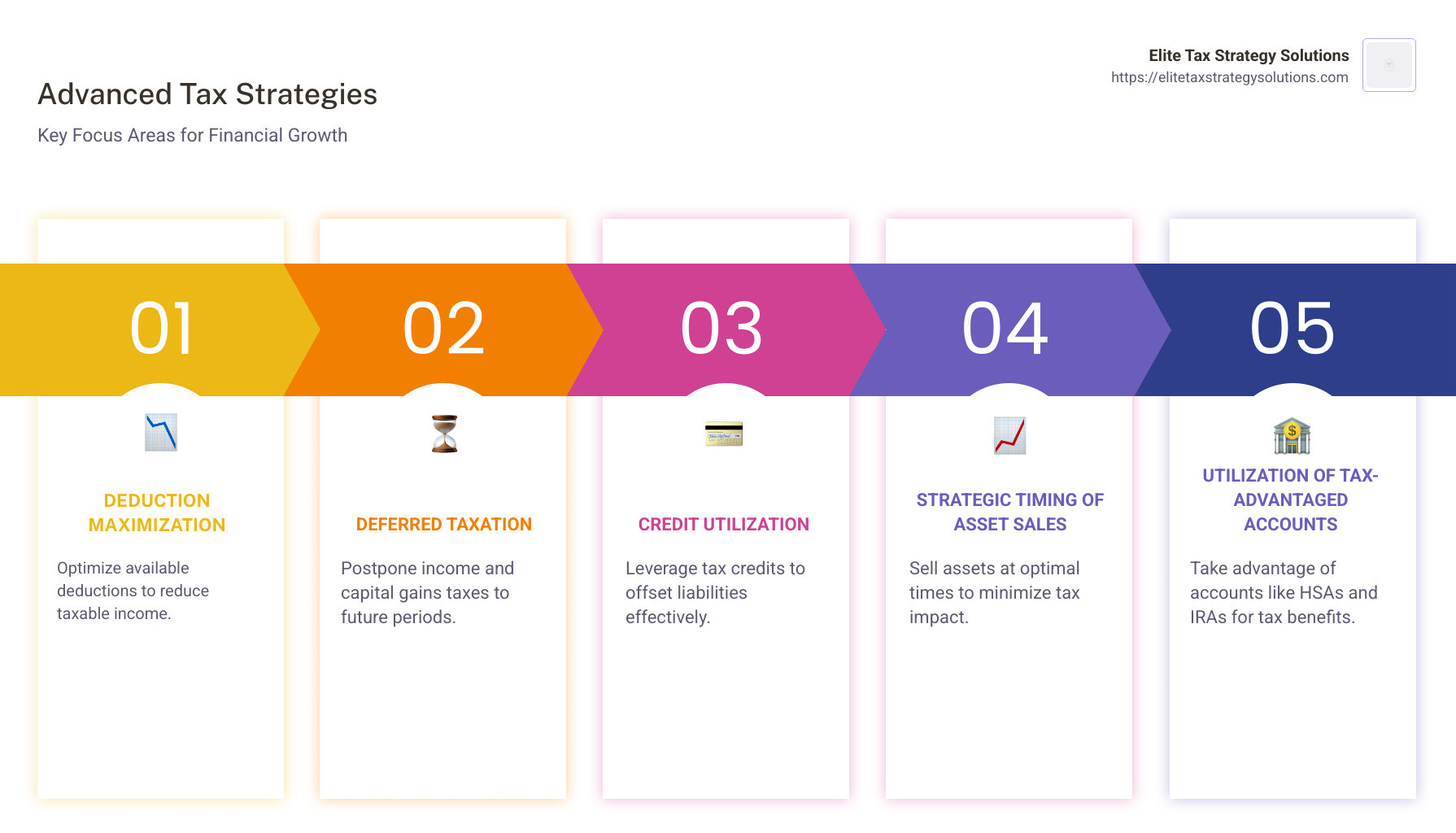
Advanced tax strategies are essential for high-net-worth individuals aiming to reduce their tax exposure and improve financial stability. These strategies involve mastering complex tax codes to make well-informed decisions. Below are key focus areas for advanced tax planning:
- Deduction Maximization
- Deferred Taxation
- Credit Utilization
- Strategic Timing of Asset Sales
- Utilization of Tax-Advantaged Accounts
Tax planning can transform daunting financial regulations into a streamlined path to wealth preservation and growth. Adjusting to ongoing changes in tax legislation is crucial. The goal is to minimize liabilities and achieve long-term financial goals.
Hello! I’m David Fritch. With over 40 years of tax planning experience, I’ve dedicated my career to assisting high-income earners and business owners manage complex tax systems. This article explores advanced strategies for achieving financial prowess and peace of mind.
Key terms for advanced tax strategies:
– high-income tax planning
– maximize tax savings
– tax planning for small businesses
Understanding Advanced Tax Strategies
When it comes to advanced tax strategies, understanding how deductions, deferrals, and tax efficiency work is crucial. These elements form the backbone of effective tax planning, especially for high-net-worth individuals.
Deductions: The Power of Reducing Taxable Income
Deductions are like magic erasers for your taxable income. They lower the amount of income that’s subject to taxes. High earners can benefit from a variety of deductions, such as those for mortgage interest, charitable contributions, and business expenses.
For instance, a business owner who invests in a defined benefit plan can enjoy significant deductions. One client contributed $200,000 to his plan and saved around $80,000 in taxes. That’s a big win for anyone looking to cut down on tax bills.
Deferrals: Paying Taxes Later
Deferring taxes means delaying the payment of taxes to a future date. This can be achieved through retirement accounts like 401(k)s or IRAs, where contributions are made with pre-tax dollars, reducing taxable income now and deferring taxes until withdrawal.
A prime example is the installment sale strategy. Instead of taking a lump sum when selling a business, spreading payments over several years can defer tax liabilities. One client saved approximately $200,000 in taxes by opting for an installment plan over five years.
Tax Efficiency: Getting the Most Bang for Your Buck
Tax efficiency is all about structuring your finances to pay the least amount of tax legally possible. This involves strategic investment decisions, such as choosing municipal bonds for their tax-exempt interest or timing asset sales to take advantage of lower capital gains rates.
Consider municipal bonds, for example. They offer tax-free interest income, making them attractive to those in high tax brackets. While they might have lower yields compared to taxable bonds, the tax savings can outweigh the difference in yield.
By focusing on these three pillars—deductions, deferrals, and tax efficiency—you can craft a tax strategy that aligns with your financial goals and helps reduce your overall tax burden.
Key Advanced Tax Strategies for High Earners
When you’re a high earner, advanced tax strategies are essential. Let’s explore some key tactics: retirement contributions, health savings accounts, and deferred compensation.
Retirement Contributions: Maximize Your Savings
Contributing to retirement accounts is one of the most effective ways to reduce taxable income. High earners can make significant contributions to 401(k) or 403(b) plans, lowering their taxable income by up to $23,000 in 2024. For those aged 50 or older, an additional catch-up contribution of $7,500 is allowed.
Traditional IRAs are another option. Although contributions are made with pre-tax dollars, they grow tax-deferred until withdrawal. The SECURE Act has extended the age for required minimum distributions (RMDs) to 73 or 75, depending on your birth year, allowing more time for your investments to grow.
Health Savings Accounts: Triple Tax Benefits
A Health Savings Account (HSA) offers a trifecta of tax benefits: contributions are tax-deductible, earnings grow tax-free, and withdrawals for qualified medical expenses are also tax-free. In 2024, individuals can contribute up to $4,150, and families can contribute up to $8,300.
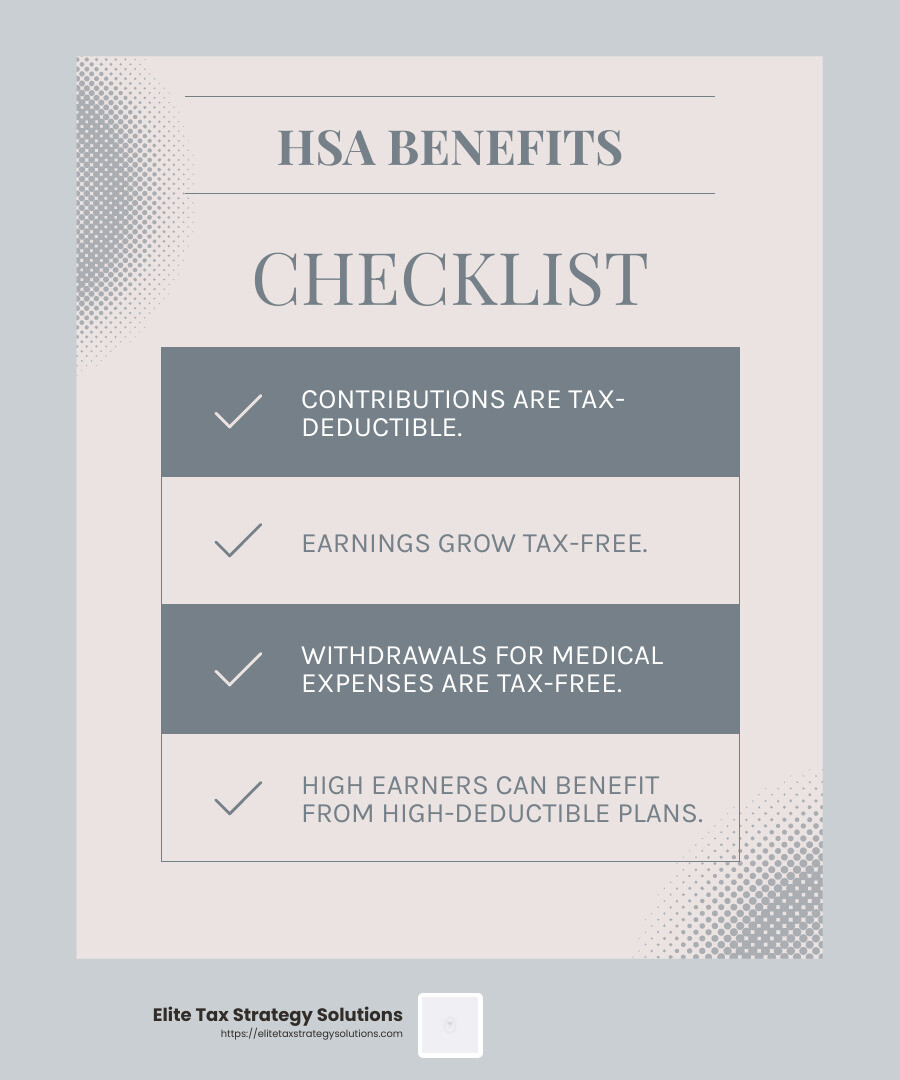
HSAs are particularly advantageous for high earners with high-deductible health plans. They can be a powerful tool for reducing taxable income while setting aside money for future healthcare costs.
Deferred Compensation: Postpone Income
Deferred compensation plans allow high earners to postpone receiving a portion of their salary until a later date, typically retirement. This can be beneficial for those who expect to be in a lower tax bracket in the future.
By deferring income, you not only reduce your current taxable income but also potentially lower your tax rate on that income when it’s eventually received. This strategy is particularly effective for executives and business owners who can negotiate compensation packages.
These advanced strategies—retirement contributions, HSAs, and deferred compensation—offer high earners smart ways to minimize their tax burden while planning for the future.
Real Estate and Investment Tax Tactics
Real estate and investments offer numerous opportunities for savvy savers to reduce their tax burden. Let’s explore some advanced tax strategies that can help you maximize your savings.
Real Estate Deductions: Boost Your Cash Flow
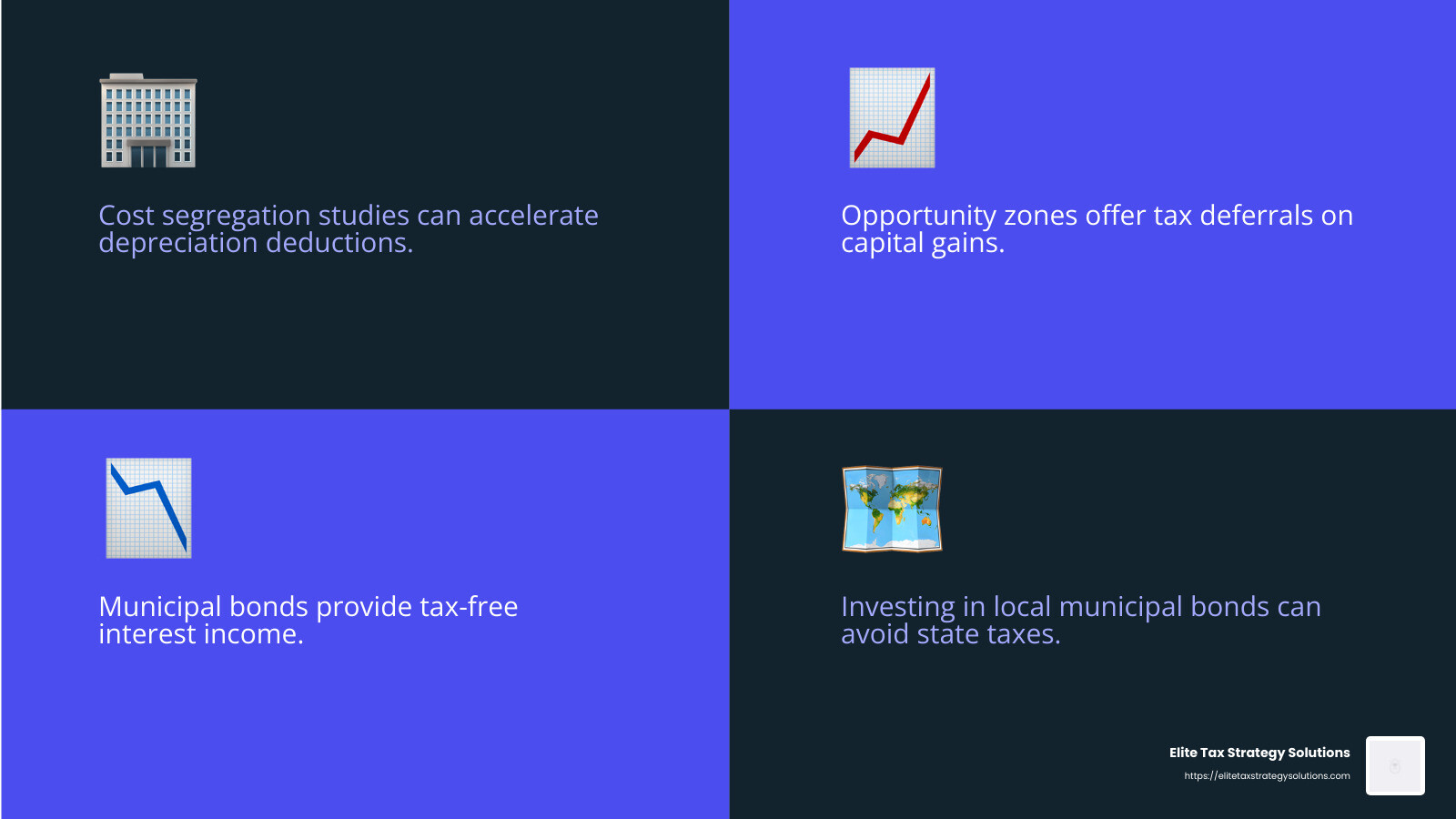
Real estate investments can significantly reduce tax exposure through various deductions. One powerful tool is the cost segregation study. By breaking down the components of a building, you can accelerate depreciation deductions, which improves near-term cash flow. This means more money in your pocket today, while still investing in the future.
Additionally, investing in properties located in opportunity zones can defer and potentially reduce taxes on prior capital gains. These zones are designed to spur economic development, and they come with attractive tax incentives for investors.
Municipal Bonds: Enjoy Tax-Free Income
Municipal bonds, or “munis,” are another great way to save on taxes. When you invest in these bonds, the interest income is generally exempt from federal income tax. If you live in the state where the bond is issued, you may also avoid state and local taxes.
This makes municipal bonds particularly attractive for high earners in higher tax brackets. They provide a steady stream of income without the tax hit, making them a smart addition to a tax-efficient investment portfolio.
Tax-Loss Harvesting: Turn Losses into Gains
Tax-loss harvesting is a strategy where you sell investments that have lost value to offset gains from other investments. This can reduce your overall tax liability.
For example, if you have a stock that has decreased in value, selling it at a loss can offset gains from other stocks. You can then reinvest the proceeds in a similar, but not identical, investment to maintain your portfolio’s balance.
This strategy can provide significant tax savings, especially for those in higher tax brackets. It’s a smart way to manage your investment portfolio while minimizing tax impacts.
By leveraging these advanced tax strategies in real estate and investments, you can reduce your tax burden and improve your financial well-being.
Next, we’ll explore wealth transfer and estate planning, where trusts, gifting, and life insurance play crucial roles in preserving wealth for future generations.
Wealth Transfer and Estate Planning
When it comes to preserving wealth across generations, advanced tax strategies in wealth transfer and estate planning are essential. Let’s explore how trusts, gifting, and life insurance can help safeguard your legacy.
Trusts: Secure and Strategic
Trusts are powerful tools for managing and transferring wealth. There are two main types to consider: Irrevocable Life Insurance Trusts (ILITs) and Grantor Retained Annuity Trusts (GRATs).
-
ILITs: These trusts hold life insurance policies outside of your taxable estate. This means heirs can receive substantial payouts without estate taxes. Once set up, the terms cannot be changed, offering solid asset protection.
-
GRATs: With GRATs, you retain income for a set period, and any appreciation passes to your heirs tax-free. This is ideal for assets expected to increase in value, as it minimizes estate taxes on future growth.
Gifting: Share the Wealth
Gifting is a straightforward way to reduce your taxable estate while supporting loved ones or causes you care about.
-
Annual Gift Tax Exclusion: You can give up to a certain amount each year (check current limits) to any number of individuals without incurring gift taxes. This strategy helps transfer wealth gradually and tax-efficiently.
-
Lifetime Gift and Estate Tax Exemption: By leveraging this exemption, you can make significant transfers during your lifetime without tax penalties. It’s a strategic way to manage your estate and reduce future tax liabilities.
Life Insurance: Protection and Planning
Life insurance is not just about providing for dependents; it also plays a vital role in estate planning.
- Whole and Universal Life Policies: These policies can accumulate cash value, offering both a death benefit and a potential source of funds during your lifetime. The payout from these policies is typically tax-free, making them a valuable component of a comprehensive estate plan.
By utilizing trusts, gifting, and life insurance, you can effectively manage wealth transfer and estate planning. These strategies not only protect your assets but also ensure that your legacy is preserved for future generations.
Next, we’ll tackle common questions about advanced tax strategies, providing clarity on how high-income earners can optimize their tax planning.
Frequently Asked Questions about Advanced Tax Strategies
What is advanced tax planning?
Advanced tax planning involves using sophisticated structures and strategies to minimize excessive taxation. It’s about more than just filing a return; it’s a proactive approach to ensure that all financial elements work together to pay the lowest taxes possible. This might involve using trusts, like Irrevocable Life Insurance Trusts (ILITs), to keep assets out of your taxable estate, or Grantor Retained Annuity Trusts (GRATs) to pass on asset appreciation tax-free.
How can high-income earners reduce taxes?
High-income earners have several tactics at their disposal to reduce taxes. Retirement contributions are a powerful tool. By contributing to retirement accounts such as 401(k)s or IRAs, you can defer taxes on these amounts until withdrawal, potentially at a lower tax rate.
Charitable contributions also offer significant tax benefits. Donating to qualified charities can reduce your taxable income, and using donor-advised funds can help maximize these benefits while supporting causes you care about.
What are the 5 pillars of tax planning?
-
Deducting: Identifying and maximizing deductions can significantly lower taxable income. This includes business expenses, mortgage interest, and medical expenses.
-
Deferring: Delaying income to future years can reduce current tax liabilities. This is commonly achieved through retirement account contributions or deferred compensation plans.
-
Dividing: Splitting income among family members or entities can reduce the overall tax burden. This is often used in family businesses or through trusts.
-
Defending: Ensuring compliance with tax laws and regulations to prevent audits and penalties.
-
Deciding: Making informed choices about investments, purchases, and financial structures to optimize tax outcomes.
These strategies form a comprehensive approach to tax planning, helping individuals and businesses alike to minimize their tax liabilities and maximize financial well-being.
Next, we’ll explore more ways in which Elite Tax Strategy Solutions can help you implement these strategies for a more tax-efficient future.
Conclusion
At Elite Tax Strategy Solutions, we understand that personalized tax planning is not just about filling out forms—it’s a proactive approach to securing your financial future. Our team of seasoned professionals is dedicated to helping high earners and closely held businesses steer the complex world of advanced tax strategies.
Why choose us? Because we offer more than just tax advice. We deliver a custom, strategic plan that aligns with your unique financial goals. By staying ahead of regulatory changes and leveraging sophisticated tax-saving tactics, we ensure that you’re not just compliant, but optimized for maximum savings.
Our proactive approach means we’re constantly on the lookout for new opportunities to improve your financial stability. Whether it’s through innovative use of trusts, strategic retirement contributions, or effective wealth transfer planning, we’re committed to helping you keep more of your hard-earned money.
Located in Jasper, Indiana, and suburban areas near major cities, we are well-positioned to serve a diverse range of clients. Our comprehensive financial planning services are designed to meet the needs of high-income earners who demand excellence and expertise in their tax planning.
Ready to take control of your financial future? Explore our comprehensive financial planning services and find how we can help you achieve your financial aspirations with confidence and clarity.