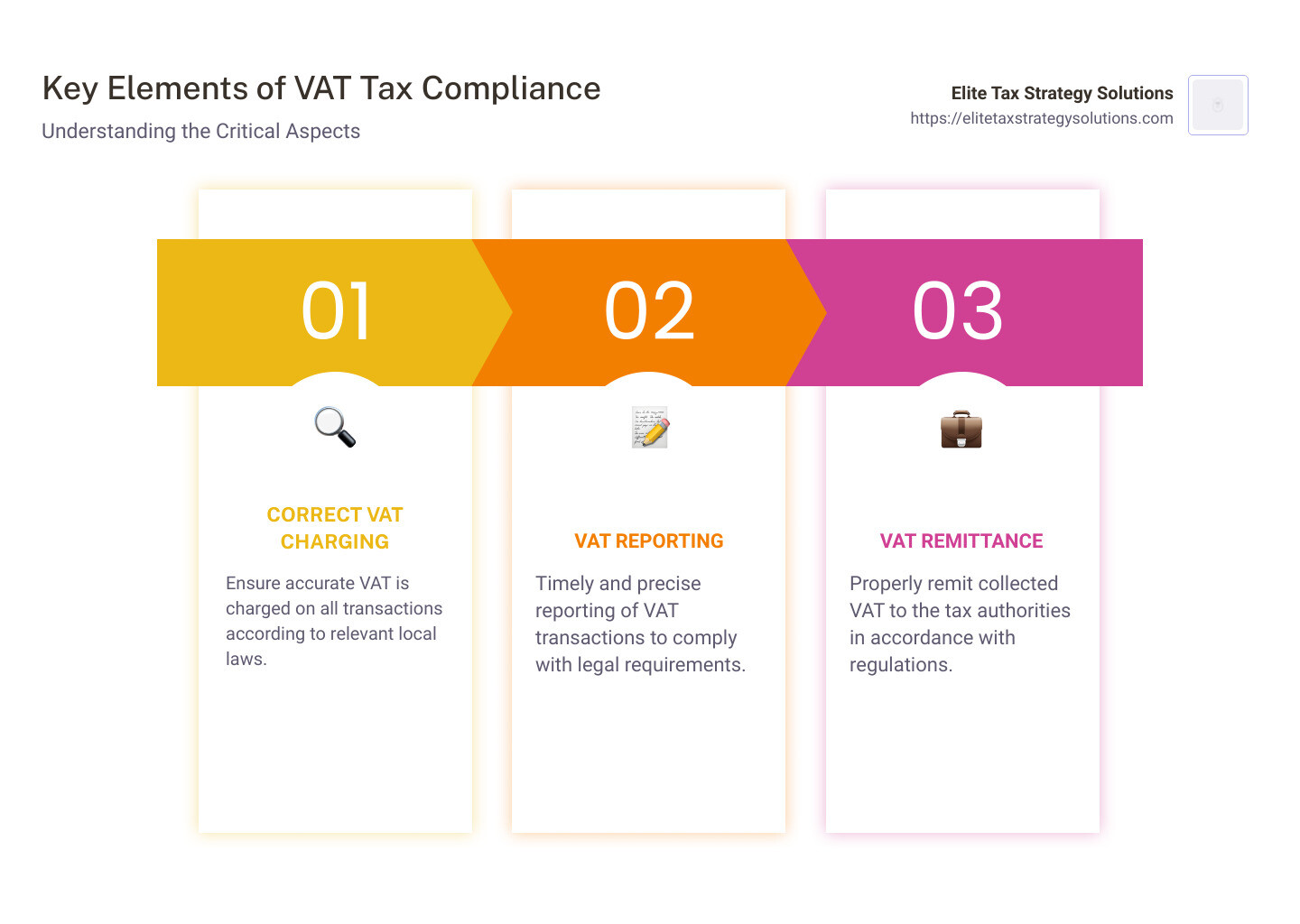
VAT tax compliance is more crucial than ever in today’s rapidly evolving digital and global business landscape. Companies worldwide must ensure they follow local regulations to avoid fines, penalties, and other consequences. Understanding VAT tax compliance involves recognizing the necessity of charging the correct VAT, accurately reporting it, and remitting it as prescribed, which varies widely across different countries.
- What is VAT Compliance?
- Charging the correct VAT on transactions.
- Reporting and remitting VAT as per local regulations.
- Understanding registration obligations.
The digital revolution has significantly impacted the way businesses manage VAT. As technology advances, companies are finding innovative ways to improve their compliance processes. The integration of digital solutions has streamlined VAT management, making it simpler to handle even the most complex international transactions.
I’m David Fritch. With over 40 years of experience navigating complex tax environments, I’m here to guide you through the intricacies of VAT tax compliance. My journey has included owning my law and CPA firms, providing specialized expertise in tax compliance and strategy.
Relevant articles related to vat tax compliance:
– foreign tax compliance
– international tax compliance
– vat compliance services
Understanding VAT Tax Compliance
The Importance of VAT Compliance
VAT compliance is vital for businesses operating in the global market. It involves more than just charging the right amount of VAT on sales. Companies must also report and remit this tax accurately to the relevant authorities. Failure to comply with these obligations can lead to severe consequences, including fines, penalties, and even business closure.
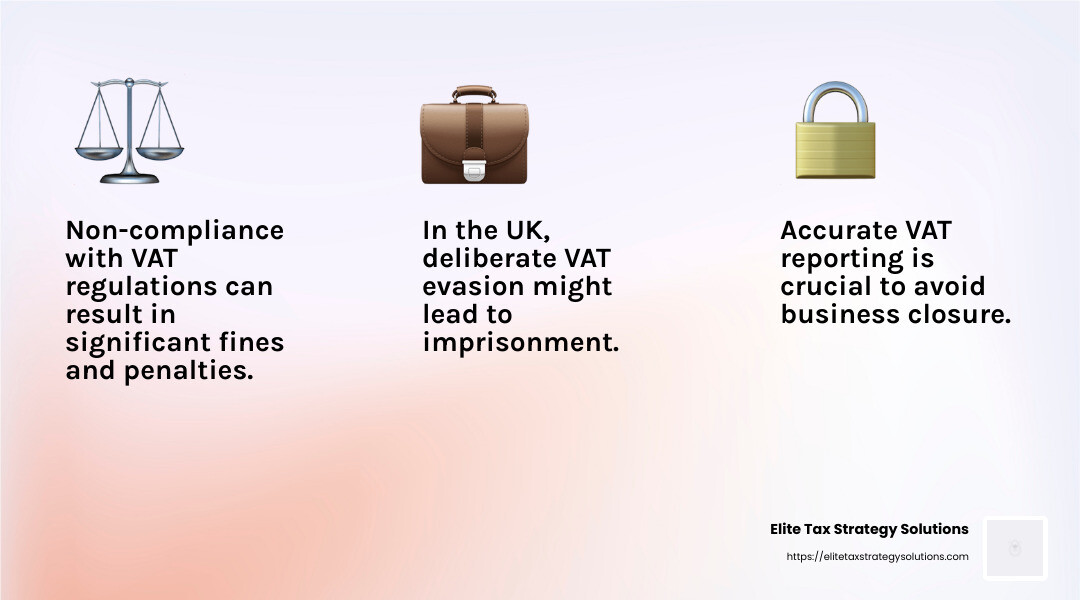
In the UK, for example, the initial penalty for late VAT returns can be £200, while deliberate VAT evasion might result in imprisonment. These penalties highlight the importance of maintaining accurate records and staying updated with local VAT regulations to avoid such costly mistakes.
VAT Registration and Obligations
VAT registration is a crucial step for businesses that meet specific sales thresholds or engage in particular types of transactions. Once a company surpasses the registration threshold set by a country, it must register for VAT. This process typically involves obtaining a VAT number, which is used to identify the business in all VAT-related transactions.
Here’s a quick overview of the VAT registration process:
- Determine Registration Thresholds: Each country sets its own sales or transaction thresholds for VAT registration. Exceeding these thresholds necessitates registration.
- Obtain a VAT Number: After registration, businesses receive a unique VAT number. This number is essential for invoicing and claiming VAT credits.
- Fiscal Representatives: In some jurisdictions, non-established businesses might need to appoint a fiscal representative. This representative acts as a local contact for tax authorities, ensuring compliance with local VAT laws.
VAT invoicing is another key component of VAT compliance. Businesses must issue invoices that meet specific requirements, such as including the VAT number, invoice date, and a description of goods or services. Proper invoicing ensures transparency and helps prevent fraud.
In the European Union, for example, VAT invoices must include details like the supplier’s and customer’s names and addresses, VAT rates, and the total VAT charged.
In conclusion, VAT compliance is not just a legal obligation but a crucial aspect of running a successful business. By understanding and adhering to VAT registration and invoicing requirements, companies can avoid penalties and maintain their reputation in the global market.
The Role of Technology in VAT Compliance
E-Invoicing and Real-Time Reporting
Gone are the days when businesses could rely solely on paper invoices and manual processes to manage their VAT tax compliance. In today’s digital world, technology plays a crucial role in streamlining VAT processes, particularly through e-invoicing and real-time reporting.
E-invoicing is the electronic exchange of invoices between businesses and tax authorities. This digital method ensures that invoices are accurate, complete, and compliant with local VAT laws. Many countries are now mandating e-invoicing to help reduce errors and fraud.
Real-time reporting takes this a step further by requiring businesses to report transaction data to tax authorities almost immediately after a sale occurs. This allows for instant verification and reduces the risk of discrepancies. By having access to real-time data, tax authorities can quickly identify and address any issues, making the VAT compliance process more transparent and efficient.
Benefits of Digital VAT Solutions
Adopting digital VAT solutions offers numerous benefits for businesses, including:
-
Efficiency: Automating VAT processes saves time and reduces the need for manual data entry. This allows employees to focus on more strategic tasks, rather than getting bogged down by paperwork.
-
Accuracy: Digital solutions minimize the risk of human error, ensuring that VAT calculations and reports are precise. This accuracy is crucial for avoiding penalties and maintaining compliance.
-
Cost Savings: By reducing the need for physical storage and manual labor, businesses can cut costs associated with traditional invoicing and reporting methods. Additionally, compliance automation can help prevent costly fines due to errors.
-
Compliance Automation: Automated systems ensure that businesses stay up-to-date with changing VAT regulations, reducing the risk of non-compliance. This is particularly important for companies operating in multiple countries with varying VAT rules.
When tax regulations are constantly evolving, leveraging technology for VAT compliance is not just a convenience—it’s a necessity. By embracing e-invoicing, real-time reporting, and other digital solutions, businesses can steer the complexities of VAT compliance with ease and confidence.
Challenges in VAT Compliance
Cross-Border Trade and VAT
Navigating cross-border trade presents a unique set of challenges for businesses striving for VAT tax compliance. Each country has its own VAT rates, registration rules, and exemptions. This lack of standardization complicates compliance for companies operating internationally.
Take, for example, a business selling goods from Germany to France. While both countries are in the EU, they have different VAT rates and reporting requirements. The seller must understand these differences to ensure compliance.
Intra-community supplies within the EU add another layer of complexity. Goods moving between EU countries are subject to specific VAT rules, impacting how businesses charge and report VAT. Failure to comply can lead to hefty penalties and disrupted trade.
Managing VAT in cross-border trade is like juggling multiple balls at once. Each ball represents a country’s unique VAT requirements. Drop one, and you might face fines or lose market access.
Industry-Specific VAT Challenges
Different industries face distinct VAT challenges. The retail sector, for instance, deals with a high volume of invoices and varying VAT rates for different products. In the UK, children’s shoes are zero-rated, while adult shoes are not. Retailers must track these differences to avoid errors.
The medical sector faces its own problems. Many medical services are VAT-exempt, meaning VAT isn’t charged. However, businesses must ensure they don’t reclaim VAT on related costs. This requires careful management to maintain compliance.
Digital services, like cloud-based software, add another layer of complexity. With digital products, determining the location of the buyer—and thus the applicable VAT rate—can be tricky. As digital services continue to grow, so do the challenges in managing VAT.
In summary, while cross-border trade and industry-specific issues present significant challenges, understanding and adapting to these complexities is crucial for successful VAT compliance. Businesses must stay vigilant, keeping abreast of changes in VAT laws to avoid costly mistakes and ensure smooth operations.
Frequently Asked Questions about VAT Tax Compliance
What is VAT Tax Compliance?
VAT tax compliance is all about ensuring that a business correctly handles the VAT (Value Added Tax) obligations in the countries it operates. This involves registering for VAT, accurately invoicing customers, collecting the right amount of tax, and submitting regular reports to tax authorities. It’s like following a recipe; each step must be done correctly to avoid a mess.
Imagine a company expanding into Europe. It must register for VAT in each country where it sells products. This registration is not just a legal formality—it’s the key to open uping the ability to charge and reclaim VAT. Without it, the company could face fines or even be barred from doing business in those countries.
How Does VAT Compliance Affect Businesses?
Complying with VAT regulations is crucial for any business operating internationally. VAT compliance impacts a business’s reputation, costs, and ability to operate smoothly in foreign markets.
-
Reputation: A company known for being VAT compliant gains trust from partners and customers. Trust can lead to increased market share and growth opportunities.
-
Costs: Understanding VAT rates and exemptions helps businesses price their products competitively. Missteps in VAT compliance can lead to financial losses or penalties.
-
Operations: VAT compliance affects everything from cash flow management to supply chain decisions. Efficient VAT processes can streamline operations and reduce costs.
A digital marketplace, for instance, must steer complex VAT rules when selling across borders. Failing to comply can disrupt operations and lead to financial penalties. By being compliant, the marketplace can focus on growth rather than legal battles.
What Are the Penalties for Non-Compliance?
Failing to comply with VAT regulations can result in severe penalties. These penalties vary by country and the nature of the violation.
-
Fines: Late filings or incorrect reporting can lead to hefty fines. In the UK, for instance, late VAT returns can incur a penalty of £200.
-
Interest Charges: Unpaid VAT can accrue interest, increasing the financial burden on businesses.
-
Loss of Input Tax Credits: Businesses might lose the right to reclaim VAT on purchases, raising their tax liability.
-
Criminal Prosecution: Deliberate VAT fraud or evasion can lead to criminal charges, including imprisonment.
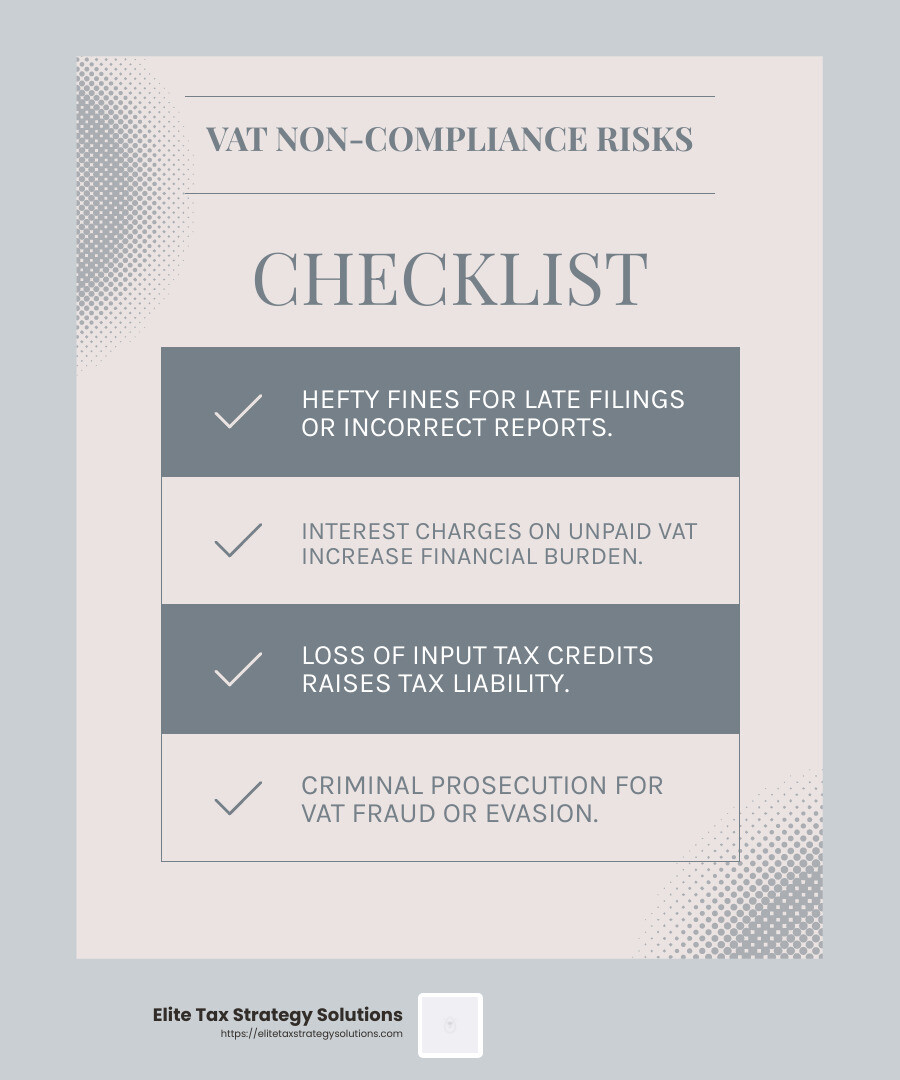
Imagine a company that ignores VAT compliance. It could face fines, lose money on missed credits, and even risk legal action. Staying compliant avoids these pitfalls and ensures smooth business operations.
Conclusion
At Elite Tax Strategy Solutions, we understand the critical role VAT tax compliance plays in achieving financial stability and success for businesses. Our proactive approach to tax optimization is designed to help our clients steer the complex world of VAT with confidence and ease.
Proactive Tax Optimization
We believe that being proactive is key to effective tax planning. By staying ahead of tax law changes and understanding the intricacies of VAT regulations, we help our clients implement strategies that maximize their tax savings. This forward-thinking approach not only ensures compliance but also positions businesses for long-term growth and success.
Financial Stability
VAT compliance isn’t just about avoiding penalties; it’s about securing your business’s financial future. By ensuring accurate VAT registration, invoicing, and reporting, we help our clients maintain a solid financial foundation. This stability allows businesses to focus on their core operations and strategic goals without the distraction of tax-related issues.
Our team at Elite Tax Strategy Solutions is dedicated to providing personalized, expert guidance to high-income earners and closely held businesses. We are committed to helping our clients achieve their financial aspirations through comprehensive tax planning and compliance services.
If you’re ready to take control of your VAT compliance and optimize your tax strategy, contact us today. Let us help you steer the digital revolution in tax compliance and secure a prosperous future for your business.