Wealth management tax planning is crucial for safeguarding and enhancing your financial future. It’s not just about filing your annual returns; it’s a strategic process that involves careful analysis and planning to minimize tax liabilities while aligning with your long-term financial goals.
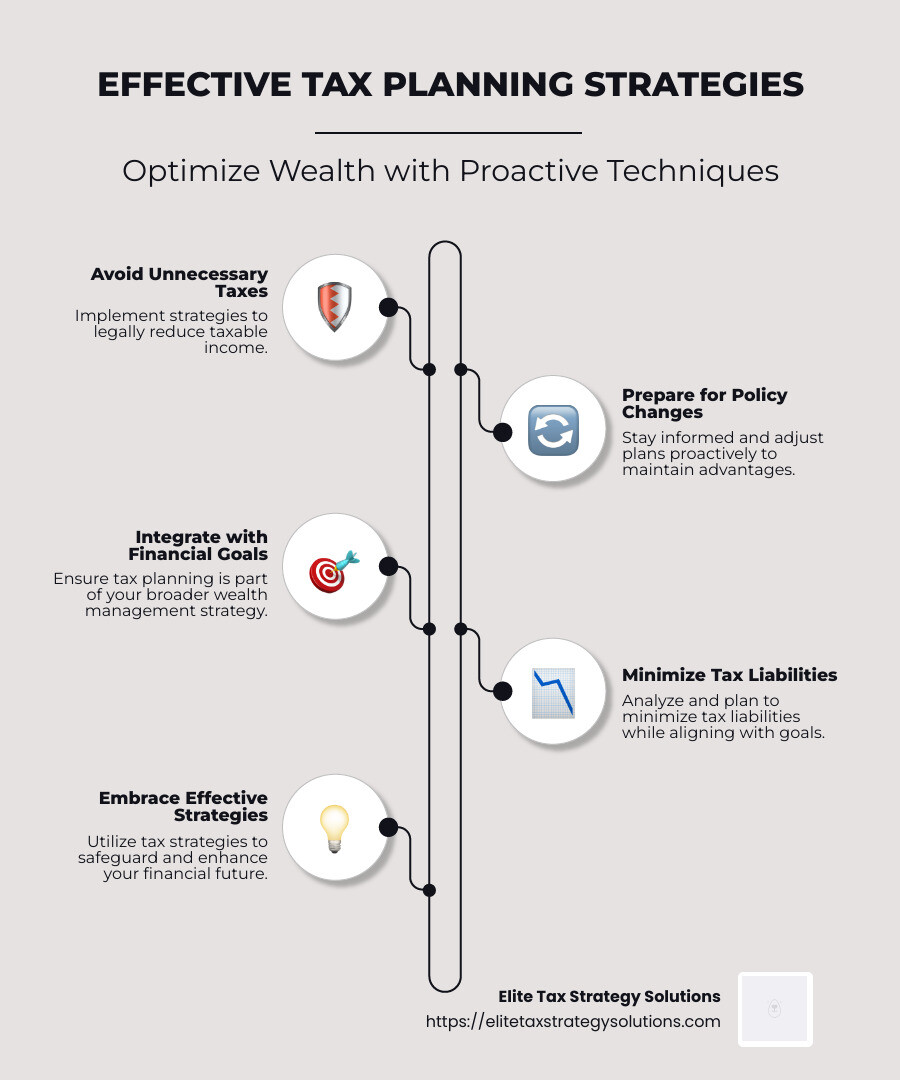
- Avoid unnecessary taxes: Implement strategies to legally reduce taxable income.
- Prepare for policy changes: Stay informed and adjust plans proactively to maintain advantages.
- Integrate with financial goals: Ensure tax planning is part of your broader wealth management strategy.
Tax planning is vital due to ever-changing tax policies that can affect how much you get to keep from your investments and earnings. By embracing effective tax planning strategies, you can ensure your financial future remains intact and thriving. Albert Einstein once remarked, “The hardest thing in the world to understand is income taxes.” Yet, proper guidance can explain this complex topic, turning it into a powerful tool for wealth optimization.
I’m David Fritch, with a rich background in wealth management tax planning. With over 40 years of experience in advising high-income earners and small business owners, I help clients maximize their tax savings while complying with complex tax laws. Let’s dig deeper into a proactive approach to optimizing your wealth.
Find more about wealth management tax planning:
– high net worth tax strategies
– financial planning for high income earners
– advanced tax planning strategies
Comprehensive Tax Planning for High-Net-Worth Individuals
Navigating taxes can be daunting, especially for high-net-worth individuals. This is why proactive tax planning is essential. It goes beyond the basics of filing returns; it involves strategic actions to minimize taxes across various fronts, including income tax, business taxes, employer taxes, and estate and gift taxes.
Income Recognition Strategies
Timing is everything. When it comes to income recognition, the goal is to strategically plan when and how you recognize income and deductions. This can help in managing the impact of the Alternative Minimum Tax (AMT) and ordinary taxes. By choosing the right time to recognize income, you can effectively lower your tax liability. For example, deferring income to a year when you expect to be in a lower tax bracket can be beneficial.
Income Shifting Techniques
Income shifting involves diverting income to individuals or entities that fall under lower marginal tax brackets. This strategy can be particularly useful for families or businesses. By shifting income to a family member in a lower tax bracket, you can significantly reduce your overall tax burden. This technique is not only about saving taxes but also about smart financial planning for the entire family.
Income Conversion Methods
Changing taxable income into tax-free or tax-deferred income can be a game-changer. One effective method is converting income into capital gains, which are typically taxed at a lower rate. Additionally, investing in tax-free municipal bonds can provide income that is free from federal taxes, and sometimes state taxes as well. These strategies not only help in minimizing taxes but also in growing wealth over time.
Maximizing Deductions and Credits
Deductions and credits are powerful tools in reducing taxable income. By identifying and maximizing allowable expenses, you can significantly lower your tax liability. This includes everything from business expenses to charitable contributions. The key is to ensure you’re taking full advantage of all available deductions and credits to minimize your taxable income.
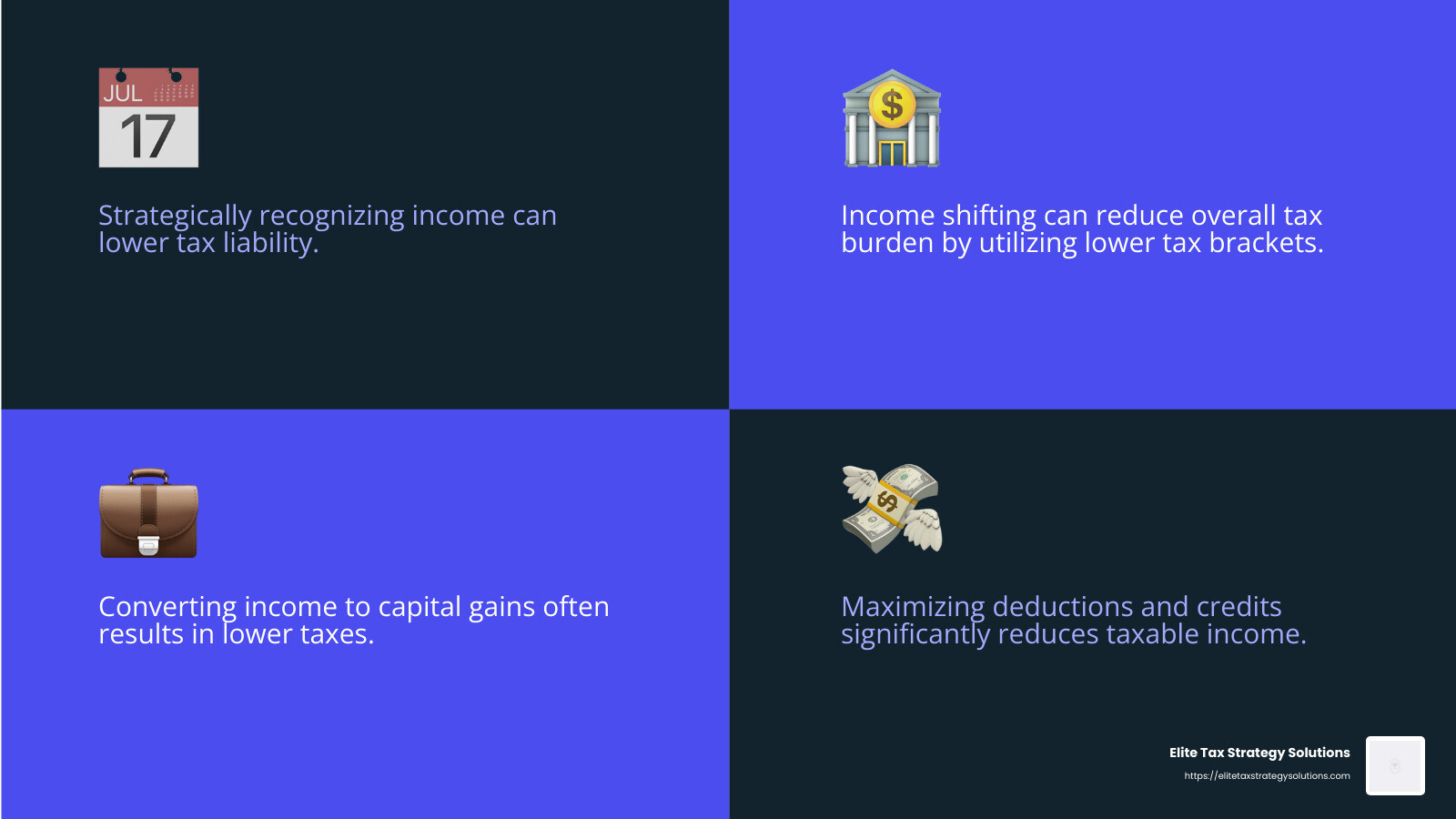
In summary, comprehensive tax planning for high-net-worth individuals requires a multi-faceted approach. By focusing on income recognition, shifting, conversion, and maximizing deductions, you can effectively manage your tax liabilities and improve your financial well-being.
Tax-Efficient Investment Strategies
Investing wisely is not just about picking the right stocks or bonds. It’s also about understanding how taxes can impact your returns. Wealth management tax planning involves strategies to maximize your investment gains while minimizing tax liabilities. Let’s explore some effective tax-efficient investment strategies.
Tax-Free Investment Income Generation
Generating tax-free income is a smart way to boost your investments. Municipal bonds are a popular choice because they often provide interest income that is exempt from federal taxes—and sometimes state and local taxes as well. These bonds are issued by states, cities, and counties to fund public projects, making them a reliable and tax-efficient investment option.
Strategic Capital Gain Recognition
Capital gains are the profits you earn from selling an asset. Recognizing these gains strategically can help manage your tax burden. Long-term capital gains, from assets held for more than a year, are taxed at lower rates compared to short-term capital gains. By holding investments longer, you can benefit from these reduced rates, which range from 0% to 20% based on your income level.
Tax-Loss Harvesting
Even when the market doesn’t perform well, you can still turn it to your advantage. Tax-loss harvesting involves selling investments at a loss to offset gains elsewhere in your portfolio. This strategy can reduce your taxable income and, therefore, your tax bill. For instance, if you have a $6,000 gain and a $7,500 loss, selling the losing investment can offset the gain and reduce your taxable income. However, be cautious of the wash-sale rule, which prevents you from repurchasing the same investment within 30 days.
Asset Location Strategies
Where you hold your investments matters. Different accounts have different tax implications. Taxable accounts are subject to capital gains and dividend taxes, while qualified accounts like IRAs and 401(k)s offer tax-deferred or tax-free growth. By strategically placing assets in the right accounts, you can minimize taxes. For example, holding bonds in a tax-deferred account can protect you from annual interest income taxes, maximizing your long-term returns.
Incorporating these strategies into your investment plan can significantly improve your financial growth while keeping taxes in check. Understanding and implementing these techniques is a crucial step in effective wealth management tax planning.
Year-Round Tax Planning Strategies
Effective tax planning is not just a one-time event; it’s a year-round commitment. By staying proactive, you can minimize your tax burden and keep more of your hard-earned money. Let’s explore some key strategies to help you plan better throughout the year.
Tax Projections
Understanding your future tax liabilities is crucial for effective financial planning. By making tax projections, you can anticipate your tax obligations and adjust your strategies accordingly. This involves estimating your income, deductions, and credits for the year to forecast your tax bill. By doing so, you can avoid surprises and make informed financial decisions.
Regularly reviewing your financial situation allows you to identify potential tax-saving opportunities. For instance, if you expect a higher income this year, you might consider accelerating deductions or deferring income to manage your tax bracket. This proactive approach ensures you’re not caught off guard when tax season arrives.
Payroll Withholding Adjustments
Adjusting your payroll withholdings can be a simple yet effective way to manage your tax liability. If you withhold too little, you might face a hefty tax bill and potential penalties. On the other hand, withholding too much means giving the government an interest-free loan.
To strike the right balance, review your withholding allowances regularly, especially after major life changes like marriage, having a child, or getting a new job. The IRS provides a withholding calculator to help you determine the correct amount to withhold. This ensures you’re on track to meet your tax obligations without overpaying or underpaying.
Maximizing Deductions
Deductions are your best friends when it comes to reducing taxable income. By keeping track of allowable expenses, you can significantly lower your tax bill. Common deductions include charitable contributions, mortgage interest, and business expenses.
For business owners, keeping detailed records of expenses can lead to substantial savings. Consider costs related to travel, office supplies, and even certain home office expenses if you work from home. Meanwhile, individuals can benefit from tracking donations to qualified charities, which can be deducted from taxable income.
Regularly reviewing your expenses and consulting with a tax professional can help you identify all possible deductions. This not only minimizes taxable income but also ensures compliance with tax laws.
By incorporating these year-round tax planning strategies, you can effectively manage your tax liabilities and improve your overall financial well-being. Staying informed and proactive is key to optimizing your wealth through smart tax planning.
Specialized Tax Planning for Ultra-High-Net-Worth Families
When managing wealth for ultra-high-net-worth families, specialized tax planning is essential. These strategies help preserve wealth and ensure efficient transfer to future generations.
Annual Gift Tax Exclusion
The annual gift tax exclusion allows you to gift a certain amount each year without incurring a gift tax. For 2023, the limit is $17,000 per recipient. This is a simple way to transfer wealth tax-free. By gifting within these limits, you can reduce the size of your taxable estate over time.
Lifetime Gift Tax Exemption
Beyond annual gifts, there’s the lifetime gift tax exemption. This allows you to transfer a substantial amount over your lifetime without paying gift tax. Currently, the exemption is $12.92 million per individual. Using this exemption strategically can help minimize estate taxes when transferring significant assets.
Charitable Giving
Charitable giving can be a powerful tax planning tool. Setting up a donor-advised fund or a charitable foundation can provide immediate tax benefits and support causes you care about. These structures allow you to make tax-deductible contributions and recommend grants to charities over time. This not only reduces taxable income but also helps create a lasting philanthropic legacy.
Using Trusts
Trusts are versatile tools for wealth management and tax planning. Irrevocable trusts remove assets from your estate, reducing estate taxes. Options like grantor-retained annuity trusts (GRATs) allow you to transfer appreciating assets at a reduced tax cost. Dynasty trusts can preserve wealth for multiple generations, offering tax advantages and asset protection.
Risk Management
Effective risk management is crucial for preserving wealth. Insurance coverage can protect against unforeseen events, while investment diversification minimizes financial risks. Additionally, estate liquidity planning ensures there are sufficient funds to cover estate taxes and other expenses without selling off valuable assets.
By incorporating these specialized strategies, ultra-high-net-worth families can manage their wealth more effectively and ensure a smooth transition to future generations.
Frequently Asked Questions about Wealth Management Tax Planning
Does a wealth manager do taxes?
Wealth managers often provide a broad range of services, but not all of them directly handle taxes. Their primary role is to grow and protect your wealth through investments, estate planning, and financial strategies. However, many wealth managers collaborate with tax professionals to ensure that your financial plan is tax-efficient. They might offer tax planning advice and strategies to minimize your tax burden, but the actual preparation and filing of taxes are usually done by a tax advisor or accountant.

Is tax planning worth it?
Absolutely. Tax planning is a crucial part of any financial strategy, especially for high-net-worth individuals. It ensures that all elements of your financial situation work together to minimize your tax liabilities. This isn’t just about saving money in the short term. It’s about maximizing your wealth over your lifetime. By taking advantage of deductions, credits, and tax-efficient investment strategies, you can significantly reduce the amount you owe, freeing up more resources for other financial goals.
Tax planning is not just a one-time task. It requires regular updates and adjustments as tax laws change and your financial situation evolves. This proactive approach can lead to substantial savings and help you achieve long-term financial success.
What is tax planning for ultra-high-net-worth?
For ultra-high-net-worth individuals and families, tax planning is more complex and involves specialized strategies. The goal is to preserve wealth, minimize taxes, and ensure efficient wealth transfer to future generations. This includes:
- Annual Gift Tax Exclusion: Gifting up to a certain limit each year without incurring gift taxes.
- Lifetime Gift Tax Exemption: Strategically using the lifetime exemption to transfer significant assets tax-free.
- Charitable Giving: Setting up donor-advised funds or charitable foundations for tax benefits and philanthropy.
- Using Trusts: Employing various trusts to manage and transfer wealth while minimizing taxes.
- Risk Management: Ensuring adequate insurance and investment diversification to protect wealth.
These strategies require careful planning and are best managed with the help of experienced tax professionals and wealth managers who understand the intricacies of the tax code and estate planning.
Conclusion
At Elite Tax Strategy Solutions, we believe in the power of proactive tax optimization. Our mission is to help clients achieve financial stability by integrating tax planning into every aspect of their wealth management strategy. We understand that the complexities of the tax code can be daunting, but with the right approach, they offer incredible opportunities for savings and growth.
Our team is dedicated to providing personalized, innovative tax planning services custom to your unique financial situation. Whether you’re a high-income earner or a small business owner, our goal is to maximize your tax savings and ensure your financial goals are met. We pride ourselves on staying ahead of tax law changes and adjusting strategies to keep you compliant and optimized.
By choosing Elite Tax Strategy Solutions, you’re not just preparing for tax season—you’re investing in your financial future. Our comprehensive approach ensures that all elements of your financial life work in harmony, minimizing your tax liabilities and enhancing your wealth over time.
For more information on our innovative tax planning services, visit our service page.
Your path to financial success starts with smart tax planning. Let’s optimize your wealth together.