Why Navigating the Maze of Sales Tax is a Full-Time Job
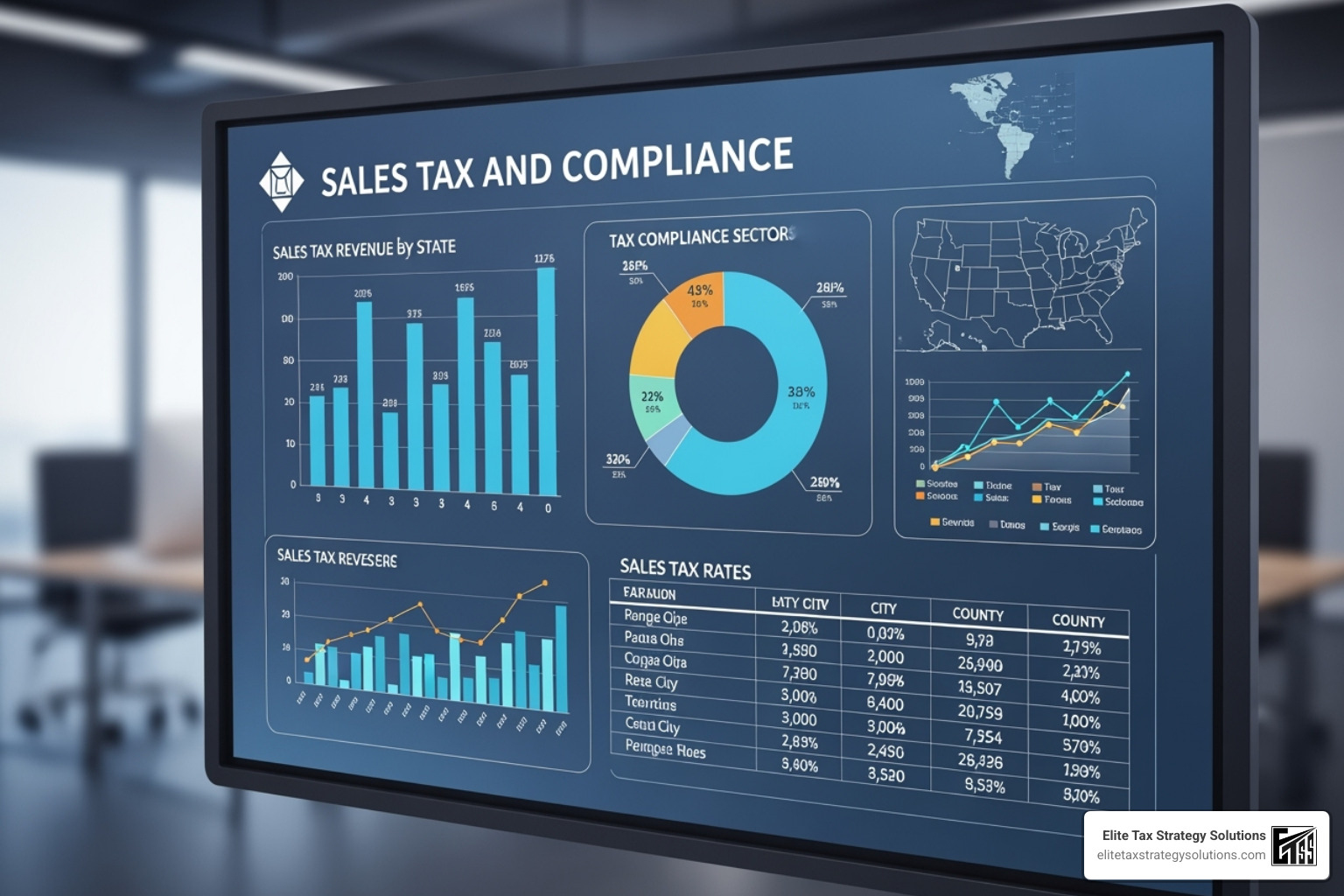
Managing sales tax compliance has become a significant burden for business owners. With over 13,000 sales tax jurisdictions across the United States and constantly changing rules, what used to be a simple task is now incredibly complex. Sales tax filing services help businesses automate this process, but understanding the challenge is the first step.
The 2018 Wayfair decision expanded states’ power to require businesses to collect sales tax based on economic activity—even without a physical presence. An online company could suddenly owe sales tax in dozens of states they’ve never visited.
As one frustrated CFO put it: “We needed a much higher degree of accuracy and confidence, and a much lower degree of effort and worry.”
The stakes are high. Interest and penalties on uncollected sales tax can easily exceed 30% of the tax due. Manual filing across multiple states takes countless hours and creates significant audit risk.
About the Author: I’m David Fritch, and I’ve spent 40 years helping business owners steer complex tax situations through my CPA practice and law firm. I understand the overwhelming burden sales tax places on growing businesses and the critical importance of getting it right.
Before Wayfair, sales tax was tied to a physical presence. Now, economic nexus means reaching a certain sales volume or transaction count in a state can trigger tax obligations. This creates a complex web of rules for businesses, especially those selling online.
This complexity leads to several challenges:
- Identifying Nexus: Knowing where you need to collect.
- Rate Determination: Applying the correct rate, which varies by state, county, city, and special district.
- Product Taxability: Determining what is taxable, as rules for goods, services, and digital products differ widely.
- Filing and Remittance: Filing accurate returns and remitting funds on different schedules for each jurisdiction.
- Staying Updated: Keeping up with constant changes in tax laws and rates.
The sheer volume of these tasks can overwhelm internal teams, diverting them from strategic work to high-risk compliance. This is why sales tax filing services have become indispensable.
The Core Benefits of Using Automated Sales Tax Filing Services
Automated sales tax filing services can transform your compliance process, freeing up valuable time and reducing stress. Businesses using these solutions typically see an 85% boost in efficiency annually. This isn’t just a minor improvement—it’s a game-changer for owners drowning in compliance paperwork.
When audit season arrives, automated systems can save 34 hours of preparation time per audit. Over three years, businesses often save over $210,000 on audit-related costs and another $83,000 on tax return preparation expenses. These are significant savings that stay in your pocket.
Perhaps the most critical benefit is 100% accuracy across 13,000+ US jurisdictions. Every rate, rule, and deadline is handled correctly, eliminating sleepless nights over compliance worries. These services also scale with your business, handling growth from a few states to a national presence without added stress.
Saving Time and Reducing Costs
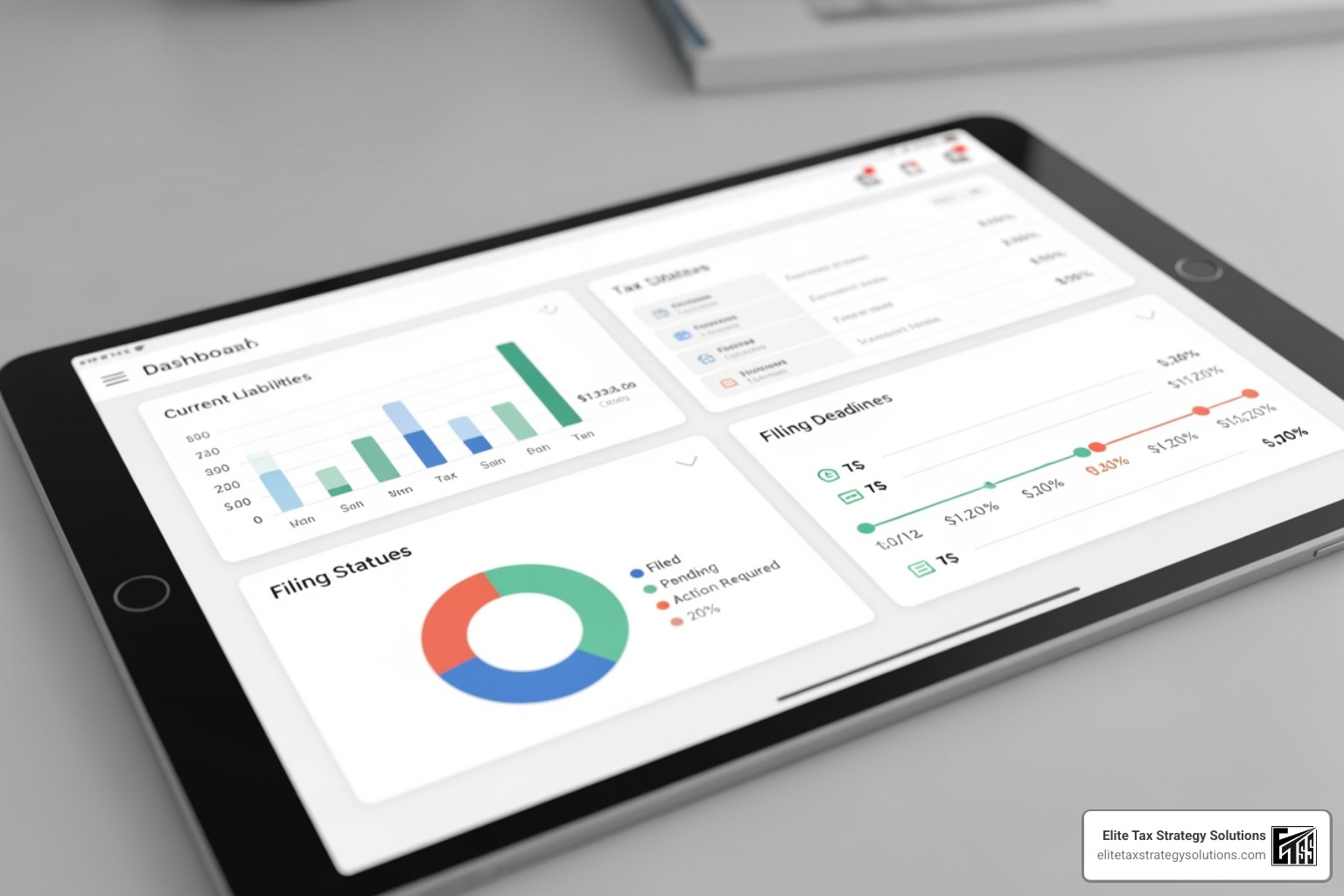
Automated systems eliminate tedious manual tasks. Automated data entry pulls information directly from your sales channels, so there’s no more copying numbers between spreadsheets. This allows your accounting team to shift from data entry to strategic financial planning.
The cost savings extend beyond labor. With accurate and timely filings, you avoid painful penalty notices, which can cost 30% or more of your tax liability. Every hour your team spends on manual compliance is an hour not spent on growing your business. Automated sales tax filing services give you those hours back.
Ensuring Accuracy and Mitigating Risk
A single mistake multiplied across thousands of transactions can become a massive liability. Automated systems are designed to eliminate these errors.
Real-time rate updates ensure your system always has the current tax rate for every location. Address validation applies the correct rates based on the customer’s precise location, which is crucial in areas where rates change from one street to the next.
Every transaction creates audit-ready records that are stored securely and can be accessed instantly. If a tax authority sends an inquiry, you can respond quickly with complete documentation. Many services also include professional notice management, where experts handle correspondence from state tax departments. This peace of mind allows you to focus on what you do best—running your business.
How Sales Tax Automation Works: From Calculation to Remittance
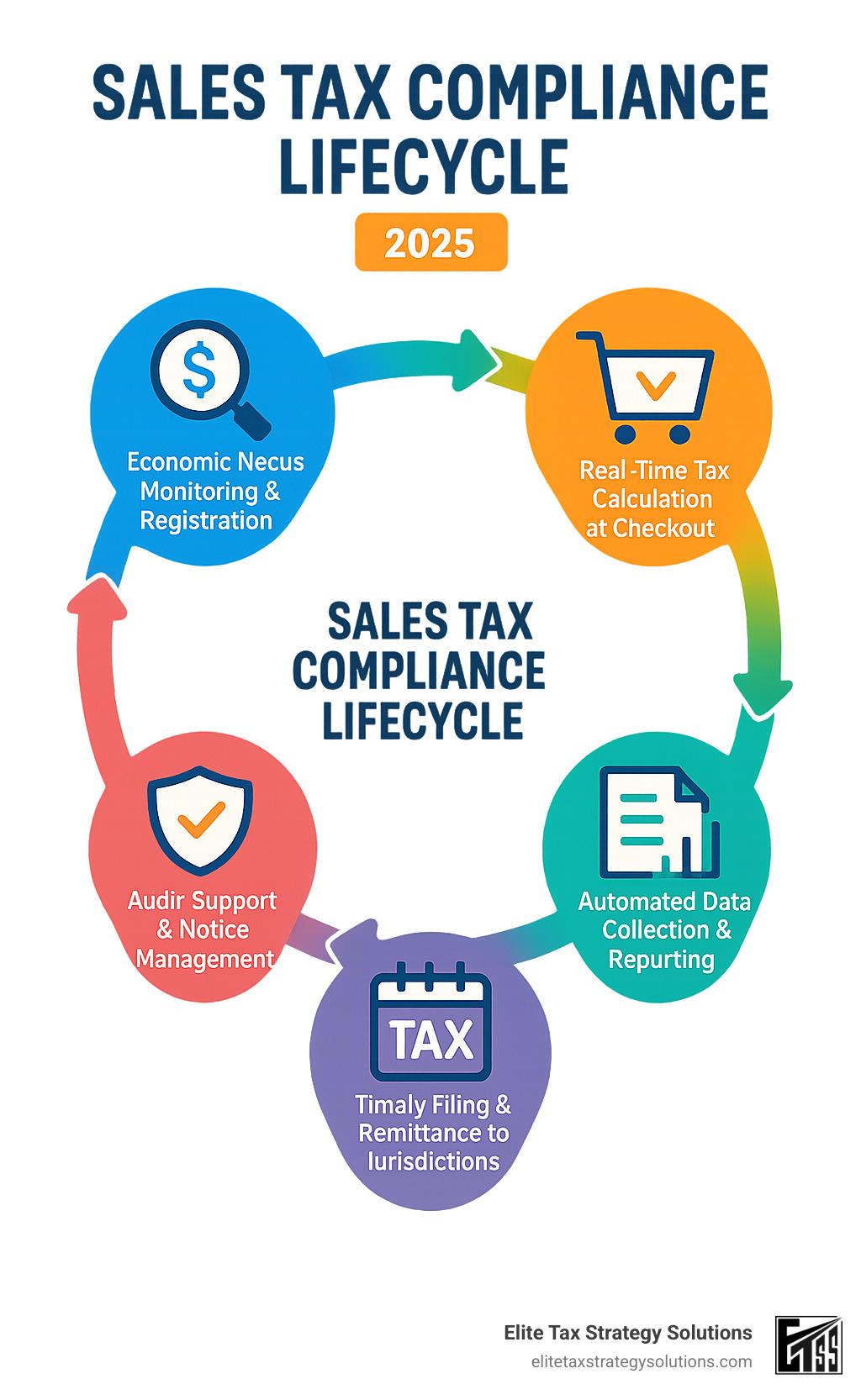
Understanding how sales tax filing services work reveals why they are so effective. Think of it as a 24/7 tax expert handling every detail, from a customer’s purchase to the final payment to tax authorities.
The process begins with real-time calculation at the point of sale. Using sophisticated API technology, the system instantly analyzes the product, the customer’s location, and your business’s nexus obligations to calculate the exact tax in milliseconds. This is powered by extensive databases of product taxability codes that classify millions of products and services, so you don’t have to guess whether an item is taxable.
After collection, the system performs automated reporting, organizing sales data by jurisdiction. When it’s time to file, it prepares the necessary returns and handles timely remittance to each tax authority, eliminating the stress of managing multiple deadlines. For businesses selling globally, these services can also manage international compliance, including VAT and GST.
You can find more information about business tax compliance at the IRS Small Business and Self-Employed Tax Center.
Seamless Integration with Your Business Systems
Modern sales tax filing services integrate smoothly with your existing setup. They connect directly with ERP systems like NetSuite, e-commerce platforms like Shopify, and accounting software like QuickBooks. This ensures that tax data flows automatically, creating a seamless experience for both you and your customers.
For businesses on marketplaces like Amazon, these services help steer complex marketplace facilitator laws, clarifying when the marketplace is responsible for tax collection. Most providers also offer custom integrations via APIs, making automation accessible to nearly any business.
Staying Current with Changing Regulations
Tax laws and rates change constantly. Automated services employ teams dedicated to tracking these legislative changes. When a new law passes or a rate is adjusted, their systems are updated automatically, so you don’t have to.
They also monitor your nexus thresholds proactively, alerting you when you’re approaching tax obligations in new states. This allows you to register and begin collecting on time. With in-house tax experts managing these complexities, you can stay ahead of your obligations instead of scrambling to catch up.
Choosing the Right Type of Service for Your Business
Not all sales tax filing services are the same. The right choice depends on your business’s needs, budget, and complexity. There are three main types, each designed for different levels of involvement.
| Feature | Software (SaaS) Solutions | Fully Managed Services | Certified Service Providers (CSPs) |
|---|---|---|---|
| Cost | Lower (monthly subscription) | Higher (monthly fee + transaction-based) | Often free for sellers in SST states, otherwise fee-based |
| Support | Self-serve, online resources, customer support teams | Dedicated account manager, expert guidance, audit defense | State-approved, direct line to state tax authorities (via CSP) |
| Liability | Your responsibility (software helps, but you manage) | Often assumed by provider for errors (check contract) | Assumed by CSP for errors in calculation/remittance to SST states |
| Ideal Business | Small to mid-sized, simpler needs, tech-savvy | Mid-sized to large, complex operations, high volume, multiple nexus | Any size selling into SST states, seeking liability relief |
| Involvement | High (you manage data, review reports, approve filings) | Low (provider handles almost everything) | Low (CSP handles calculation, filing, remittance) |
The key is to understand your unique situation. Consider your comfort with technology, the complexity of your tax obligations, your budget, and your team’s capacity.
Understanding Software (SaaS) Solutions
SaaS solutions are like a powerful calculator and filing assistant. You remain in control, but you have automation to help. This DIY approach is great for tech-savvy owners who want to manage their tax process. The software handles automated calculations and reporting, and you review and approve filings. It’s a cost-effective option for smaller businesses with simpler needs.
Exploring Fully Managed Sales Tax Filing Services
Fully managed services offer end-to-end outsourcing of your sales tax compliance. You get a dedicated tax preparer who handles everything from nexus monitoring to filing and remittance. This is like having a sales tax expert on staff without the overhead. They provide professional notice management and audit defense, making them ideal for businesses with complex or high-volume operations.
Leveraging Certified Service Providers (CSPs)
CSPs are state-certified companies vetted by the Streamlined Sales Tax (SST) program. Their main advantage is liability relief in member states—if they make an error, they are responsible, not you. For businesses selling into the 24 SST member states, these services are often provided for free, as the states compensate the CSPs directly. This is an attractive option for any business seeking professional management with liability protection.
If you’re just starting out and need to get your business properly set up, you might want to Apply for an Employer Identification Number (EIN) online as part of your initial business setup process.
Key Features to Look for in a Sales Tax Solution
Choosing the right sales tax filing services requires careful consideration. Think of it as selecting a trusted partner to handle a critical compliance challenge.

Here are the key features to evaluate:
- Jurisdictional Coverage: Ensure the provider covers all states and local jurisdictions where you have or may establish nexus. With over 13,000 jurisdictions, comprehensive coverage is vital.
- Integration Capabilities: The service must connect seamlessly with your ERP, e-commerce platform, and accounting software. Look for native integrations or a robust API to eliminate manual data transfer.
- Reporting Features: You need comprehensive, customizable reports to reconcile accounts and prepare for audits. The ability to drill down into specific transactions is essential.
- Audit Support: The best providers offer direct support during an audit, acting as your primary point of contact with tax authorities.
- Data Security: Look for services with SOC 2 certification, which demonstrates a serious commitment to protecting your sensitive financial data.
- Customer Support: Responsive, knowledgeable support teams are crucial. US-based teams often provide more personalized assistance with domestic tax complexities.
- International Tax Support: If you sell globally, your provider should handle VAT, GST, and other international obligations.
- Product Taxability Engine: An accurate engine for categorizing products, including digital goods and SaaS, prevents costly errors.
- Nexus Tracking: Proactive monitoring of economic nexus thresholds helps you stay ahead of new compliance obligations as you grow.
Before signing up, ask any potential provider these essential questions:
- How do your sales tax filing services address the primary challenges of sales tax compliance?
- What level of automation do you provide from calculation through remittance?
- How do you integrate with existing business systems?
- What expertise do you offer for complex tax situations or specific industries?
- How do you handle sales tax audits and notices?
- What different service types do you offer?
- How do you ensure compliance across all jurisdictions?
- What role does technology play in your services?
- How do you address international sales tax obligations?
- What are your data security protocols?
- How do you help businesses stay updated with changing regulations?
- What are the total costs associated with your services?
Asking these questions upfront will help you choose a provider that truly fits your business.
Frequently Asked Questions about Sales Tax Compliance
Sales tax compliance can be confusing. Here are answers to some of the most common questions we hear from business owners.
What is sales tax nexus and why does it matter?
Sales tax nexus is the connection between your business and a state that creates a legal obligation to collect and remit sales tax there. For decades, nexus was based on physical presence (an office, employee, or warehouse). The 2018 Wayfair decision introduced economic nexus, which is based on your sales activity in a state.
Every state sets its own economic nexus thresholds, typically a certain sales dollar amount (e.g., $100,000) or number of transactions (e.g., 200) within a year. Because these thresholds vary, tracking your sales volume in every state is crucial. This complexity is a primary reason businesses turn to sales tax filing services.
How are sales tax for e-commerce and digital goods handled?
For e-commerce, marketplace facilitator laws in most states require platforms like Amazon or Etsy to collect and remit sales tax on behalf of their sellers. This simplifies compliance, but you may still have obligations if you have physical nexus or sell through your own website and meet economic nexus thresholds.
Digital goods and services, like SaaS or downloadable media, are taxed differently from state to state. Some states tax them, some don’t, and others tax a percentage of the sale. For international sales, especially to the EU, you often need customer location validation for VAT purposes. The complexity of these rules makes automated sales tax filing services essential.
Can a service handle back-filing or amended returns?
Yes, and this is a key feature of comprehensive sales tax filing services. If you find you had a past-due tax liability, a service can help you with a Voluntary Disclosure Agreement (VDA). This involves proactively approaching the state to report the liability, which often results in reduced penalties. The service can calculate the historical tax due, prepare the returns, and manage communications with the state.
Services can also file amended returns to correct errors on previous filings. This capability, typically part of fully managed services, ensures your records are accurate and helps you resolve past issues efficiently.
Conclusion: Gaining Peace of Mind and Focusing on Growth
It’s clear that sales tax filing services are no longer a luxury but an essential tool for any business navigating today’s complex regulatory environment. You started your business to serve customers, not to become an expert in 13,000+ tax jurisdictions.
Automated services can boost your operational efficiency by 85% annually and provide the accuracy needed to eliminate compliance risks. Most importantly, they give you back your time and mental energy. Instead of worrying about nexus thresholds and tax rates, you can focus on what you do best: growing your business.
The risk reduction is significant, giving you the confidence to expand into new markets without fear of compliance nightmares. For businesses using Certified Service Providers, there’s even liability protection from errors.
At Elite Tax Strategy Solutions, we’ve helped countless business owners transform from stressed compliance managers back into visionary leaders. Our personalized tax planning for high earners and closely held businesses focuses on a proactive approach to maximize your tax savings while ensuring rock-solid compliance.
We believe smart tax strategy is about positioning your business for sustainable growth while minimizing risks and administrative burdens.
Ready to reclaim your time and gain peace of mind? Learn more about outsourcing sales tax compliance and find how we can build a tax strategy that works as hard as you do.