When it comes to high income tax reduction strategies, the maze of tax regulations can be daunting. However, there are several effective tactics that high earners can employ to significantly reduce their tax burden:
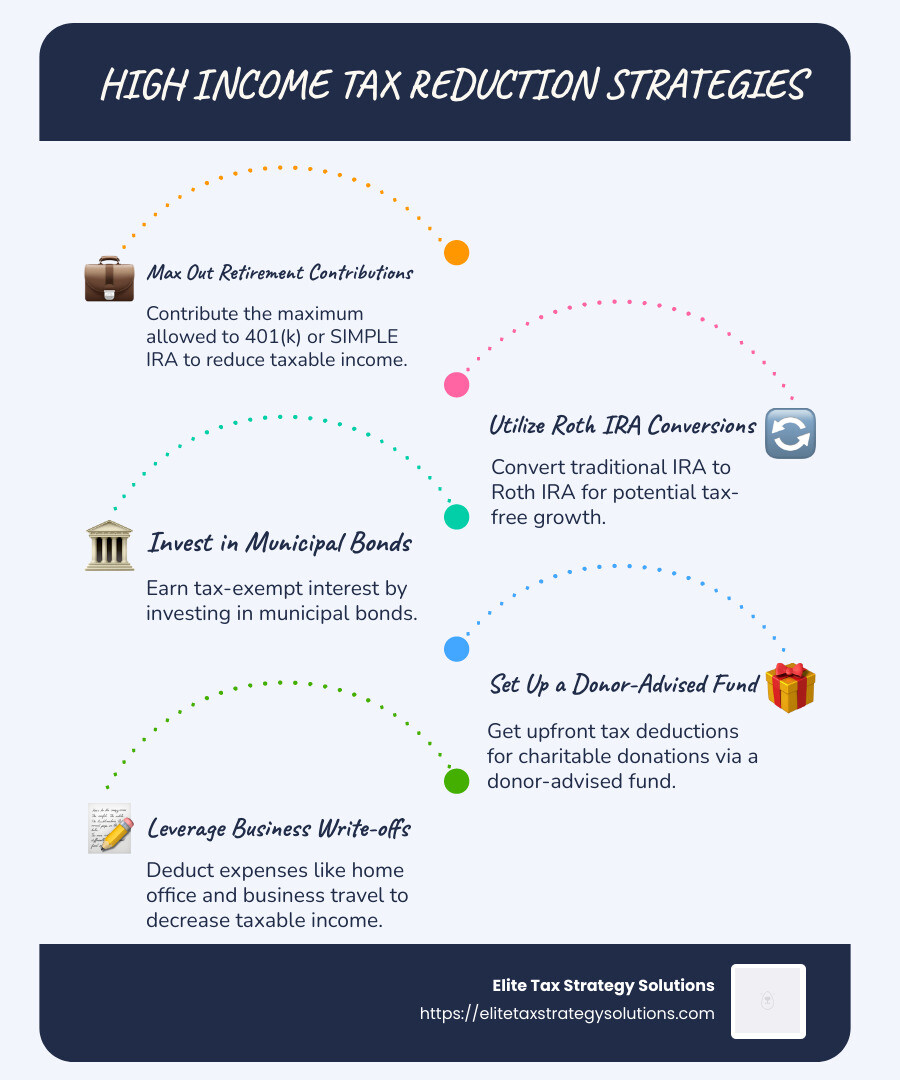
- Max out retirement contributions
- Use Roth IRA conversions
- Invest in municipal bonds
- Set up a donor-advised fund
- Leverage business write-offs
If you’re a high-income earner, finding ways to keep more of what you earn, legally and smartly, starts with understanding these strategies.
I’m David Fritch, a tax planning expert with over 40 years of experience in owning a law firm and CPA practice. My focus is on high income tax reduction strategies to help clients maximize their tax savings and achieve financial stability.
High income tax reduction strategies terminology:
– advanced tax planning strategies
– high income individual tax planning
– high net worth tax strategies
Understanding Tax Rules for High-Income Earners
Navigating the tax landscape can feel like solving a complex puzzle, especially if you’re a high-income earner. But understanding the basic rules is essential to make the most of high income tax reduction strategies. Let’s break down some key components: tax brackets, IRS definitions, and RMD age.
Tax Brackets
Tax brackets are the tiers of income that determine the rate at which your income is taxed. In 2024, there are seven federal income tax brackets, ranging from 10% to 37%. Here’s a brief look at how these brackets work:
- 10% Bracket: For single filers with taxable income up to $11,600.
- 12% Bracket: Single filers earning between $11,601 and $47,150.
- 22% Bracket: Income from $47,151 up to $100,525 for singles.
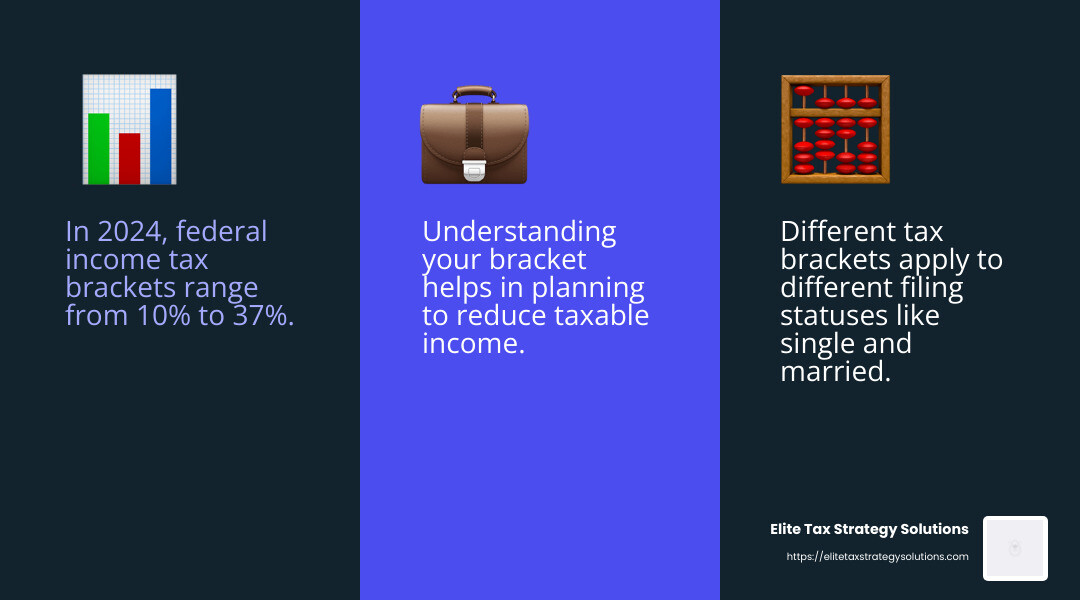
These brackets apply to different filing statuses, such as married filing jointly, married filing separately, and head of household, each with its own income thresholds. Understanding where your income falls helps you plan how to reduce your taxable income effectively.
IRS Definitions
When talking about taxes, know how the IRS defines certain terms. Two key terms are Adjusted Gross Income (AGI) and Taxable Income:
- Adjusted Gross Income (AGI): This is your total gross income minus specific deductions, like student loan interest or retirement contributions.
- Taxable Income: This is your AGI minus personal exemptions and itemized deductions, which determines your tax bracket.
Required Minimum Distributions (RMDs)
The age at which you must start taking Required Minimum Distributions from retirement accounts has recently changed. As of 2023, the RMD age increased to 73 for individuals born between 1951 and 1959. If you were born in 1960 or later, your RMD age will be 75.
This change allows high-income earners to keep their money invested longer, potentially growing tax-deferred. It’s a significant shift that can affect your retirement planning and tax strategy.
By understanding these fundamental tax rules, you can better steer the complexities of tax planning and implement strategies to reduce your tax burden effectively. Next, we’ll dive into specific strategies for maximizing your wealth through smart tax planning.
High Income Tax Reduction Strategies
Reducing taxes for high-income earners involves smart planning and strategic use of available options. Let’s explore some effective high income tax reduction strategies that can help you keep more of your hard-earned money.
Retirement Contributions
Maximizing contributions to retirement accounts like 401(k) and SIMPLE IRAs is a powerful way to reduce taxable income. For 2024, you can contribute up to $23,000 to a 401(k) and $16,000 to a SIMPLE IRA. If you’re over 50, catch-up contributions allow an additional $7,500 for 401(k)s and $3,500 for SIMPLE IRAs. These contributions lower your taxable income now, and withdrawals are taxed at potentially lower rates during retirement.
Roth IRA Conversions
While traditional IRAs offer tax-deferred growth, Roth IRAs provide tax-free growth. Converting a traditional IRA or 401(k) to a Roth IRA can be beneficial, especially in years when your income is lower. Although you’ll pay taxes on the conversion amount now, future withdrawals, including earnings, are tax-free. This strategy is particularly advantageous if you expect to be in a higher tax bracket during retirement.
Buy Municipal Bonds
Municipal bonds are an attractive option for high-income earners because the interest income is often exempt from federal, state, and local taxes. Although these bonds may offer lower yields compared to taxable bonds, the tax savings can make them more appealing. Calculating the bond’s tax-equivalent yield can help determine if it’s a worthwhile investment for you.
Set Up a Donor-Advised Fund
A donor-advised fund allows you to make a charitable contribution, receive an immediate tax deduction, and recommend grants from the fund over time. By contributing a lump sum, you can take a significant tax deduction in the year of the contribution. This is an excellent strategy for those who want to support charitable causes while reducing their tax burden.
Use a Health Savings Account
Contributing to a Health Savings Account (HSA) offers triple tax benefits: contributions are tax-deductible, growth is tax-free, and withdrawals for qualified medical expenses are tax-free. For 2024, the contribution limits are $4,150 for individuals and $8,300 for families, with an additional $1,000 catch-up contribution for those 55 or older. An HSA can be a valuable tool for managing healthcare costs and reducing taxable income.
By leveraging these strategies, high-income earners can effectively manage and reduce their tax liabilities. Next, we’ll explore more advanced tactics to further maximize your wealth.
Top 11 Tax Saving Strategies for High-Income Earners
Max Out Retirement Contributions
Maximizing your retirement contributions is a straightforward way to lower your taxable income. For 2024, the contribution limits are $23,000 for a 401(k) and $16,000 for a SIMPLE IRA. If you’re over 50, you can add more with catch-up contributions—$7,500 for 401(k)s and $3,500 for SIMPLE IRAs. By contributing the maximum, you not only save on taxes now but also benefit from potentially lower tax rates when you withdraw the funds in retirement.
Roth IRA Conversions
Roth IRAs offer the advantage of tax-free growth. If you convert a traditional IRA or 401(k) to a Roth IRA, you’ll pay taxes on the conversion amount now but enjoy tax-free withdrawals later. This is especially beneficial if you expect your tax rate to rise in retirement. Consider doing this in years when your income is lower to minimize the immediate tax impact.
Buy Municipal Bonds
Municipal bonds can be a smart choice for high-income earners. The interest income from these bonds is typically exempt from federal, state, and local taxes. While they might yield less than taxable bonds, the tax savings can make them more attractive. Calculate the bond’s tax-equivalent yield to see if it’s a good fit for your portfolio.
Set Up a Donor-Advised Fund
Setting up a donor-advised fund allows you to make a charitable donation, get an upfront tax deduction, and then distribute the funds over time. By contributing a large amount in one year, you can take a significant tax deduction, which is perfect for those who want to support charities while reducing their tax load.
Use a Health Savings Account
Health Savings Accounts (HSAs) offer triple tax benefits: contributions are tax-deductible, growth is tax-free, and withdrawals for qualified medical expenses are tax-free. For 2024, you can contribute up to $4,150 as an individual or $8,300 for a family, with an extra $1,000 if you’re 55 or older. An HSA is a great way to cover medical costs while lowering your taxable income.
Leverage Business Write-offs
Running a business? Take advantage of business-related deductions like home office expenses and business travel. These deductions can significantly reduce your taxable income. Ensure you keep accurate records to substantiate these expenses.
Create Real Estate “Paper” Losses
Real estate investors can benefit from depreciation, which allows you to reduce your taxable income even if your property value increases. This “paper” loss can offset rental income and lower your overall tax liability.
Avoid Selling Your Investments
Holding onto your investments for the long term can help you avoid taxable events. By not selling, you defer taxes on capital gains, allowing your investments to grow without the drag of tax payments.
Borrow Against Your Investments
Need cash but don’t want to sell your investments? Consider a securities-backed line of credit. This allows you to borrow against your portfolio’s value, giving you tax-free cash while keeping your investments intact.
Sell for Long-term Capital Gains
When you do decide to sell investments, aim for long-term capital gains. Holding assets for over a year typically results in lower tax rates compared to short-term gains. This can make a significant difference in your tax bill.
Time Your Capital Gains for the Lowest Rate
Strategically timing the sale of your assets can help you lock in the lowest tax rate. Plan your sales around your income levels and tax bracket to optimize your tax situation.
By using these strategies, high-income earners can effectively manage and reduce their tax liabilities. Next, we’ll explore more advanced tactics to further maximize your wealth.
Frequently Asked Questions about High Income Tax Reduction Strategies
How do rich people reduce taxable income?
Charitable Contributions: Wealthy individuals often make significant charitable donations to reduce their taxable income. By donating to qualified charities, they can deduct up to 60% of their adjusted gross income, which can substantially lower their tax bill. This not only benefits the charities but also provides a strategic tax break.
Tax Credits: Tax credits directly reduce the amount of tax owed, and high-income earners can benefit from various credits, such as those for energy-efficient home improvements or electric vehicle purchases. These credits can be a powerful tool in reducing overall tax liability.
Retirement Plans: Contributing the maximum amount to retirement plans like 401(k)s or IRAs is another common tactic. These contributions are often tax-deductible, lowering taxable income for the year. In 2024, individuals can contribute up to $23,000 to a Traditional 401(k) and up to $7,000 to a Traditional IRA, with additional catch-up contributions allowed for those over 50.
What lowers your taxes the most?
Deductible Expenses: High-income earners can lower their taxes significantly by maximizing deductible expenses. This includes mortgage interest, state and local taxes, and medical expenses. Keeping detailed records of these expenses can help in maximizing deductions.
Asset Growth and Strategic Holding: By strategically holding onto assets and planning their sale, individuals can benefit from long-term capital gains rates, which are generally lower than ordinary income tax rates. This approach allows for tax-efficient growth of investments.
How to reduce taxes as a high-income earner?
Strategic Asset Holding: Avoiding short-term sales and holding investments for over a year can result in lower tax rates on capital gains. This strategy is particularly useful for those in higher tax brackets.
Utilizing Health Savings Accounts (HSAs): Contributing to an HSA not only provides a tax deduction but also allows for tax-free growth and withdrawals for medical expenses. This triple tax advantage makes HSAs a valuable tool for reducing taxable income.
By integrating these high income tax reduction strategies into their financial planning, individuals can significantly decrease their tax burden. Next, we’ll explore more advanced tactics to further maximize your wealth.
Conclusion
At Elite Tax Strategy Solutions, we believe that proactive tax planning is the key to achieving financial stability and maximizing wealth. High-income earners face unique challenges when it comes to taxes. Our personalized approach helps steer these complexities and ensures you’re not paying more than you owe.
Tax laws are always changing, and what worked last year might not be as effective this year. That’s why staying informed and adjusting strategies is essential. Our team is dedicated to keeping abreast of the latest tax developments to provide you with the most effective solutions.
Financial Stability Through Planning
Our goal is to align your tax strategies with your long-term financial goals. Whether it’s planning for retirement, optimizing investment growth, or ensuring a smooth wealth transfer, we tailor our strategies to fit your needs. By integrating tax planning with your overall financial strategy, we help you build a stable financial future.
Why Choose Us?
With over 100 custom tax-saving strategies, we specialize in serving high-income earners and small business owners. Our thorough, proactive approach ensures that you not only comply with tax regulations but also make the most of every opportunity to save.
We invite you to explore our innovative tax planning services and find how Elite Tax Strategy Solutions can help you achieve your financial aspirations. Let us guide you through the tax maze and help maximize your wealth with expert strategies designed just for you.