
The Path to Financial Peace: Understanding Tax Planning
Effective financial and tax planning is simply the art of arranging your finances so you keep more of what you earnand put those savings to work for future goals. Done proactively, it becomes a yearround guide that ties everyday money movesfrom paychecks to portfolio decisionsto the life you want to build.
Key takeaways
* Ongoing strategy that minimizes taxes within the law
* Aligns income, investments, retirement, and deductions
* Frees up cash flow and compounds longterm wealth
“Tax planning isnt just about paying lessits about sleeping better at night.” David Fritch, Founder, Elite Tax Strategy Solutions
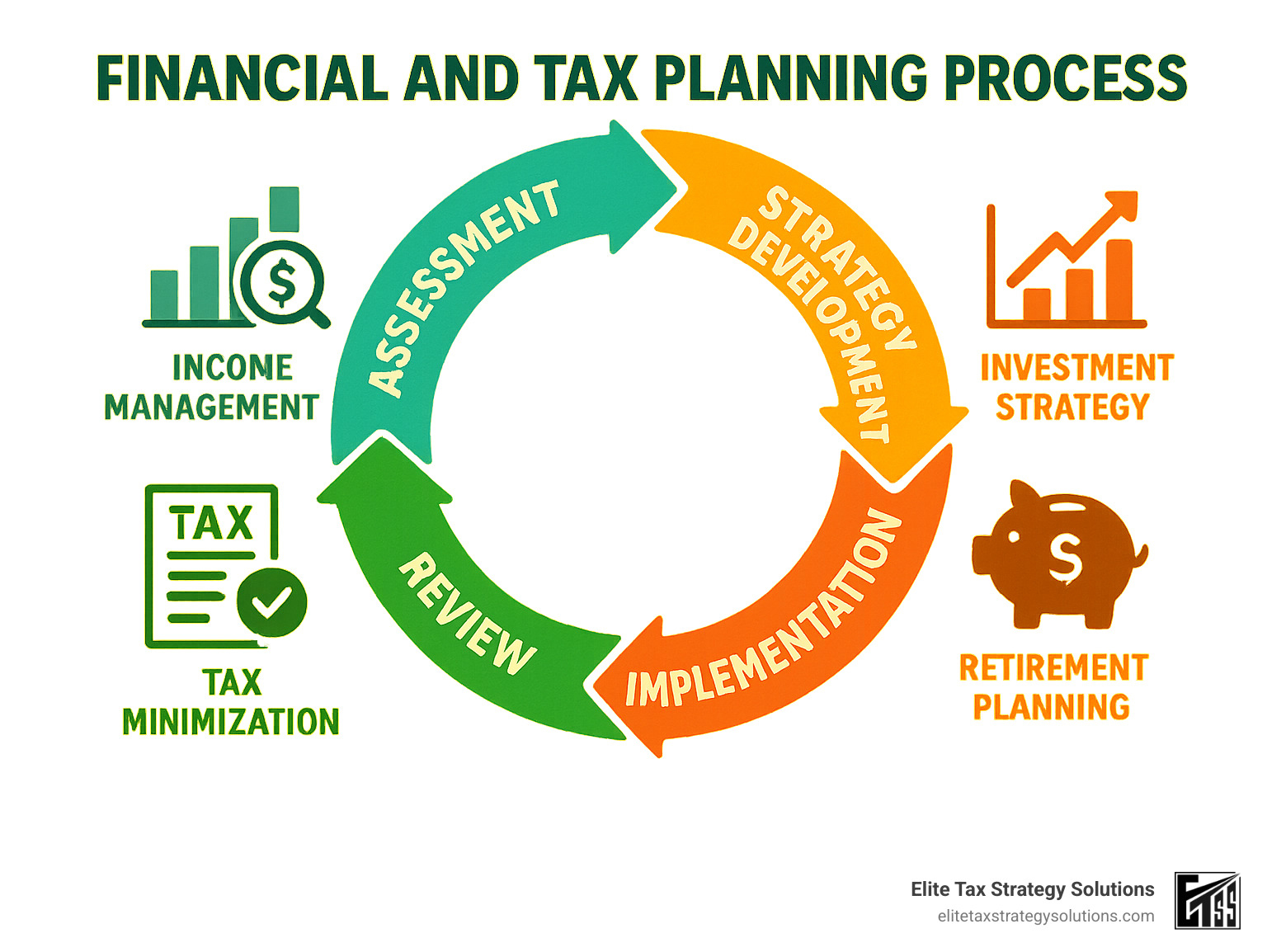
Why Financial and Tax Planning Matter & Core Concepts
Skipping tax planning is like building a house on sandeverything looks fine until the first storm. By channeling even modest tax savings back into smart investments, you release compound growth, steady cash flow, and a buffer against lifes surprises.
Core ideas to remember:
* Compound growth turns small tax wins into large balances over decades.
* Cashflow management avoids nasty surprises on April 15.
* Behavioral guardrails keep emotions from derailing longterm goals.
1. Review and Adjust Your Withholding Early
Use the IRS Tax Withholding Estimator each Januaryand again after raises, bonuses, or job changesto hit the sweet spot between refund and underpayment. File an updated W if needed so your cash flownot the IRSholds your money.
2. Maximize Contributions to TaxAdvantaged Accounts
Small annual contributions add up quickly when taxes arent clipping the returns.
- 401(k)/403(b): $23,000 (plus $7,500 catchup).
- Traditional or Roth IRA: $7,000 ($8,000 catchup).
- HSA: $4,150 single / $8,300 familytriple tax break.
- 529 Plan: Taxfree growth for education.
Automate deposits early in the year or with each paycheck so you never have to think about it.
3. Harvest Tax Losses YearRound
Sell investments that are temporarily down to capture a deductible loss, then reinvest in a similar (not identical) holding to stay on track. Losses can offset current gains and up to $3,000 of ordinary income, with unused amounts carried forward indefinitely. Mind the 30day washsale rule and see Schedule D basics for reporting.
4. Manage Capital Gains with Smart Timing
Hold assets 12+ months to qualify for longterm rates (020%). Spread big sales across tax years, pair gains with harvested losses, or explore installment sales to smooth income. Donating appreciated stock or reinvesting in Qualified Opportunity Zones can eliminate or defer the tax altogether.
5. Optimize Deductions: Standard vs. Itemizing & Bunching
Standard deduction (2024): $14,600 single / $29,200 joint. If your itemized deductions hover near those numbers, bunch two years of charitable gifts or medical expenses into one year to exceed the threshold, then use the standard deduction the next year. A donoradvised fund makes bunching donations simple.
6. Leverage Charitable Giving for Tax Efficiency
- Cash gifts: Deduct up to 60% of AGI.
- Appreciated securities: Deduct full market value and avoid capital gains.
- Donoradvised funds: Frontload one big deduction, grant funds later.
- QCDs: After age 709, transfer up to $105k per year directly from an IRA to charitycounts toward RMD but isnt taxable.
7. Understand and Plan for RMDs
Traditional IRAs and most employer plans require minimum withdrawals at age 73 (75 if born 1960+). Project future RMDs now: Roth conversions in lowincome years or directing RMDs to charity via QCDs can trim lifetime taxes and Medicare surcharges.
8. Use Annual Gift Exclusion and Estate Exemption
Give up to $18,000 per person annually ($36,000 for married couples) taxfreea painless way to reduce a future estate. The $13.61 million lifetime exemption is scheduled to drop by roughly half after 2025, so highnetworth families may benefit from larger gifts or trusts before then.
9. Coordinate Tax Planning with Major Life Events
Marriage, a new baby, job changes, business sales, retirementeach can shift you into new brackets or open up credits. Revisit withholding, retirement contributions, and estate documents whenever life changes so taxes dont add extra stress.
10. Monitor State, Local, and Changing Federal Laws
The Tax Cuts and Jobs Act sunsets after 2025, likely raising brackets and shrinking the standard deduction. States also tweak rules constantlyIndianas SALT limits differ from Illinois next door. Staying alert lets you accelerate deductions or defer income when rules are favorable.
Partnering With Professionals to Maximize Results
A qualified CPA, EA, CFP, or tax attorney keeps track of evermoving rules and integrates them with your goals. Transparent fee modelsflat, hourly, or AUMlet you choose value that fits your situation. Check credentials at FINRA BrokerCheck and insist on yearround communicationnot just a hurried April meeting.
Frequently Asked Questions
How often should I update my plan? Review annually and after big life changes.
Tax planning vs. tax preparation? Preparation reports history; planning shapes the future.
When does taxloss harvesting make sense? When you have gains to offset and the tax savings exceed transaction costs.
Conclusion
Thoughtful financial and tax planning turns a confusing chore into a clear path toward lasting wealth. If youre ready to see how proactive strategies can lower taxes and build stability, explore our innovative tax planning approachand let Elite Tax Strategy Solutions be your guide.