Business expenses examples are crucial for any company aiming to manage its finances effectively and optimize tax savings. Understanding which expenses are considered ordinary and necessary can help businesses determine what can be deducted to reduce their taxable income. The IRS defines ordinary expenses as those commonly accepted within an industry, while necessary expenses are ones that are helpful and appropriate for business operations. Here are some common examples of business expenses:
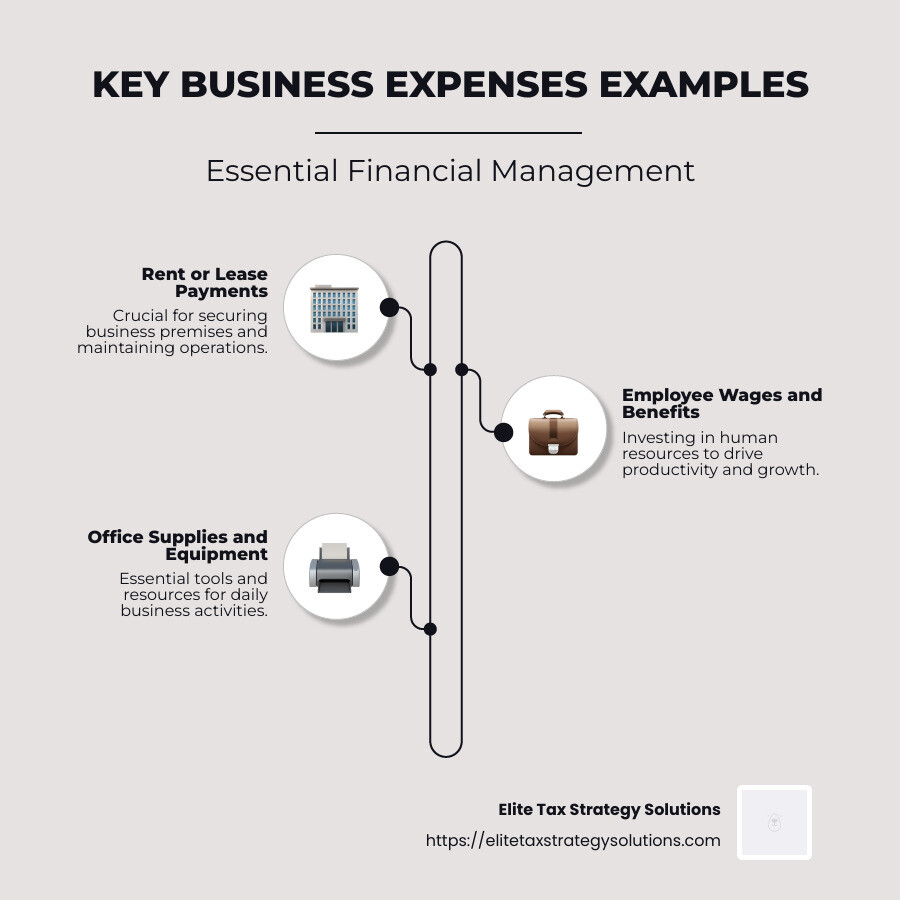
- Rent or lease payments
- Employee wages and benefits
- Office supplies and equipment
- Utilities and communication costs
- Travel and transportation expenses
Navigating these expenses properly can lead to significant financial benefits for your business, helping ensure compliance and financial efficiency.
As we dig deeper into the field of business expenses, I am David Fritch, a seasoned expert with over 40 years of experience in tax planning and consultancy. My background in providing businesses with effective strategies to manage and identify business expenses examples ensures that you will gain valuable insights that can be directly applied to your own financial planning and growth strategies.
Business expenses examples definitions:
– business expense categories
– comprehensive tax planning
– tax management services
Understanding Business Expenses
When it comes to running a business, understanding ordinary and necessary expenses is key. These terms might sound a bit complex, but they really aren’t. Let’s break them down.
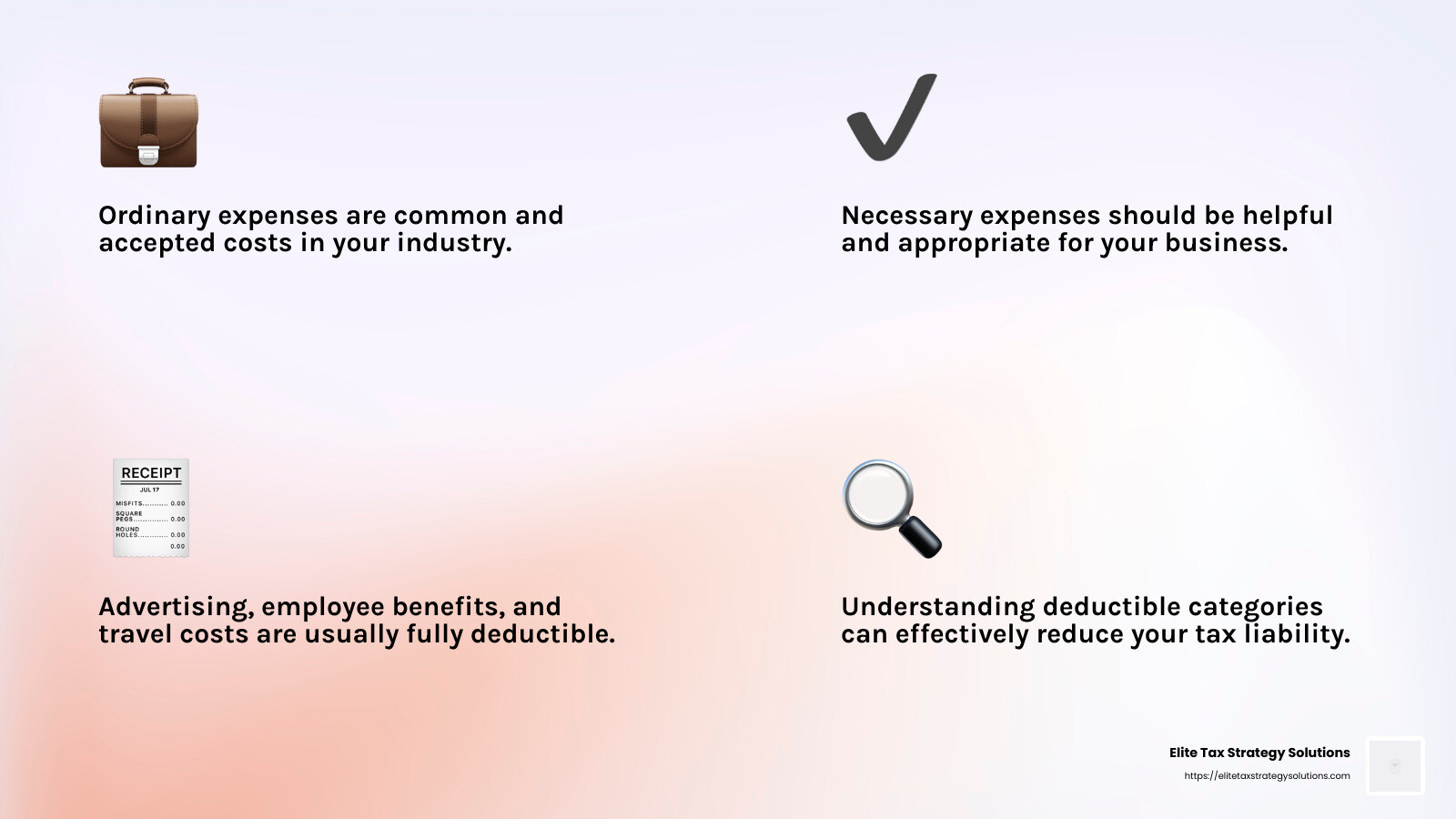
Ordinary expenses are the costs that are common and accepted in your industry. Think of them as the usual suspects. For example, if you run a tech company, buying software licenses is an ordinary expense. If you’re in retail, purchasing inventory fits the bill.
On the other hand, necessary expenses are those that are helpful and appropriate for your business. They don’t have to be essential, but they should make sense for your operations. Imagine a marketing firm investing in design software. It’s not just helpful—it’s appropriate for their line of work.
Deductible Categories
The IRS allows businesses to deduct certain expenses from their taxable income. This is where deductible categories come into play. By understanding these categories, you can effectively reduce your tax liability.
Here are some common deductible categories:
-
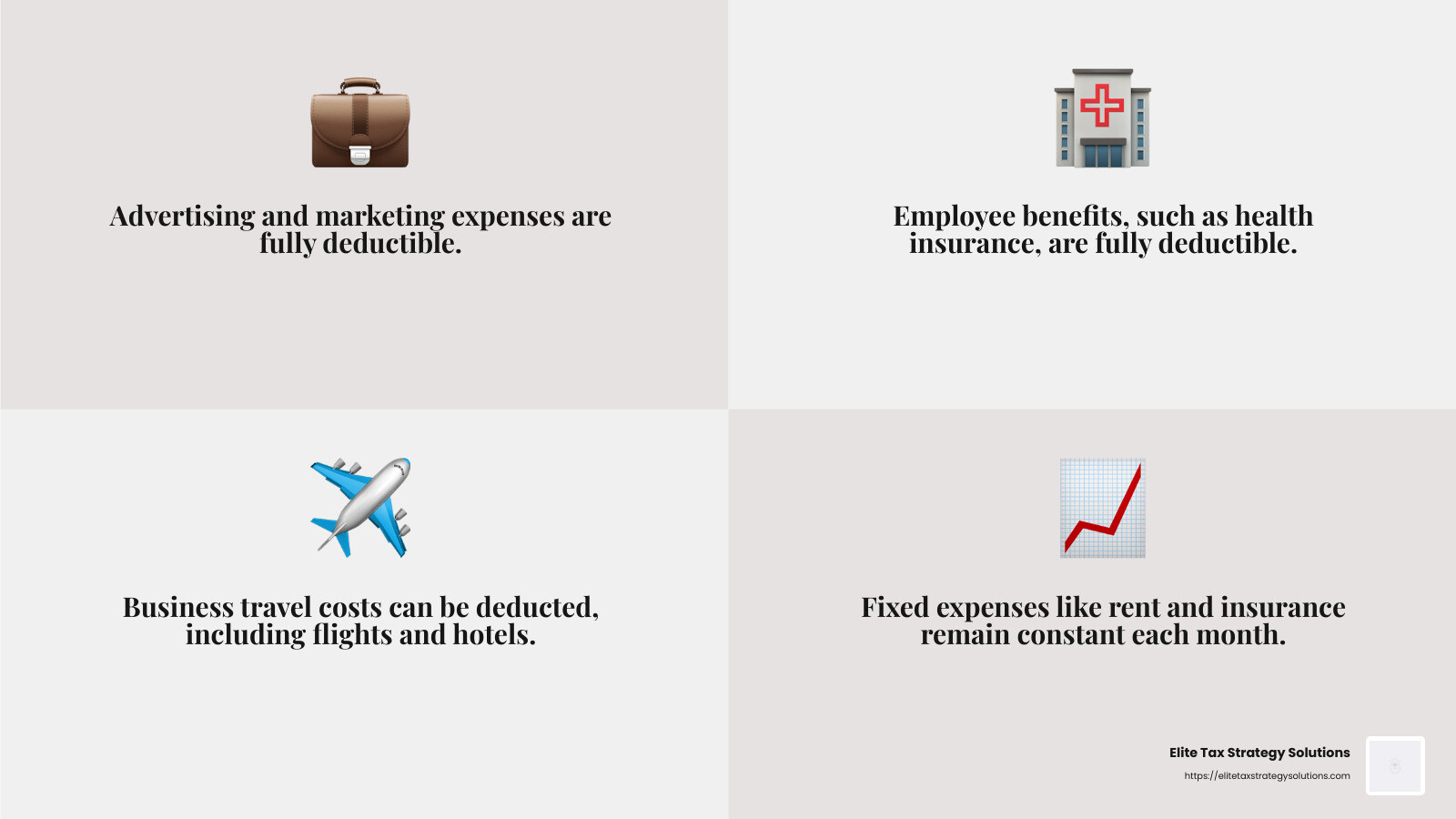
Advertising and Marketing: Whether you’re launching a new product or maintaining your brand presence, advertising costs are usually fully deductible.
-
Employee Benefits: Costs related to health insurance, retirement plans, and other benefits can often be deducted, making them a smart investment for both your team and your tax strategy.
-
Travel Costs: If your business requires travel, such as attending conferences or meeting clients, these expenses can be deducted. Just remember to keep detailed records.
-
Office Supplies and Equipment: Everyday supplies like pens and paper, as well as larger items like computers and furniture, can be deducted. Keep track of these purchases to ensure you’re maximizing your deductions.
-
Utilities: The cost of keeping the lights on and the internet running is deductible, so make sure to include these in your calculations.
By categorizing your expenses correctly and understanding what qualifies as ordinary and necessary, you can make informed decisions that benefit your business financially. Keep these points in mind, and you’ll be well on your way to mastering business expenses.
In the next section, we’ll explore the Top 10 Business Expenses that most companies face, providing a deeper dive into how these costs can impact your financial planning.
Business Expenses Examples
Running a business involves various costs, and understanding these business expenses examples can help you manage your finances better. Let’s explore some common categories:
Office Equipment
Whether you’re setting up a new office or upgrading existing setups, office equipment is a vital expense. This includes items like computers, printers, desks, and chairs. These are not just one-time purchases; they often require updates and maintenance. Office equipment expenses are usually deductible, helping you save on taxes while keeping your workspace efficient.
Travel Costs
Business travel can be essential for growth, whether it’s meeting clients or attending industry conferences. Travel costs cover flights, hotel stays, and even meals. Though, only 50% of meal costs are deductible. Keeping detailed records is crucial to ensure you can claim these deductions.
Employee Benefits
Offering benefits like health insurance, retirement plans, and paid vacations can attract and retain top talent. Employee benefits are not only a great way to support your team but are also deductible expenses. This makes them a smart investment for your workforce and your tax strategy.
Marketing
Marketing is key to growing your business and reaching new customers. This includes advertising campaigns, social media promotions, and even printing brochures. Marketing expenses are fully deductible, making them a valuable part of your business plan. Investing in effective marketing can lead to significant returns.
Utilities
Keeping the lights on and the internet running is essential for any business. Utilities such as electricity, gas, water, and internet services are necessary operational costs. These expenses are deductible, so be sure to include them in your financial planning.
Understanding these common business expenses can help you manage your budget more effectively. By keeping track of these costs and knowing which ones are deductible, you’ll be better prepared for tax season and can make informed financial decisions for your business.
In the next section, we’ll explore the Top 10 Business Expenses that most companies face, providing a deeper dive into how these costs can impact your financial planning.
Top 10 Business Expenses
Running a business means managing a variety of costs. Here are the top 10 business expenses that most companies face. Understanding these can help you plan your finances better.
1. Rent and Leases
Whether you’re renting office space, a storefront, or a warehouse, rent is a significant expense. If you’re leasing equipment or vehicles, those costs add up too. The good news is, rent and lease expenses are fully deductible, helping to ease the financial burden.
2. Payroll
Paying your employees is often the largest expense for a business. This includes salaries, wages, bonuses, and other compensation. Payroll taxes also fall under this category. Ensuring accurate payroll management is crucial for both financial planning and compliance.
3. Insurance
Insurance is vital for protecting your business assets. This includes property, liability, and workers’ compensation insurance. These costs are deductible, making them an essential part of your financial strategy.
4. Inventory
For businesses that sell products, inventory is a major expense. This includes the cost of raw materials, finished goods, and storage. Managing inventory efficiently can significantly impact your profit margins and cash flow.
5. Legal Services
Legal expenses can arise from contracts, disputes, or compliance issues. Attorney fees and other legal costs are deductible. It’s important to budget for these expenses to avoid unexpected financial strain.
6. Research and Development
Investing in innovation can set your business apart. Research and development (R&D) expenses cover product development, testing, and improvements. Tax incentives often exist for R&D, which can help offset these costs.
7. Advertising
Getting the word out about your business is crucial for growth. Advertising expenses include online ads, print media, and promotional events. These costs are fully deductible, making them a smart investment.
8. Employee Training
Training and developing your workforce can improve productivity and job satisfaction. Employee training expenses, including workshops and courses, are deductible. This investment in your team can lead to long-term benefits.
9. Maintenance
Keeping your business in good working order involves maintenance costs. This includes repairs for equipment and facilities. Regular maintenance can prevent costly breakdowns and is a deductible expense.
10. Taxes
Taxes are an inevitable part of business operations. This includes federal, state, and local taxes. While taxes themselves aren’t deductible, many related expenses, like tax preparation fees, are. Proper tax planning can help minimize your liabilities.
Understanding these top business expenses can aid in better budgeting and financial forecasting. In the next section, we’ll dig into the different Business Expenses Categories and how they can inform your financial strategy.
Business Expenses Categories
Understanding business expenses categories is crucial for effective financial management. These categories help you track and manage expenses, ensuring you’re prepared come tax season. Let’s break down the main categories: direct expenses, indirect expenses, interest on debt, and non-deductible expenses.
Direct Expenses
Direct expenses are costs that are directly tied to the production of goods or services. They include:
-
Cost of Goods Sold (COGS): This is the total cost of manufacturing or purchasing the products you sell. It includes raw materials, direct labor, and manufacturing overhead.
-
Inventory Costs: Expenses related to storing and managing inventory, such as warehouse fees and inventory shrinkage.
-
Manufacturing Supplies: Items like tools, equipment, and other supplies directly used in production.
These expenses are essential for calculating your gross profit, which is your revenue minus the COGS.
Indirect Expenses
Indirect expenses are not directly tied to production but are necessary for running the business. They include:
-
Utilities: Costs for electricity, water, and internet services that keep your business running smoothly.
-
Office Supplies: Everyday items like paper, pens, and printer ink.
-
Administrative Salaries: Wages for employees who perform general business operations, such as HR and accounting staff.
Indirect expenses are deducted from your gross profit to determine your operating profit, also known as earnings before interest and taxes (EBIT).
Interest on Debt
Interest expenses arise from borrowing money to fund business activities. This includes:
-
Business Loans: Interest paid on loans taken out for business expansion, equipment purchase, or operational costs.
-
Credit Card Interest: Interest on business-related purchases made with a credit card.
Interest on debt is deductible, but only if it’s related to business operations. Personal interest expenses are not eligible for deduction.
Non-Deductible Expenses
Not all expenses can be deducted from your taxable income. Non-deductible expenses include:
-
Fines and Penalties: Payments for breaking the law, such as traffic tickets or late fees.
-
Political Contributions: Donations to political campaigns or parties.
-
Personal Expenses: Costs that are not related to business operations, like personal travel or entertainment.
It’s important to separate these non-deductible expenses from your business expenses to ensure accurate financial reporting.
By categorizing expenses correctly, businesses can better assess their spending patterns and make informed financial decisions. In the next section, we’ll address some Frequently Asked Questions about Business Expenses to further clarify common concerns.
Frequently Asked Questions about Business Expenses
What are business expenses?
Business expenses are costs that you incur while running your business. The IRS says these expenses must be “ordinary and necessary” for your line of work. Ordinary means they’re common and accepted in your industry. Necessary means they’re helpful and appropriate for your business.
For example, if you run a bakery, buying flour and sugar is an ordinary expense. Renting a kitchen space is a necessary expense.
What business expenses are 100% deductible?
Some expenses can significantly reduce your taxable income because they’re fully deductible. Here are a few:
-
Advertising and Marketing: Every dollar spent on promoting your business can be deducted. This includes social media ads, flyers, and even the cost of printing business cards.
-
Employee Benefits: Contributions to your employees’ health insurance and retirement plans are fully deductible. This not only helps with taxes but also boosts employee morale.
-
Travel Costs: If you travel for business, you can deduct the cost of flights, hotels, and even half of your meal expenses. Just remember to keep detailed records and receipts.
What are examples of fixed and variable expenses?
Understanding the difference between fixed and variable expenses helps in budgeting and financial planning.
-
Fixed Expenses: These are costs that remain constant each month. They include:
-
Rent: Whether you lease office space or a storefront, rent is a predictable monthly cost.
-
Insurance: Premiums for business insurance policies, like liability or property insurance, typically don’t change month to month.
-
Payroll: Salaries for full-time employees are usually fixed, though they might vary with bonuses or overtime.
-
Variable Expenses: These fluctuate based on the level of business activity. Examples include:
-
Inventory: The cost of goods you need to purchase can vary depending on sales volume.
-
Utilities: While somewhat predictable, utilities can vary with energy usage.
-
Commission Costs: If you pay sales commissions, these will change with the number of sales made.
Knowing which expenses are fixed and which are variable helps you plan better for the future. It also ensures you’re prepared for any financial changes in your business. This clarity can guide you in making smarter financial decisions.
In the next section, we’ll dig into the Top 10 Business Expenses, providing further insights into the most common costs businesses face.
Conclusion
At Elite Tax Strategy Solutions, we understand that managing business expenses is more than just keeping the lights on—it’s a critical part of achieving financial stability and success. Our proactive and personalized approach to tax planning ensures that your business not only survives but thrives in a complex financial landscape.
Tax Planning for Financial Stability
Effective tax planning is a cornerstone of financial stability. By identifying and maximizing deductions, we help you keep more of your hard-earned money. Whether it’s optimizing your business expenses or navigating changing tax laws, our team is here to guide you every step of the way.
Why Choose Us?
Our expertise lies in changing the daunting task of tax management into a strategic advantage. We offer over 100 custom tax-saving strategies, each designed to align with your unique financial goals. With our help, you can confidently tackle tax season and focus on growing your business.
Start Your Journey
Ready to take control of your business expenses and improve your financial stability? Explore our Tax Planning for Small Businesses services today. Let us help you steer the path to financial success with clarity and confidence.
At Elite Tax Strategy Solutions, your financial well-being is our top priority. Together, we can turn tax planning into a tool for growth and prosperity.